LIVE MARKETS
USD/NGN1,377-0.22%
USD/KES130.40+0.18%
USD/ZAR16.77+0.31%
USD/GHS11.19-0.44%
USD/EGP48.00+0.05%
|
GOLD$4,628/oz+1.15%
BRENT$69.41/bbl-0.54%
COBALT$26,800/t-1.35%
|
BTC$94,280+2.34%
ETH$3,218+1.87%
USD/NGN1,377-0.22%
GOLD$4,628/oz+1.15%
BTC$94,280+2.34%
ROAD-1
Breaking AfCFTA Secretariat: 47 of 54 member states now operational under continental free trade framework — intra-Africa trade volumes up 12% year-on-year
Home Business Air Peace’s $479M Revenue Under Pressure: Fuel Shock,…
Business

Air Peace’s $479M Revenue Under Pressure: Fuel Shock, FX Volatility, and the Cost of Flying in Nigeria

Author: Chinedu Azubuike Desk: Uncategorized Desk Published: April 20, 2026 Air Peace is generating approximately $479.2 million in annual revenue while absorbing a jet fuel price that surged from ₦995 to over ₦2,700 per litre in early 2026 a 171% cost spike on the single input that accounts for 35% of its operating cost structure, in a market where naira depreciation is simultaneously inflating every dollar-denominated expense line on its balance sheet. Nigeria’s largest privately owned airline is navigating the most structurally compressed operating environment in West African aviation history not because demand has collapsed, but because the cost of serving that demand has been transformed by fuel price inflation, foreign exchange constraints, and regulatory costs that together create a margin squeeze with no single lever to release it. The situation is compounded by global geopolitical dynamics. The Strait of Hormuz a critical transit route for global oil supplies has faced escalating tension through 2025 and into 2026, creating upward pressure on crude oil prices that Nigerian carriers feel immediately and disproportionately. For airlines that must import fuel and pay for it in dollars while collecting revenue predominantly in naira, global oil market shocks compound into a double cost event: rising global prices and deteriorating exchange rates striking simultaneously. $479M Air Peace Estimated Annual Revenue (2026) +171% Jet Fuel Price Surge ₦995 to ₦2,700/Litre 35% Fuel Share of Nigerian Airline Operating Costs +25% Nigeria Operating Cost Premium vs Global Average Energy Intelligence Nigeria Jet Fuel Price Trajectory (₦/Litre, 2024–2026) Sources: AfDB, IMF, Nigeria Energy Data  •  Calculations & Modelling: Limitless Beliefs Consulting Cost Intelligence 171% Fuel Spike The Structural Trap A 171% increase in jet fuel prices is not a cost challenge it is a structural trap. At ₦995 per litre, fuel was already the dominant operating cost at approximately 25–35% of total expenses. At ₦2,700 per litre, it becomes the consuming variable that subordinates every other cost management decision to its own trajectory. Every route that was marginally profitable at the old fuel price becomes loss-making at the new one, and the airline’s network strategy must be reconstructed around which routes can absorb the new cost floor and which cannot. Jet fuel accounts for approximately 25–40% of total airline operating costs in normal market conditions and Nigerian carriers face a structural disadvantage even before the 2026 spike. According to the IFC, African airlines already incur operating costs 15–25% higher than global averages. Nigeria represents one of the most expensive operating environments on the continent. VAT on aviation spare parts, dollar-denominated maintenance contracts, and imported aircraft leasing costs all compound before fuel is even considered. “Air Peace is not losing to competition. It is absorbing a structural cost environment that no airline management team can fully offset through operational efficiency alone and maintaining market leadership regardless.” Operational Intelligence Air Peace Operating Cost Structure — Nigeria (2026) Sources: AfDB, IATA, IMF  •  Calculations & Modelling: Limitless Beliefs Consulting Competitive Intelligence Operating Cost Pressure Index Nigeria vs Africa vs Global Average Sources: IFC, AfDB Aviation Data  •  Calculations & Modelling: Limitless Beliefs Consulting FX Intelligence Dollar Costs, Naira Revenue The Currency Compression Foreign exchange volatility is the second dimension of the margin squeeze. Nigeria’s aviation sector relies heavily on dollar-denominated inputs aircraft leasing, maintenance contracts, spare parts procurement, and international route operating costs. The depreciation of the naira against the dollar inflates each of these cost lines in naira terms without any corresponding increase in naira-denominated ticket revenue. When the currency weakens 30%, dollar-cost inputs effectively cost 30% more in operational terms a cost inflation that no pricing strategy can fully recover when the domestic market has clear limits on fare elasticity. The competitive constraint compounds the problem. Despite rising costs, airlines have limited ability to increase ticket prices without losing market share to competitors facing the same cost environment but potentially better-capitalised to absorb short-term losses. This creates the classic margin squeeze dynamic: costs rising faster than revenues, with no single lever able to close the gap independently. Economic Intelligence Aviation GDP Contribution Index Nigeria (2019–2025) Sources: AfDB, World Bank, IMF  •  Calculations & Modelling: Limitless Beliefs Consulting Labour Intelligence Workforce Under Pressure Critical Roles Protected Workforce Intelligence Airline Workforce Adjustment Model Cost Pressure Environment Sources: IFC, AfDB Aviation Data  •  Calculations & Modelling: Limitless Beliefs Consulting Aviation plays a crucial role in Nigeria’s broader economy. The AfDB estimates aviation contributes between 2–3% of GDP in emerging markets, with multiplier effects across tourism, trade logistics, and regional connectivity. In Nigeria’s context, Air Peace’s domestic network and growing regional presence are not simply commercial assets they are infrastructure for business travel, trade facilitation, and economic integration across West Africa’s largest economy. Despite the operating environment, Air Peace has maintained market leadership reinforced by multiple industry awards in early 2026 a signal that brand strength and operational reliability are providing a competitive buffer that cost-only analysis does not fully capture. The airline’s ability to maintain revenue at $479 million in this environment demonstrates that demand is structurally intact; the challenge is entirely on the cost side. Air Peace’s 2026 operating environment illustrates the fundamental structural problem of Nigerian aviation and African aviation more broadly. The demand exists. The market is large. The airline is competent. But the cost infrastructure fuel pricing, forex access, regulatory levies, and maintenance import costs makes profitability contingent on macro policy decisions that airline management cannot control. Addressing fuel supply constraints, improving forex access for aviation inputs, and rationalising the VAT structure on spare parts are not sector-specific reforms. They are national competitiveness decisions whose costs are currently being paid by Air Peace’s balance sheet.
By Chinedu Azubuike · April 20, 2026 · 10 min read
Air Peace’s $479M Revenue Under Pressure: Fuel Shock, FX Volatility, and the Cost of Flying in Nigeria

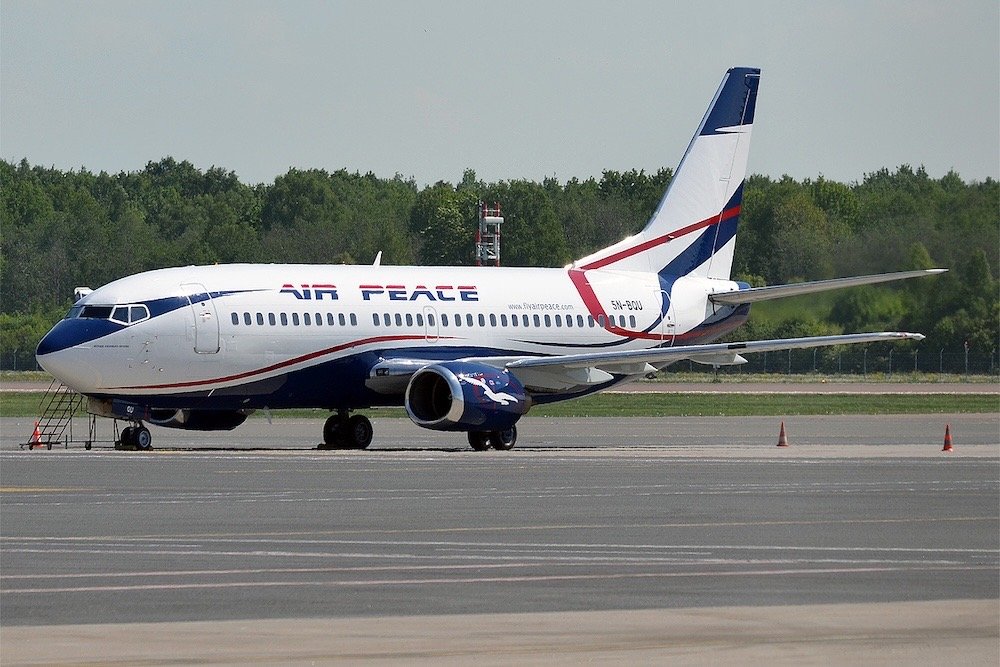
Air Peace is generating approximately $479.2 million in annual revenue while absorbing a jet fuel price that surged from ₦995 to over ₦2,700 per litre in early 2026 a 171% cost spike on the single input that accounts for 35% of its operating cost structure, in a market where naira depreciation is simultaneously inflating every dollar-denominated expense line on its balance sheet.

Nigeria's largest privately owned airline is navigating the most structurally compressed operating environment in West African aviation history not because demand has collapsed, but because the cost of serving that demand has been transformed by fuel price inflation, foreign exchange constraints, and regulatory costs that together create a margin squeeze with no single lever to release it.

The situation is compounded by global geopolitical dynamics. The Strait of Hormuz a critical transit route for global oil supplies has faced escalating tension through 2025 and into 2026, creating upward pressure on crude oil prices that Nigerian carriers feel immediately and disproportionately. For airlines that must import fuel and pay for it in dollars while collecting revenue predominantly in naira, global oil market shocks compound into a double cost event: rising global prices and deteriorating exchange rates striking simultaneously.

$479M
Air Peace Estimated Annual Revenue (2026)
+171%
Jet Fuel Price Surge ₦995 to ₦2,700/Litre
35%
Fuel Share of Nigerian Airline Operating Costs
+25%
Nigeria Operating Cost Premium vs Global Average

Energy Intelligence
Nigeria Jet Fuel Price Trajectory (₦/Litre, 2024–2026)

Sources: AfDB, IMF, Nigeria Energy Data  •  Calculations & Modelling: Limitless Beliefs Consulting

171% Fuel Spike The Structural Trap

A 171% increase in jet fuel prices is not a cost challenge it is a structural trap. At ₦995 per litre, fuel was already the dominant operating cost at approximately 25–35% of total expenses. At ₦2,700 per litre, it becomes the consuming variable that subordinates every other cost management decision to its own trajectory. Every route that was marginally profitable at the old fuel price becomes loss-making at the new one, and the airline's network strategy must be reconstructed around which routes can absorb the new cost floor and which cannot.

Jet fuel accounts for approximately 25–40% of total airline operating costs in normal market conditions and Nigerian carriers face a structural disadvantage even before the 2026 spike. According to the IFC, African airlines already incur operating costs 15–25% higher than global averages. Nigeria represents one of the most expensive operating environments on the continent. VAT on aviation spare parts, dollar-denominated maintenance contracts, and imported aircraft leasing costs all compound before fuel is even considered.

“Air Peace is not losing to competition. It is absorbing a structural cost environment that no airline management team can fully offset through operational efficiency alone and maintaining market leadership regardless.”

Operational Intelligence
Air Peace Operating Cost Structure — Nigeria (2026)

Sources: AfDB, IATA, IMF  •  Calculations & Modelling: Limitless Beliefs Consulting

Competitive Intelligence
Operating Cost Pressure Index Nigeria vs Africa vs Global Average

Sources: IFC, AfDB Aviation Data  •  Calculations & Modelling: Limitless Beliefs Consulting

Dollar Costs, Naira Revenue The Currency Compression

Foreign exchange volatility is the second dimension of the margin squeeze. Nigeria's aviation sector relies heavily on dollar-denominated inputs aircraft leasing, maintenance contracts, spare parts procurement, and international route operating costs. The depreciation of the naira against the dollar inflates each of these cost lines in naira terms without any corresponding increase in naira-denominated ticket revenue. When the currency weakens 30%, dollar-cost inputs effectively cost 30% more in operational terms a cost inflation that no pricing strategy can fully recover when the domestic market has clear limits on fare elasticity.

The competitive constraint compounds the problem. Despite rising costs, airlines have limited ability to increase ticket prices without losing market share to competitors facing the same cost environment but potentially better-capitalised to absorb short-term losses. This creates the classic margin squeeze dynamic: costs rising faster than revenues, with no single lever able to close the gap independently.


Economic Intelligence
Aviation GDP Contribution Index Nigeria (2019–2025)

Sources: AfDB, World Bank, IMF  •  Calculations & Modelling: Limitless Beliefs Consulting

Workforce Under Pressure Critical Roles Protected

Workforce Intelligence
Airline Workforce Adjustment Model Cost Pressure Environment

Sources: IFC, AfDB Aviation Data  •  Calculations & Modelling: Limitless Beliefs Consulting

Aviation plays a crucial role in Nigeria's broader economy. The AfDB estimates aviation contributes between 2–3% of GDP in emerging markets, with multiplier effects across tourism, trade logistics, and regional connectivity. In Nigeria's context, Air Peace's domestic network and growing regional presence are not simply commercial assets they are infrastructure for business travel, trade facilitation, and economic integration across West Africa's largest economy.

Despite the operating environment, Air Peace has maintained market leadership reinforced by multiple industry awards in early 2026 a signal that brand strength and operational reliability are providing a competitive buffer that cost-only analysis does not fully capture. The airline's ability to maintain revenue at $479 million in this environment demonstrates that demand is structurally intact; the challenge is entirely on the cost side.

Air Peace's 2026 operating environment illustrates the fundamental structural problem of Nigerian aviation and African aviation more broadly. The demand exists. The market is large. The airline is competent. But the cost infrastructure fuel pricing, forex access, regulatory levies, and maintenance import costs makes profitability contingent on macro policy decisions that airline management cannot control. Addressing fuel supply constraints, improving forex access for aviation inputs, and rationalising the VAT structure on spare parts are not sector-specific reforms. They are national competitiveness decisions whose costs are currently being paid by Air Peace's balance sheet.

🌍
ROAD-1 Intelligence
Get port friction scores, PAPSS settlement data, FX volatility signals, and corridor analysis for the trade routes in this story.
Access ROAD-1 →