LIVE MARKETS
USD/NGN1,377-0.22%
USD/KES130.40+0.18%
USD/ZAR16.77+0.31%
USD/GHS11.19-0.44%
USD/EGP48.00+0.05%
|
GOLD$4,628/oz+1.15%
BRENT$69.41/bbl-0.54%
COBALT$26,800/t-1.35%
|
BTC$94,280+2.34%
ETH$3,218+1.87%
USD/NGN1,377-0.22%
GOLD$4,628/oz+1.15%
BTC$94,280+2.34%
ROAD-1
Breaking AfCFTA Secretariat: 47 of 54 member states now operational under continental free trade framework — intra-Africa trade volumes up 12% year-on-year
Home Politics Bridging the Bloc Fracture: Togo’s Calculated Bet on…
Politics

Bridging the Bloc Fracture: Togo’s Calculated Bet on the Alliance of Sahel States (AES) and the Limits of ECOWAS

Author: Nnamdi Okeke Desk: Uncategorized Desk Published: April 23, 2026 Togo’s April 2026 Lomé convening bringing AES states, ECOWAS, the UN, and European partners to the same table under Togolese facilitation is the most consequential diplomatic positioning by a West African coastal state since the AES bloc’s formation, because it is not a choice between ECOWAS and the Sahel juntas but a calculated bet that Lomé Port’s logistics indispensability to three landlocked economies gives Togo the leverage to be the one country that neither bloc can afford to alienate, regardless of which regional order ultimately prevails. The framing of Togo’s strategy as a “double game” simultaneously engaged with AES military governments while remaining inside ECOWAS structures misreads what is actually a coherent single game: maximising Lomé’s indispensability in a fragmenting regional order by being the logistics and diplomatic bridge that both sides need. Mali, Burkina Faso, and Niger are landlocked. Their dependence on coastal port access estimated at 85%, 80%, and 90% of trade volume respectively is not a political preference. It is a geographic reality. That reality is Togo’s primary leverage asset, and President Gnassingbé is deploying it with a precision that ECOWAS’s more ideologically rigid members have been unable to match. The economic logic is unambiguous: Lomé Port’s position as a transit gateway for Sahel commerce is worth more to Togo the more landlocked those Sahel economies become and ECOWAS’s sanctions and diplomatic isolation of AES member states have paradoxically increased Togo’s leverage by reducing alternative coastal access options for Mali, Burkina Faso, and Niger. 90% Niger’s Coastal Trade Route Dependence 85% Mali’s Coastal Port Access Dependence Apr 2026 Lomé Summit AES, ECOWAS, UN & EU at One Table 2–3% Annual GDP Suppression Sahel Conflict States Trade Intelligence AES States Coastal Trade Route Dependence Togo’s Leverage Base (%) Sources: AfDB, IMF, World Bank  •  Calculations & Modelling: Limitless Beliefs Consulting Political Intelligence The Lomé Summit What Togo’s Convening Role Actually Means The April 18–20 Lomé meeting’s significance is not in what was agreed summit communiqués from multi-stakeholder West African meetings have a long history of producing language that outlasts the political will to implement it. The significance is in who convened it and under what framing. Togo positioning itself as the 2026–2028 Sahel strategy host bringing AES, ECOWAS, UN and European representatives to Lomé rather than to Abuja, Accra, or any ECOWAS institutional seat is a statement about where West Africa’s real diplomatic gravity is shifting in a period of ECOWAS institutional stress. The three AES military governments General Assimi Goïta in Mali, Captain Ibrahim Traoré in Burkina Faso, General Abdourahamane Tchiani in Niger have been explicit about their rejection of ECOWAS as a legitimate forum for Sahel governance questions. They attended or sent representatives to Lomé precisely because Togo is not leading with ECOWAS institutional authority. Gnassingbé’s convening power derives from bilateral relationships and logistics dependence, not from the regional institutional architecture that AES states have formally rejected. That distinction is the basis of Togo’s diplomatic value and its diplomatic risk. “Togo is not playing a double game. It is playing the only game available to a small coastal state with a large port and powerful neighbors making itself indispensable to everyone simultaneously and collecting the rent.” Political Intelligence Togo AES Alignment What Each Party Needs and Risks Togo’s Position The Indispensable Intermediary Needs: Transit revenue, regional influence, security buffer against Sahel spillover. Risks: ECOWAS credibility damage if alignment tips too visibly toward AES; French diplomatic pressure on a government historically dependent on Paris for security guarantees. AES States’ Position Landlocked with Options Running Out Need: Lomé port access, customs digitisation support, coastal diplomatic cover. Risk: Deepening economic isolation if Togo’s ECOWAS alignment constrains the bilateral relationship; vulnerability to any future Togolese policy shift. ECOWAS Position The Structurally Weakened Bloc Needs: Togo to maintain formal ECOWAS membership and not legitimise AES as an equal alternative bloc. Risk: Togo’s mediation role implicitly validates AES as a negotiating partner, undermining ECOWAS’s stated position that military governments must restore civilian rule before full engagement. Analysis: Limitless Beliefs Consulting Economic Intelligence Lomé Port, Customs Digitalisation, and the Transit Revenue Thesis Togo’s core economic proposition in the AES engagement is straightforward: Lomé Port handles a significant share of Sahel landlocked trade, and the customs digitalisation programme Togo is proposing with Mali, Burkina Faso, and Niger would increase both the volume and the efficiency of that transit trade generating increased port revenues, logistics sector employment, and the kind of regional connectivity infrastructure that positions Togo as a commercial hub regardless of which political order prevails in the Sahel. Customs digitalisation is not merely an administrative reform in this context it is a geopolitical tool. Integrated digital customs systems between Togo and AES states create technical dependencies that deepen the bilateral relationship beyond the political cycle. If Togolese technical systems process Nigerien, Malian, and Burkinabé customs documentation, those trade flows become embedded in Togolese infrastructure in ways that are difficult to redirect to alternative corridors even if the political relationship changes. That embeddedness is the economic moat Togo is building beneath the diplomatic architecture. Economic Intelligence AES States Estimated GDP Growth (2025–2026) Despite Political Contestation (%) Sources: AfDB, IMF, World Bank  •  Calculations & Modelling: Limitless Beliefs Consulting Security Intelligence Sahel Security Spending Growth Trajectory (2021–2025, Indexed) Sources: AfDB, IMF, World Bank  •  Calculations & Modelling: Limitless Beliefs Consulting Policy Intelligence AES’s 4% GDP Growth Under Military Governance The Governance-Performance Disconnect The estimated GDP growth figures for AES states Mali at 4.1%, Burkina Faso at 3.8%, Niger at 4.5% present an analytical challenge for the conventional governance-performance framework that Western institutions apply to the Sahel. The standard thesis is that military governance produces economic deterioration through investor flight, aid withdrawal, and institutional degradation. The AES data in 2025–2026 does not straightforwardly confirm that thesis, and understanding why matters for how Togo and other coastal states calculate the long-term viability of engagement. The explanation is not that military governance is economically functional it is
By Nnamdi Okeke · April 23, 2026 · 11 min read
Bridging the Bloc Fracture: Togo’s Calculated Bet on the Alliance of Sahel States (AES) and the Limits of ECOWAS

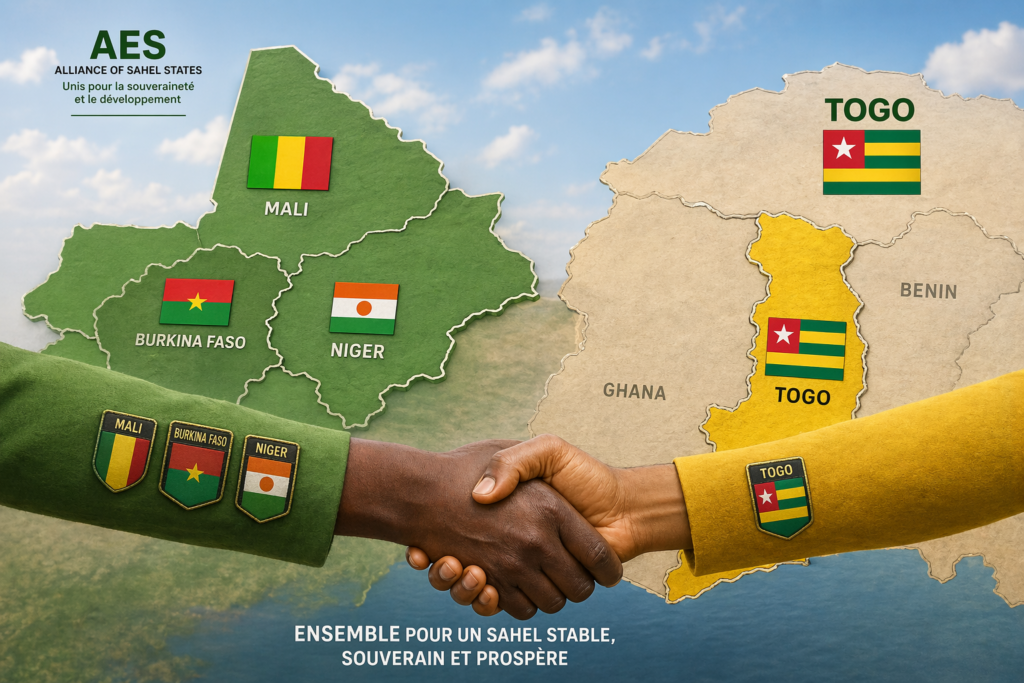
Togo's April 2026 Lomé convening bringing AES states, ECOWAS, the UN, and European partners to the same table under Togolese facilitation is the most consequential diplomatic positioning by a West African coastal state since the AES bloc's formation, because it is not a choice between ECOWAS and the Sahel juntas but a calculated bet that Lomé Port's logistics indispensability to three landlocked economies gives Togo the leverage to be the one country that neither bloc can afford to alienate, regardless of which regional order ultimately prevails.

The framing of Togo's strategy as a "double game" simultaneously engaged with AES military governments while remaining inside ECOWAS structures misreads what is actually a coherent single game: maximising Lomé's indispensability in a fragmenting regional order by being the logistics and diplomatic bridge that both sides need. Mali, Burkina Faso, and Niger are landlocked. Their dependence on coastal port access estimated at 85%, 80%, and 90% of trade volume respectively is not a political preference. It is a geographic reality. That reality is Togo's primary leverage asset, and President Gnassingbé is deploying it with a precision that ECOWAS's more ideologically rigid members have been unable to match.

The economic logic is unambiguous: Lomé Port's position as a transit gateway for Sahel commerce is worth more to Togo the more landlocked those Sahel economies become and ECOWAS's sanctions and diplomatic isolation of AES member states have paradoxically increased Togo's leverage by reducing alternative coastal access options for Mali, Burkina Faso, and Niger.

90%
Niger's Coastal Trade Route Dependence
85%
Mali's Coastal Port Access Dependence
Apr 2026
Lomé Summit AES, ECOWAS, UN & EU at One Table
2–3%
Annual GDP Suppression Sahel Conflict States

Trade Intelligence
AES States Coastal Trade Route Dependence Togo's Leverage Base (%)

Sources: AfDB, IMF, World Bank  •  Calculations & Modelling: Limitless Beliefs Consulting

The Lomé Summit What Togo's Convening Role Actually Means

The April 18–20 Lomé meeting's significance is not in what was agreed summit communiqués from multi-stakeholder West African meetings have a long history of producing language that outlasts the political will to implement it. The significance is in who convened it and under what framing. Togo positioning itself as the 2026–2028 Sahel strategy host bringing AES, ECOWAS, UN and European representatives to Lomé rather than to Abuja, Accra, or any ECOWAS institutional seat is a statement about where West Africa's real diplomatic gravity is shifting in a period of ECOWAS institutional stress.

The three AES military governments General Assimi Goïta in Mali, Captain Ibrahim Traoré in Burkina Faso, General Abdourahamane Tchiani in Niger have been explicit about their rejection of ECOWAS as a legitimate forum for Sahel governance questions. They attended or sent representatives to Lomé precisely because Togo is not leading with ECOWAS institutional authority. Gnassingbé's convening power derives from bilateral relationships and logistics dependence, not from the regional institutional architecture that AES states have formally rejected. That distinction is the basis of Togo's diplomatic value and its diplomatic risk.

“Togo is not playing a double game. It is playing the only game available to a small coastal state with a large port and powerful neighbors making itself indispensable to everyone simultaneously and collecting the rent.”

Political Intelligence
Togo AES Alignment What Each Party Needs and Risks
Togo's Position
The Indispensable Intermediary
Needs: Transit revenue, regional influence, security buffer against Sahel spillover. Risks: ECOWAS credibility damage if alignment tips too visibly toward AES; French diplomatic pressure on a government historically dependent on Paris for security guarantees.
AES States' Position
Landlocked with Options Running Out
Need: Lomé port access, customs digitisation support, coastal diplomatic cover. Risk: Deepening economic isolation if Togo's ECOWAS alignment constrains the bilateral relationship; vulnerability to any future Togolese policy shift.
ECOWAS Position
The Structurally Weakened Bloc
Needs: Togo to maintain formal ECOWAS membership and not legitimise AES as an equal alternative bloc. Risk: Togo's mediation role implicitly validates AES as a negotiating partner, undermining ECOWAS's stated position that military governments must restore civilian rule before full engagement.

Analysis: Limitless Beliefs Consulting

Lomé Port, Customs Digitalisation, and the Transit Revenue Thesis

Togo's core economic proposition in the AES engagement is straightforward: Lomé Port handles a significant share of Sahel landlocked trade, and the customs digitalisation programme Togo is proposing with Mali, Burkina Faso, and Niger would increase both the volume and the efficiency of that transit trade generating increased port revenues, logistics sector employment, and the kind of regional connectivity infrastructure that positions Togo as a commercial hub regardless of which political order prevails in the Sahel.

Customs digitalisation is not merely an administrative reform in this context it is a geopolitical tool. Integrated digital customs systems between Togo and AES states create technical dependencies that deepen the bilateral relationship beyond the political cycle. If Togolese technical systems process Nigerien, Malian, and Burkinabé customs documentation, those trade flows become embedded in Togolese infrastructure in ways that are difficult to redirect to alternative corridors even if the political relationship changes. That embeddedness is the economic moat Togo is building beneath the diplomatic architecture.


Economic Intelligence
AES States Estimated GDP Growth (2025–2026) Despite Political Contestation (%)

Sources: AfDB, IMF, World Bank  •  Calculations & Modelling: Limitless Beliefs Consulting

Security Intelligence
Sahel Security Spending Growth Trajectory (2021–2025, Indexed)

Sources: AfDB, IMF, World Bank  •  Calculations & Modelling: Limitless Beliefs Consulting

AES's 4% GDP Growth Under Military Governance The Governance-Performance Disconnect

The estimated GDP growth figures for AES states Mali at 4.1%, Burkina Faso at 3.8%, Niger at 4.5% present an analytical challenge for the conventional governance-performance framework that Western institutions apply to the Sahel. The standard thesis is that military governance produces economic deterioration through investor flight, aid withdrawal, and institutional degradation. The AES data in 2025–2026 does not straightforwardly confirm that thesis, and understanding why matters for how Togo and other coastal states calculate the long-term viability of engagement.

The explanation is not that military governance is economically functional it is that commodity export revenues in gold (Mali, Burkina Faso), uranium and oil (Niger), and agricultural exports sustain government revenues in ways that are relatively insulated from the governance quality indicators that affect FDI-dependent economies. An economy where 60–70% of export revenue comes from extractive commodities priced in global markets continues to generate government income regardless of domestic governance quality. The GDP growth figures reflect commodity cycle performance and informal sector resilience, not institutional effectiveness. The fragility is real it simply has not yet manifested in the headline numbers.

Togo's strategic bet is that this fragility gives AES states an incentive to maintain the Lomé relationship regardless of the political trajectory because the coastal access and customs infrastructure Togo provides is part of the logistics chain that gets those commodity exports to global markets.

Togo's AES engagement is the most commercially sophisticated political positioning in West Africa in 2026 a small state with a large port converting geographic necessity into diplomatic leverage at a moment when the regional architecture is fragmenting in ways that create exactly the kind of intermediary vacuum that Lomé is designed to fill. The risk is real: ECOWAS credibility, French diplomatic relationships, and the long-term governance trajectory of three military-led states are all variables outside Togolese control. But the opportunity is equally real — and Gnassingbé's calculated bet on pragmatism over ideology is the kind of foreign policy that builds regional influence in fragmented orders, even when it makes ideologically consistent actors uncomfortable. That discomfort is precisely the point.