
Desk: Uncategorized Desk
Published: June 1, 2026
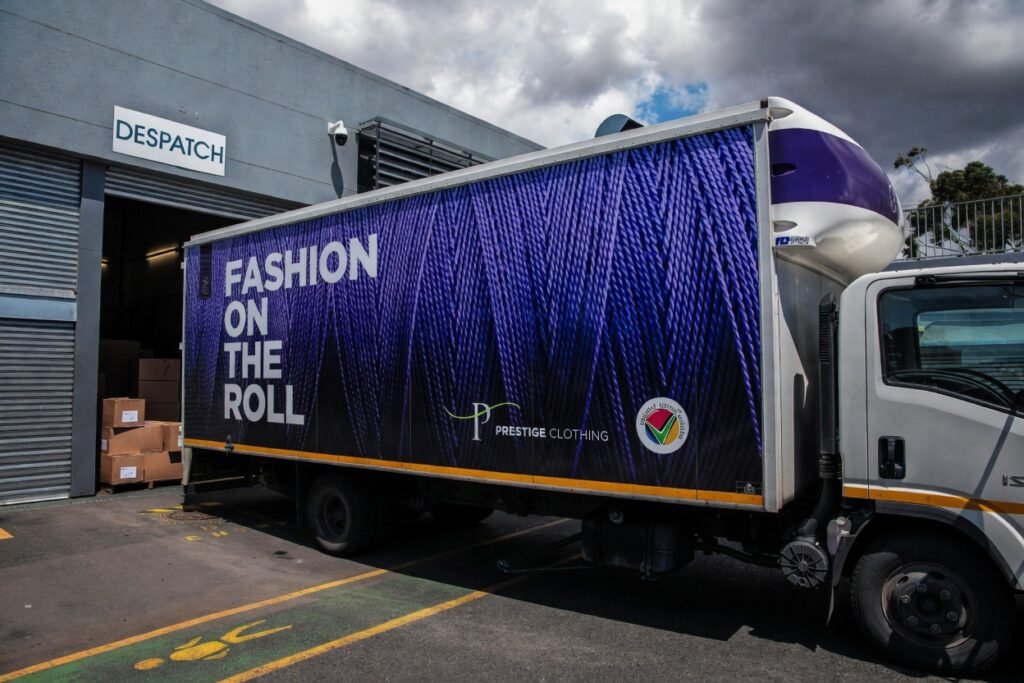
The Foschini Group (TFG), one of Africa’s largest fashion and apparel retailers, has moved aggressively to deepen South African manufacturing capabilities through a new investment framework finalized alongside the City of Cape Town during the Allfashion Sourcing industry brief on May 19, 2026. The strategy represents far more than a retail expansion. It is part of a broader continental shift toward localized industrial resilience as African corporations attempt to reduce exposure to global shipping disruptions, currency volatility, rising Asian labor costs, and geopolitical supply chain fragmentation. Rather than relying heavily on imported fast‑fashion inventory from Asia, TFG’s new model prioritizes expansion of Cape Town garment production facilities, scaling local textile processing capacity, investment in independent African apparel creators, regionalized sourcing under AfCFTA trade corridors, skills development for fashion manufacturing workers, and reduced exposure to rand dollar import volatility.
Africa’s fashion economy is no longer a niche cultural industry. According to estimates from the AfDB, IFC, and regional textile associations, Africa’s apparel and textile sector could exceed $31 billion in annual value by 2030 if AfCFTA trade integration and manufacturing localization targets are achieved. South Africa, Kenya, Ethiopia, Egypt, Morocco, and Mauritius are emerging as the primary manufacturing hubs competing to capture production migrating away from China and Bangladesh. Cape Town specifically has emerged as one of Africa’s strongest premium apparel ecosystems due to advanced logistics infrastructure, retail proximity, established design talent, access to regional cotton supply chains, financial market sophistication, and higher industrial compliance standards.
Sources: AfDB, IFC, World Bank, McKinsey • Analysis: Limitless Beliefs Consulting
The Currency Protection Strategy Localization as a Hedge
One of the most overlooked aspects of TFG’s strategy is currency defense. African retailers that rely heavily on imports face major balance sheet pressure whenever local currencies weaken against the U.S. dollar. South African retailers importing Asian inventory remain vulnerable to shipping inflation, port disruptions, dollar strength, commodity volatility, and rising freight insurance costs. By localizing production, TFG effectively reduces FX exposure, lead times (from 60–90 days to 2–4 weeks), inventory delays, working capital stress, and import dependency risk. The strategy reflects a broader global transition from “cheapest production” toward “most resilient production.”
The table below outlines TFG’s localization strategy vs traditional import dependent retailing:
| Metric | Traditional Asian Import Model | TFG Localization Strategy |
|---|---|---|
| Lead Time (Order to Shelf) | 60–90 days | |
| Currency Risk Exposure | ||
| Working Capital Requirement | ||
| Shipping Disruption Vulnerability | ||
| Local Job Multiplier |
“Africa’s fashion sector is increasingly transitioning from being merely a consumer market into a vertically integrated manufacturing ecosystem. The continent’s next industrial battle may not be automobiles or semiconductors — but textile sovereignty.”
Job Creation and Industrial Employment Impact Direct & Indirect Multipliers
TFG’s manufacturing localization strategy is expected to generate direct and indirect employment growth across garment assembly, pattern making, industrial sewing, logistics, warehousing, packaging, fashion technology, and retail distribution. Industry analysts estimate that every 100,000 locally manufactured apparel units can sustain between 250–400 industrial jobs depending on automation intensity. Across Africa, the textile and apparel value chain already supports more than 8 million jobs either directly or indirectly, with that number potentially exceeding 15 million by 2035 if intra‑African sourcing improves. The pie chart below shows the employment distribution across the fashion supply chain:
Sources: ILO, AfDB, IFC, African Union • Analysis: Limitless Beliefs Consulting
Policy Environment: Pro‑Growth or Industrial Bottleneck?
Despite momentum, major risks remain. African fashion manufacturing continues to face electricity instability (load shedding in South Africa, unreliable grids elsewhere), port congestion (Durban, Mombasa, Dar es Salaam), high financing costs (interest rates 15–25%), limited industrial parks, weak customs harmonization, expensive logistics networks, and fragmented textile regulations. South Africa retains advantages in financial infrastructure, industrial maturity, retail sophistication, and export compliance. But labor rigidity, energy constraints, and rising operating costs remain structural risks. The binding constraint is no longer demand – it is reliable infrastructure.
Sources: LBNN Intelligence, AfDB, IFC • Analysis: Limitless Beliefs Consulting
Can African Fashion Become a Continental Industrial Engine?
The larger question is whether Africa can evolve from exporting raw cotton into owning full‑stack fashion manufacturing ecosystems. Currently, much of Africa exports raw cotton, leather, and agricultural inputs, yet imports finished apparel products at significantly higher value. That imbalance contributes to trade deficits, currency pressure, industrial dependency, and limited job creation. TFG’s investment model signals a growing realization among African corporates: the continent cannot industrialize while outsourcing its manufacturing base abroad. The larger intelligence signal is not simply about clothing. It is about supply chain sovereignty, industrial resilience, currency insulation, urban employment creation, regional manufacturing integration, and African ownership of value‑added production.
Which Regions and Sectors Rebound First?
If regional infrastructure and political stabilization continue improving under AfCFTA corridors, East Africa and Southern Africa are likely to dominate Africa’s next‑generation apparel manufacturing expansion. Kenya, Ethiopia, Tanzania, and Rwanda are positioning themselves as scalable low‑cost production hubs, while South Africa increasingly specializes in premium apparel manufacturing, design, and retail distribution infrastructure. Once security and logistics risks decline further, private capital is expected to move aggressively into industrial textile parks, cotton processing facilities, leather manufacturing, fashion logistics, e‑commerce infrastructure, and cross‑border warehousing. The first sectors likely to rebound strongest include logistics, industrial manufacturing, and agricultural processing tied directly to apparel supply chains. Africa’s next economic battle may ultimately be decided not only by natural resources or fintech dominance but by which nations successfully rebuild industrial ecosystems capable of employing millions at scale.
Sources: ILO, AfDB, World Bank • Analysis: Limitless Beliefs Consulting
Bottom Line: TFG’s expansion of Cape Town manufacturing capacity is a strategic bet on localized industrial resilience moving away from Asian import dependence toward regional production. The African apparel and textile market could reach $31 billion by 2030, with over 8 million current jobs and the potential for 15 million by 2035 if intra‑African sourcing scales. TFG’s localization reduces FX exposure, slashes lead times from 90 days to 4 weeks, and creates higher domestic value retention. But structural bottlenecks electricity instability, port congestion, high financing costs remain binding constraints. The continent’s fashion supply chain war is not just about clothing; it is about supply chain sovereignty, industrial employment, and the ability to retain value from raw cotton to finished garment. South Africa is placing a premium manufacturing bet. East Africa is competing on volume. The winners will be those who deliver reliability not just low wages.