
Desk: Uncategorized Desk
Published: May 5, 2026
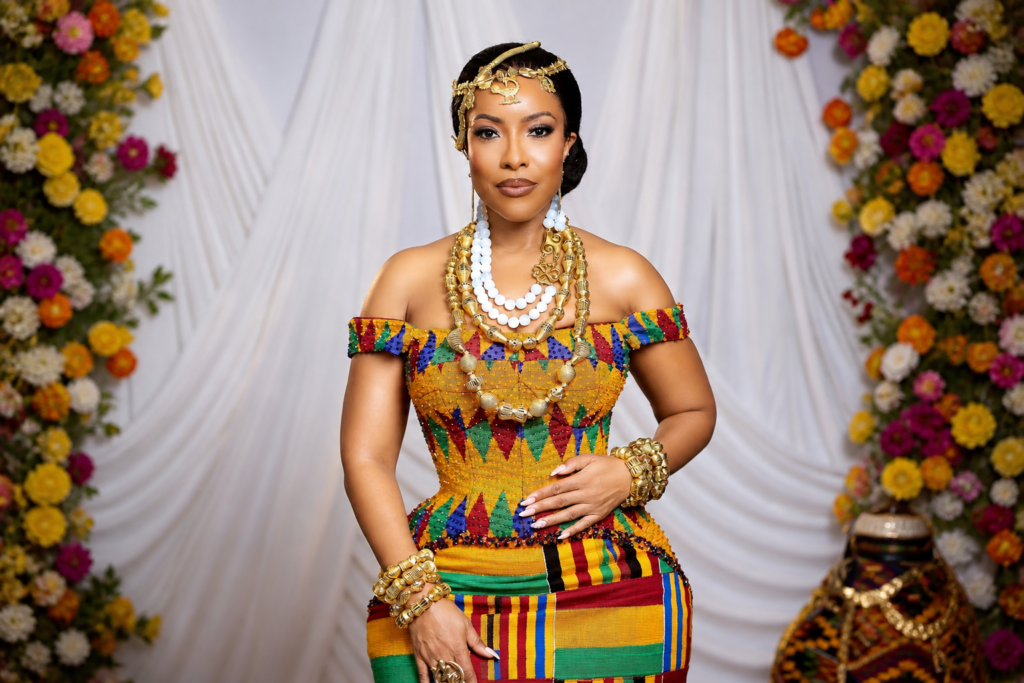
The global Kente cloth apparel market, valued at approximately $480 million in 2024, is projected to exceed $1.15 billion by 2033, reflecting a strong 10.2% CAGR. This signals rising global demand for African cultural fashion a validation of the continent’s aesthetic and artisanal heritage. But the economic reality is more complex: a significant share of value creation is captured outside Africa. Estimates suggest that over 60–70% of Kente-style products in global circulation are manufactured in Asia, primarily China, significantly reducing local value capture. Kente remains one of Africa’s most recognizable luxury cultural fabrics, yet its economic footprint exposes a broader structural issue across the continent’s fashion sector: high demand but limited ownership of production value.
The Kente paradox is Africa’s cultural asset paradox in miniature. The continent produces the culture, the designs, and the authenticity that global consumers increasingly value but industrial capacity, manufacturing scale, and supply chain logistics reside elsewhere. A premium ceremonial Kente piece woven in Ghana can command $200 to over $2,000. A mass-produced imitation, indistinguishable to the untrained eye, retails for $20–$50. The price disparity up to 85% cheaper is not just a competitive threat. It is a structural leakage of economic value that African producers cannot currently address without industrial upgrading.
Sources: AfDB, World Bank, Fashionomics Africa • Analysis: Limitless Beliefs Consulting
Market Structure High Value, Low Control
Authentic Kente production is concentrated in Ghana, particularly in Bonwire (Ashanti Region) and Agotime Kpetoe (Volta Region). These weaving communities have preserved techniques across generations. Premium ceremonial pieces can command prices from $200 to over $2,000, while lower-end strips sell between $20–$50. The value ladder exists. The problem is scale.
The comparison table below illustrates the structural asymmetry in the Kente value chain:
| Value Chain Segment | Africa Capture | External Capture | Key Constraint |
|---|---|---|---|
| Raw Material Production | High (cotton, dye production) | Low | Limited local cotton processing; raw exports |
| Weaving/Production | Medium (artisanal) | Low-Medium | Limited mechanization; labor-intensive |
| Mass Manufacturing | Very Low | High (China, India, Turkey) | No industrial scale; cost disadvantage |
| Branding & Design | Medium (designers) | Medium (global brands) | IP enforcement; design theft |
| Distribution & Retail | Low | High | Weak export infrastructure; logistics |
| Final Value Capture | Low (~15–25%) | High (~75–85%) | Structural leakage |
Ghana’s Geographical Indication (GI) protection for Kente a legal recognition that authentic Kente must be woven in Ghana using traditional methods is a step forward. But GI enforcement remains inconsistent globally. A Chinese factory producing “Kente-style” fabric faces no legal consequence in most markets because the brand “Kente” is not universally protected as a geographical indication. Africa produces culture but does not control its legal protection at scale.
“Africa produces culture but does not control its monetization. Kente is a case study in the continent’s broader economic paradox: high-value cultural assets with low industrial capture.”
Economic Footprint What Kente Contributes vs What It Could
Africa’s broader textile and apparel market is valued at approximately $70 billion, employing over 15 million people across the value chain. However, Kente’s contribution remains disproportionately small due to limited industrial weaving capacity, weak export infrastructure, and intense competition from counterfeit imports. In Ghana alone, the traditional textile sector supports an estimated 500,000–700,000 direct and indirect jobs, but modernization gaps have prevented large-scale employment expansion. Job creation in the authentic Kente segment is growing modestly at approximately 3–5% annually, while factory-based textile jobs across West Africa have stagnated or declined due to import competition from Asia and second-hand clothing imports.
The opportunity cost is substantial. If Africa captured just 50% of the global “African-inspired” textile market currently dominated by Asian manufacturers — it could generate an additional $500 million to $1 billion annually in export revenue and create hundreds of thousands of manufacturing jobs. But capturing that value requires industrial policy: investment in textile manufacturing infrastructure, export logistics, and brand development.
Sources: AfDB, IFC, World Bank, Ghana Textile Association • Analysis: Limitless Beliefs Consulting
Can African Fashion Win? The Authenticity Advantage
The price disparity is daunting. Imported imitation Kente can be up to 85% cheaper than authentic handmade product, making it more accessible to mass-market consumers but systematically undermining local producers. Yet Africa retains a competitive edge in authenticity, storytelling, and cultural capital assets that are becoming more valuable in global luxury markets where provenance and narrative command premium pricing.
African designers are increasingly integrating Kente into modern fashion: fusion wear, streetwear, and luxury collections. Brands like Christie Brown (Ghana), Maki Oh (Nigeria), and Loza Maléombho (Côte d’Ivoire) are building global followings by centering African textiles and techniques. But they face competition from fast fashion brands (Zara, H&M, Shein) replicating African designs without compensation or attribution, low-cost Asian manufacturers with supply chain advantages that African producers cannot match, and global supply chain logistics that favor centralized production.
The strategic response is not to compete on cost African producers will never win a race to the bottom against Asian mass manufacturing. The strategic response is to compete on differentiation: authenticity, customization, storytelling, and ethical production. Consumers willing to pay $2,000 for a ceremonial Kente are not price-sensitive. The challenge is building the distribution and marketing infrastructure to reach them.
Sources: ILO, Ghana Statistical Service, World Bank • Analysis: Limitless Beliefs Consulting
The Real Bottleneck Industrial Capacity and Ownership
The issue is not demand it is industrial capacity and ownership. Global demand for African cultural fashion has never been higher. Diaspora consumers, luxury buyers, and culturally curious global customers are driving the 10.2% CAGR. But Africa lacks the manufacturing scale to meet that demand with African-made product. The continent’s textile manufacturing capacity is fragmented, undercapitalized, and technologically outdated compared to Asian competitors.
The path forward requires coordinated investment across three pillars:
- Manufacturing infrastructure — modern weaving facilities, dyeing plants, and garment assembly capable of producing at commercial scale without sacrificing quality or authenticity
- Export logistics — reliable shipping, customs clearance, and distribution networks that connect African producers to global buyers
- Brand development — marketing, e-commerce, and retail partnerships that tell the Kente story and justify premium pricing
Without these, Africa risks remaining a supplier of raw cultural value designs, motifs, techniques while the industrial-scale value capture occurs elsewhere. The Geographical Indication for Kente is a legal tool, not an industrial strategy.
Sources: LBNN Intelligence, Limitless Beliefs Consulting projections • Analysis: Limitless Beliefs Consulting
From Artisan Production to Scalable Industry
If properly leveraged, the Kente market could become a transformative economic asset. LBNN Intelligence estimates that with targeted industrial policy and private investment, the sector could:
- Create over 1 million jobs across West Africa (weavers, dyers, designers, logistics, retail)
- Generate $2–3 billion in annual exports by 2033
- Position Africa as a global cultural luxury hub, creating spillover benefits for tourism, hospitality, and related creative industries
The shift required is fundamental: from artisan production to scalable industry, from fragmented supply chains to integrated value chains, from cultural preservation to commercial competitiveness. This is not about replacing traditional weaving — authenticity remains the competitive advantage. It is about adding industrial capacity alongside artisanal production, enabling African producers to serve both the premium handmade market and the commercial mass-market with African-made product.
Ghana’s GI protection, the African Continental Free Trade Area (AfCFTA), and growing diaspora engagement create a policy environment more favorable than at any point in the past generation. But policy environment does not equal industrial execution. Capital must be deployed. Training must be scaled. Logistics must be built.
Bottom Line: Kente cloth represents more than fashion it is a case study in Africa’s broader economic paradox: high-value cultural assets with low industrial capture. Global demand is rising at 10.2% CAGR toward a $1.15 billion market. But 60–70% of Kente-style products are manufactured outside Africa, capturing value that could otherwise support 500,000+ Ghanaian textile jobs. The next decade will determine whether Africa transforms Kente into a globally dominant luxury category or continues to lose value to external producers. The raw materials are culture and technique. The missing inputs are capital, infrastructure, and industrial organization. With them, Kente becomes a billion-dollar export industry. Without them, it remains a story of what could have been written in thread, exported in inspiration, and monetized elsewhere.