
Desk: Uncategorized Desk
Published: May 27, 2026
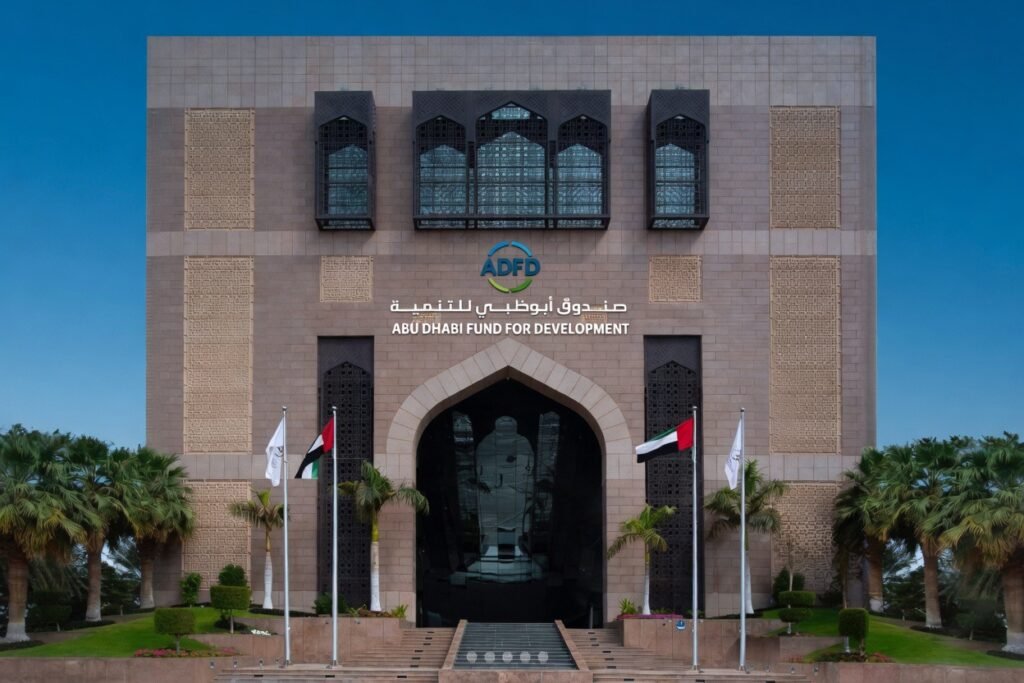
Nigeria and the broader West African region are entering a new phase of infrastructure expansion following renewed investment activity tied to over ₦13.8 billion worth of transport, flood protection, and regional corridor projects supported by the Abu Dhabi Fund for Development (ADFD). The projects are strategically designed to strengthen economic integration between Nigeria and neighboring West African economies by improving road connectivity, reducing logistics costs, expanding cross border commerce, and increasing trade efficiency across ECOWAS markets. Infrastructure analysts increasingly view regional transport corridors as one of the most important long term growth multipliers for African economies. Poor transport systems historically raised business costs across the continent by up to 30–40% compared to global averages, severely weakening intra-African trade competitiveness.
Africa currently suffers from one of the world’s largest infrastructure financing gaps, estimated by the African Development Bank (AfDB) at roughly $68–$108 billion annually. Road infrastructure remains especially critical because nearly 80% of freight movement across Africa still relies on road transportation systems. Nigeria, as Africa’s largest economy by population and one of its largest consumer markets, sits at the center of West Africa’s trade architecture. This makes regional corridor investments strategically important not only for Nigeria but also for Ghana, Benin, Togo, Niger, Côte d’Ivoire, and Burkina Faso.
Sources: AfDB, IMF, World Bank, IFC • Analysis: Limitless Beliefs Consulting
Infrastructure Is Becoming Africa’s New Economic Battleground
The Nigerian and West African corridor projects focus on road network modernization, flood mitigation systems, regional logistics connectivity, trade facilitation corridors, transport efficiency upgrades, and cross-border commercial integration. The projects are expected to improve cargo movement between Nigeria, Benin, Togo, Ghana, Niger, and Côte d’Ivoire while reducing freight bottlenecks that have historically slowed regional commerce. Improved corridors reduce transportation delays, fuel costs, food inflation pressures, supply chain disruptions, and flood-related business losses. In many West African economies, poor road systems substantially increase the final cost of agricultural products, imported goods, and industrial materials. Businesses often transfer these higher logistics expenses directly onto consumers.
Flood protection infrastructure also plays a major role in protecting urban economic productivity. Nigerian cities lose billions of naira annually from flood related transport paralysis and infrastructure damage. The table below summarizes the key economic impacts of corridor expansion:
| Infrastructure Impact Area | Projected Economic Effect |
|---|---|
| Reduced Freight Costs | 15%–25% reduction |
| Cross-Border Trade Volume | 20%–40% growth potential |
| Regional Supply Chain Efficiency | Significant improvement |
| Job Creation (direct & indirect) etxek |
“The real economic battle is over who controls Africa’s future trade arteries. Countries capable of becoming logistics gateways will likely dominate regional commerce, industrialization, and supply chain power over the next two decades.”
Estimated Employment & Economic Multipliers 50,000–120,000 Jobs
Large-scale transport infrastructure projects create both direct and indirect economic activity. Analysts estimate that regional corridor modernization could support engineering employment, construction labor markets, logistics industry expansion, port-related job growth, warehousing development, and manufacturing supply chains. Across West Africa, transport infrastructure investments are increasingly becoming one of the largest employment multipliers outside oil, telecommunications, and agriculture. The multiplier effect is substantial: every $1 million invested in road infrastructure typically generates 5–15 direct jobs in construction plus additional indirect jobs in supply chains and induced consumption.
The Policy Challenge Infrastructure Without Bureaucracy
Despite strong infrastructure demand, regulatory bottlenecks remain one of the biggest threats to project execution across Africa. Common barriers include land acquisition disputes (often delaying projects by 2–5 years), customs inefficiencies (border crossing times averaging 3–7 days for trucks), political instability (policy reversals across administrations), cross-border regulatory inconsistency (different standards across ECOWAS members), corruption risks (inflated contract costs), and delayed public procurement systems. This creates a paradox where African economies desperately need infrastructure investment while simultaneously creating administrative conditions that slow capital deployment. Countries that simplify infrastructure approval systems while improving transparency are expected to dominate future logistics investment flows.
Sources: LBNN Intelligence, AfDB, ECOWAS • Analysis: Limitless Beliefs Consulting
Regional GDP Impact & Trade Integration AfCFTA Multiplier
Improved road corridors could substantially increase intra-African trade under the African Continental Free Trade Area (AfCFTA). Currently, intra-African trade remains below 20% of total African trade volumes—far lower than Europe (60%+) or Asia (50%+). Infrastructure gaps are one of the largest reasons for this underperformance. Analysts believe successful corridor execution could increase regional GDP growth rates by improving export competitiveness, industrial production, port efficiency, trade integration, and regional manufacturing ecosystems. The table below outlines the projected outlook for West African infrastructure and trade:
| Indicator | Projected Trend (2026–2035) |
|---|---|
| Regional Cargo Volumes | Strong growth (5–8% CAGR) |
| Manufacturing Integration | Accelerating along transport corridors |
| Agricultural Export Capacity | Improving with reduced spoilage |
| Urban Corridor Expansion | |
| Private Infrastructure Investment |
Sources: IMF, Afreximbank, World Bank, IFC • Analysis: Limitless Beliefs Consulting
Where Private Capital Will Move Once Risk Drops
As regional security improves across parts of West Africa, several transport linked economic zones could rapidly become major investment destinations: the Lagos–Badagry trade corridor, Niger border logistics zones, Abidjan–Lagos coastal highway routes, northern Nigerian agricultural corridors, and cross-border industrial processing hubs. Infrastructure investment historically follows stabilization. Once logistics predictability improves and security risks decline, institutional capital typically enters rapidly into industrial real estate, warehousing, trucking, and energy distribution sectors.
Private African capital is increasingly expected to move toward industrial parks, dry ports, truck logistics companies, warehousing infrastructure, export processing zones, and regional retail distribution networks. The long term strategic objective is larger than roads themselves. The real economic battle is over who controls Africa’s future trade arteries. Countries capable of becoming logistics gateways will likely dominate regional commerce, industrialization, and supply chain power over the next two decades.
Sources: AfDB, PIDA, World Bank • Analysis: Limitless Beliefs Consulting
Bottom Line: Nigeria’s ₦13.8 billion ADFD-backed transport and flood protection projects represent a strategic bet on West African economic integration. With Africa facing a $68–108 billion annual infrastructure financing gap and 80% of freight moving by road, corridor modernization could reduce freight costs by 15–25%, boost cross-border trade by 20–40%, and create 50,000–120,000 jobs. The Lagos–Badagry corridor, Abidjan–Lagos coastal highway, and northern Nigerian agricultural routes are emerging as priority investment zones. But regulatory bottlenecks land acquisition, customs delays, corruption risk remain binding constraints. The winners of West Africa’s logistics race will not be those with the most roads, but those capable of moving goods across borders with the least friction. ADFD’s backing is a vote of confidence. Execution will determine whether Nigeria captures its gateway potential.