
Desk: Uncategorized Desk
Published: July 23, 2026
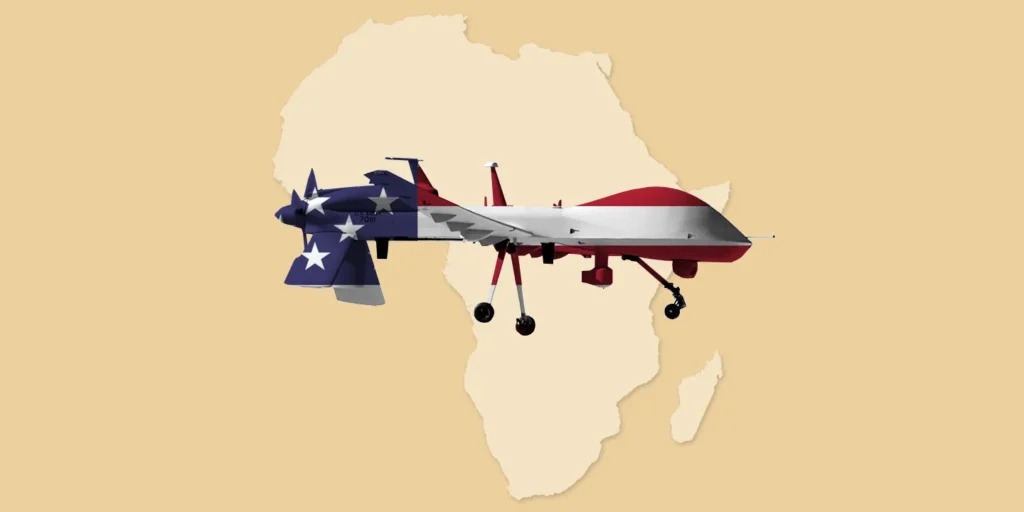
In a significant development for U.S. influence operations in Africa, the U.S. Army activated Delta Company, 7th Psychological Operations Battalion at Fort Bragg (Fort Liberty), North Carolina. According to an Army statement released July 16, 2026, the new unit nicknamed ‘Drongo’ after a small African bird known for its clever mimicry and ability to drive competitors away will focus exclusively on conducting psychological operations across the African continent in support of U.S. Africa Command (AFRICOM). The activation of a dedicated Africa-focused PSYOP company signals continued expansion of U.S. influence capabilities. While it may improve short-term counter messaging against extremists, the long-term effect on African sovereignty is deeply concerning. Declassified CIA documents and decades of historical precedent reveal a consistent pattern: external powers, particularly the United States, intervene in African affairs not for the benefit of African peoples, but to secure strategic resources, minerals, and geopolitical advantage.
The core mission of Psychological Operations (PSYOP/MISO) is to influence foreign audiences, shape perceptions, attitudes, and behaviors in support of U.S. objectives. Delta Company adds dedicated capacity for influence campaigns in contested environments, targeting violent extremist organizations and addressing strategic competition across priority regions including the Sahel, Lake Chad Basin, Horn of Africa, and Gulf of Guinea. The unit nickname “Drongo” reflects the PSYOP philosophy of subversion through clever influence rather than direct confrontation, mimicking the African bird’s ability to mimic other species and drive competitors away from its territory.
A Century of Interference Declassified Evidence of U.S. Intervention in Africa
The U.S. Army’s new PSYOP company cannot be understood in isolation. It is the latest chapter in a long history of American interference in African affairs a pattern extensively documented in declassified CIA records, congressional hearings, and independent scholarship. The historical record reveals that U.S. involvement in Africa has consistently prioritized American strategic interests mineral extraction, Cold War geopolitics, and now, competition with China and Russia over African sovereignty and self-determination.
DRC (1960–1961): Declassified CIA documents confirm the agency’s central role in the assassination of Patrice Lumumba, the democratically elected Prime Minister of the Congo. Lumumba’s crime was his refusal to align with Western interests and his determination to control Congo’s vast mineral wealth — including uranium, cobalt, and copper for the benefit of the Congolese people. CIA Director Allen Dulles authorized the operation, stating that Lumumba’s removal was “an urgent and prime objective.” Lumumba was assassinated in January 1961. The Congo descended into decades of dictatorship, civil war, and foreign exploitation. Strategic resources: Uranium, cobalt, copper. U.S. objective: Prevent Soviet aligned control over strategic minerals.
Ghana (1966): Declassified documents reveal U.S. involvement in the overthrow of Kwame Nkrumah, Ghana’s first president and a leading Pan-Africanist. Nkrumah’s vision of a united Africa, free from colonial and neocolonial control, threatened Western access to Ghana’s gold, cocoa, and strategic minerals. The CIA worked with Ghanaian military officers to stage the coup while Nkrumah was on a state visit to China. He never returned to lead his country. Strategic resources: Gold, cocoa, bauxite. U.S. objective: Remove Pan-Africanist influence hostile to Western interests.
Angola (1970s–1980s): The U.S. government, through the CIA, funnelled hundreds of millions of dollars in covert aid to anti-government forces in Angola, prolonging a brutal civil war that killed hundreds of thousands. The objective was to prevent the MPLA (which had Cuban and Soviet support) from controlling Angola’s oil and diamond wealth. American involvement continued for decades, with Angola remaining unstable and its resources largely controlled by foreign multinationals. Strategic resources: Oil, diamonds. U.S. objective: Prevent MPLA/Soviet control over oil reserves.
Burkina Faso (1987): Thomas Sankara, one of Africa’s most visionary leaders, was overthrown and assassinated in a coup led by his former ally Blaise Compaoré. Sankara’s policies land reform, women’s rights, and debt independence threatened Western financial institutions and mining interests. While direct CIA involvement remains unconfirmed, declassified French intelligence documents and testimonies strongly suggest that Compaoré’s coup was supported by external powers concerned about Sankara’s radical agenda. Strategic resources: Gold, manganese. U.S. objective: Remove leader advocating debt independence and resource sovereignty.
Libya (2011): U.S. and NATO military intervention in Libya, justified as a humanitarian mission to protect civilians, resulted in the overthrow and killing of Muammar Gaddafi. Declassified documents and whistleblower accounts reveal that Western governments were primarily concerned with Libya’s oil reserves, Gaddafi’s plans for a gold-backed African currency, and his growing influence across the continent. The aftermath: Libya collapsed into chaos, becoming a hub for human trafficking and extremism, while its oil wealth continues to be controlled by foreign interests. Strategic resources: Oil, gold reserves. U.S. objective: Remove Gaddafi’s gold backed currency ambitions and regional influence.
Multiple Nations (Ongoing): Declassified documents from the National Security Archive and CIA’s own historical review program confirm over 100 covert U.S. operations in Africa since the 1950s. These operations have included assassinations, coup support, propaganda campaigns, election interference, and destabilization of governments perceived as hostile to American interests. The pattern is consistent: when African leaders seek genuine independence, control their own resources, or align with non-Western powers, they become targets.
“Declassified CIA documents confirm over 100 covert U.S. operations in Africa since the 1950s. The pattern is consistent: when African leaders seek genuine independence and control their own resources, they become targets.”
The Real Objective: African Minerals, Not African Lives
American involvement in Africa has never been about humanitarianism or democracy. It has always been about strategic resources. Africa possesses the world’s largest reserves of cobalt, platinum, chromium, manganese, uranium, gold, diamonds, and increasingly, lithium and rare earth elements critical for the green energy transition. The U.S. Department of Defense has classified 17 of Africa’s 54 countries as “critical” for mineral supply chains. The PSYOP company designed to shape African perceptions and behaviors is a tool to ensure that African populations and governments remain compliant with American strategic interests.
Sources: USGS, IMF, World Bank • Calculations & Modeling: Limitless Beliefs Consulting
U.S. PSYOP in Africa: Net Negative for African Independence
U.S. objectives — countering terrorism and strategic competition often overlap with African security interests. However, psychological operations designed to shape foreign populations’ behavior raise legitimate concerns about sovereignty and self-determination. Critics argue that such activities can undermine African agency by amplifying externally favored narratives, contribute to perceptions of neo-colonial interference, and interact problematically with local politics. The activation of a dedicated Africa-focused PSYOP company signals continued expansion of U.S. influence capabilities. Many African voices advocate prioritizing African Union-led and regionally owned information operations over external dominance of the narrative space.
Sources: National Security Archive, CIA FOIA, Congressional Research Service • Calculations & Modeling: Limitless Beliefs Consulting
African Unity: The Only Path to True Sovereignty
The lesson of history is clear: African nations cannot achieve genuine sovereignty individually. Divided, they are easily manipulated, co-opted, or overthrown by external powers seeking their resources. The only path to true independence is continental unity aligning with neighbors as brothers, building regional economic blocs, and creating a unified African voice on the global stage.
The Pan-African vision from Kwame Nkrumah to Thomas Sankara to contemporary leaders has always understood this. Nkrumah famously declared: “We face neither East nor West; we face forward.” But he was overthrown. Sankara warned: “Imperialism is a system of exploitation that never gives up anything voluntarily.” He was assassinated. Both were targeted because they represented a threat to external control over African resources. The new PSYOP company is a continuation of the same logic: control narratives, shape perceptions, maintain influence.
Sources: LBNN Intelligence, African Union, AfDB • Calculations & Modeling: Limitless Beliefs Consulting
The Economic Cost of External Interference Hundreds of Billions Lost
Insecurity imposes severe costs. Between 2007 and 2019, the economic impact of terrorism in Nigeria alone reached approximately $142 billion. Across the continent, cumulative losses from violent extremism including direct damages, lost GDP growth, displaced populations, and extra security spending run into the hundreds of billions of dollars.
Sources: AfDB, UNDP, World Bank, Global Terrorism Database • Calculations & Modeling: Limitless Beliefs Consulting
From Dependency to Sovereignty The Choice Before Africa
The activation of the “Drongo” PSYOP Company reflects the evolving nature of competition and security on the African continent. While it strengthens U.S. capacity to shape narratives and counter extremist messaging, it also underscores the tension between external security assistance and African aspirations for genuine sovereignty and economic self-reliance. For African nations and institutions, the priority remains building resilient, independent information ecosystems and addressing the root drivers of instability. External tools like PSYOP can play a supporting role when aligned with African priorities but sustainable, legitimate stability will ultimately depend on African ownership of both security and narrative spaces.
The next 10–15 years will determine whether Africa’s resources continue to enrich foreign powers or whether the continent finally asserts control over its own destiny. The historical record is clear: external powers will never voluntarily relinquish control. They must be compelled. The path to sovereignty is through unity, resource control, narrative independence, and regional security the four pillars that have always been the foundation of genuine self-determination.
Sources: DoD, AFRICOM, Congressional Research Service • Calculations & Modeling: Limitless Beliefs Consulting
African Brothers, Not Foreign Masters
African sovereignty can only be found in aligning with neighbors as brothers. The continent’s future depends on intra-African trade, shared infrastructure, joint security forces, and a unified diplomatic stance. The Pan-African dream a continent free from external domination is not a relic of the past. It is the only viable path to a prosperous future. The “Drongo” PSYOP company is a reminder that external powers will continue to attempt to shape African perceptions and behaviors. The response must be African unity, African stories, and African solutions.
Bottom Line: The U.S. Army’s activation of the ‘Drongo’ PSYOP company a dedicated Africa-focused psychological operations unit is the latest chapter in a century of American interference on the continent. Declassified CIA documents confirm over 100 covert operations targeting African leaders who dared to assert genuine independence, from Lumumba to Nkrumah to Sankara. The objective has always been strategic resources: Africa’s cobalt, uranium, gold, oil, and critical minerals are the real prize, not African lives or development. The economic cost of insecurity $142 billion in Nigeria alone, hundreds of billions across the continent is a direct consequence of external manipulation and proxy conflict. The path to sovereignty is clear: African unity, resource control, narrative independence, and regional security. Divided, Africa remains exploited. United, Africa becomes a power unto itself. The choice belongs to Africans to continue as clients of external powers, or to build a continent that stands, speaks, and prospers together as brothers.