
Desk: Uncategorized Desk
Published: July 2, 2026
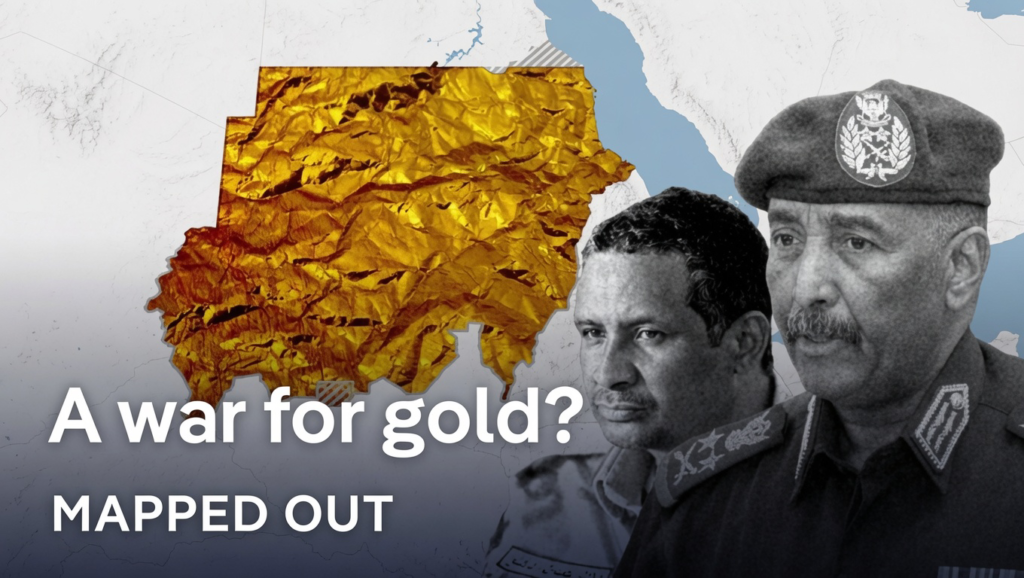
Gold has emerged as the primary currency and strategic lifeline sustaining Sudan’s devastating civil war between the Sudanese Armed Forces (SAF) and the Rapid Support Forces (RSF). Both factions extract and smuggle the country’s vast gold reserves to finance weapons purchases, drones, ammunition, and prolonged attrition warfare. This shadow economy bypasses formal systems and international sanctions, entrenching conflict incentives. Gold accounts for over 70% of Sudan’s national revenue streams amid collapsed formal exports. Sudan remains one of Africa’s largest gold producers, with output rebounding to approximately 70 tonnes in 2025 despite widespread disruption. An estimated 60% of production is smuggled via regional routes through Egypt, Chad, and Libya before reaching Dubai in the UAE the central hub where illicit gold enters legitimate markets. In return, opaque networks supply military materiel back to both sides.
The war, raging since April 2023, has claimed over 150,000 lives (with higher estimates including disease and famine) and displaced more than 12 million people. Both factions have aggressively recruited fighters, including reports of child soldiers and foreign mercenaries, while dismissing or sidelining dissenters. Peace deals and mediation efforts (including Quad initiatives involving Egypt, Saudi Arabia, UAE, and the US, plus AU efforts) have largely been counterproductive serving as stalling tactics rather than catalysts for compromise. SAF preconditions on RSF withdrawals and RSF parallel governance attempts have stalled progress, making negotiated peace a net con for resolution in the near term. The conflict shows no signs of rapid contraction and continues expanding in contested zones like Darfur and Kordofan.
Sources: AfDB, IMF, World Bank, Interpol • Calculations & Modeling: Limitless Beliefs Consulting
The Gold-War Nexus: Financing Mechanisms How Illicit Gold Fuels Conflict
Both SAF and RSF have established parallel gold extraction and smuggling networks. RSF controls key gold producing areas in Darfur and Kordofan, while SAF maintains oversight of formal mining concessions and export channels. The smuggling route is well documented: gold is transported overland to Egypt (via the northern corridor), Chad (via western routes), or Libya (via the northern desert), then air freighted to Dubai, where it is refined and enters global markets. In return, weapons, ammunition, drones, and military equipment flow back through the same networks. According to Interpol and UN Panel of Experts reports, the UAE has become the primary destination for Sudanese gold, with imports from Sudan surging during the conflict period though UAE officials deny any direct involvement in arms supplies to either faction.
“Gold accounts for over 70% of Sudan’s collapsed formal revenue. An estimated 60% of production is smuggled the gold leaves through Egypt, Chad, and Libya, and weapons return through the same corridors. Breaking this cycle is the precondition for peace.”
Alleged External Involvement Whose Hands Are on the Levers?
While the Sudanese conflict is fundamentally a domestic power struggle, multiple external actors have been alleged to be involved behind the scenes though definitive proof remains elusive, and all parties formally deny direct participation. The most persistent and widely reported allegations involve the United Arab Emirates. Multiple UN Panel of Experts reports and investigative journalism outlets (including The Guardian, Reuters, and the BBC) have documented that the UAE has allegedly supplied weapons, drones, and logistical support to the RSF via gold-for-weapons loops operating through Chad, Libya, and the Central African Republic. UAE officials have consistently denied these allegations, stating that they support humanitarian efforts and peace mediation only.
On the SAF side, allegations of external support have centred on Russia (through the Wagner Group’s successor entities), which is alleged to have provided drone technology, intelligence, and mercenary support in exchange for access to Sudanese gold and Red Sea port facilities. Egypt has been alleged to support the SAF, viewing a stable Sudanese state as a security buffer against regional instability, though Cairo has framed its involvement as diplomatic and humanitarian. Turkey has also been cited in some reports as a supplier of drones and military technology, with commercial interests in Sudanese reconstruction and Red Sea access.
China maintains significant economic interests in Sudan’s oil, gold, and infrastructure sectors and has been accused by some analysts of maintaining a pragmatic relationship with both sides to protect its commercial assets—though Beijing has publicly called for ceasefires and political dialogue without endorsing either faction. Saudi Arabia has been involved in mediation efforts (as part of the Quad) and is alleged by some observers to have tilted toward the SAF, viewing the RSF as destabilising and tied to regional rivals. However, Riyadh’s official position remains neutral and focused on de-escalation.
It is important to note that these allegations remain unverified and are based on open source intelligence, witness testimony, and investigative journalism rather than official confirmation. No external actor has admitted to providing military support to either side, and all have publicly expressed support for peace processes. The intelligence value lies in recognising the pattern of allegations and understanding how they shape the conflict’s trajectory and international response.
Sources: UNDP, AfDB, World Bank • Calculations & Modeling: Limitless Beliefs Consulting
Economic Toll and Ease of Doing Business Catastrophic Contraction
Insecurity has triggered catastrophic economic contraction. UNDP estimates a $6.4 billion GDP loss in 2023 alone, with projections of $18.8–34.5 billion cumulative losses by 2043 depending on conflict duration. Poverty has surged to around 71%, inflation remains extreme, and formal banking and logistics have collapsed. Ease of doing business has plummeted due to destroyed infrastructure, supply disruptions, and risk premiums rendering most sectors unviable for legitimate investment. The informal war economy thrives on smuggling but exacerbates inequality and entrenches armed groups. The table below summarises key humanitarian and economic indicators:
| Metric | Estimate (2023–2026) | Source |
|---|---|---|
| Deaths | >150,000 | |
| Displaced | ||
| Gold Production (2025) | ||
| Poverty Rate | ||
| 2023 GDP Loss |
Post-Stabilization Predictions: Investable Regions and Sector Rebound
Should enforceable security stabilization materialize—through verified ceasefires, gold sector formalization, demobilization, and transitional civilian governance—specific regions will become prime investment targets. Eastern Sudan, particularly the Port Sudan–Red Sea corridor, stands out due to preserved port infrastructure and relatively lower recent intensity of fighting. Northern areas could follow quickly, offering logistical gateways. Darfur and Kordofan may require more time for demining and reconciliation but hold significant long-term potential in resources if militia integration succeeds. Private capital, initially cautious, will likely flow from Gulf partners, diaspora networks, and responsible Asian investors seeking stabilized entry points.
Agriculture and logistics are expected to rebound first. Agriculture, historically Sudan’s economic backbone, could recover rapidly with restored access to seeds, fertilizers, irrigation, and markets—directly addressing famine risks and boosting food security and export potential. Logistics infrastructure (ports, roads, cross-border corridors) would normalize next, unlocking commodity flows and AfCFTA integration. Mining, especially formalized gold and other minerals (iron ore, chrome, copper), would attract substantial private capital once legal clarity, traceability, and security improve, shifting from smuggling to transparent FDI-driven operations. Overall, reconstruction-focused PPPs in agribusiness, transport, and ethical mining will draw the earliest waves of investment once risk profiles drop materially. Limitless Beliefs Consulting modelling indicates strong ROI potential for early movers who prioritize local partnerships and governance safeguards.
Sources: LBNN Intelligence, AfDB, UNDP • Calculations & Modeling: Limitless Beliefs Consulting
Weapons Proliferation and Casualties The Cost of External Support
Militarized munitions from external suppliers—including drones, artillery, and armored vehicles from China, Russia, Turkey, and allegedly the UAE have intensified lethality. Despite UN arms embargoes, both sides procure advanced systems funded by gold. This external involvement has driven civilian casualties higher through indiscriminate strikes and atrocities. The UAE faces persistent accusations of arming the RSF via gold-for-weapons loops (denied officially), while other actors tilt toward the SAF, creating proxy dimensions that prolong suffering and complicate accountability.
Sources: UN Panel of Experts, ACLED, investigative journalism • Allegations are unverified • Calculations & Modeling: Limitless Beliefs Consulting
Breaking the Gold-War Cycle Pathways to Stabilization
Breaking the gold-war cycle requires targeted sanctions on smuggling networks, stricter arms embargo enforcement, transparent gold certification, and inclusive mediation that addresses root incentives. Without disrupting this economic engine, Sudan’s insecurity will persist, undermining continental stability. African institutions like the AfDB and Afreximbank should lead post-conflict financing frameworks emphasizing sustainable resource management. For investors, the key insight is that Sudan’s gold and agricultural potential are vast – but cannot be accessed until the war economy is dismantled. The first movers will be those who invest in governance infrastructure, traceability systems, and community reconciliation alongside physical assets.
Bottom Line: Sudan’s gold‑fueled war economy has transformed the country from a frontier investment destination into a humanitarian catastrophe. Gold accounts for 70% of revenue, with 60% smuggled, financing both SAF and RSF. Over 150,000 dead, 12 million displaced, and $6.4 billion in GDP loss in 2023 alone with a potential $34.5 billion cumulative loss by 2043 if the conflict persists. Allegations of external involvement UAE supporting the RSF, Russia and Egypt leaning toward the SAF, and Chinese pragmatic neutrality remain unverified but shape the conflict’s trajectory. Breaking the gold‑weapons cycle requires sanctions on smuggling networks, gold certification, and inclusive mediation. For investors, Eastern Sudan’s Red Sea corridor offers the earliest post‑stabilization opportunity, followed by agriculture and logistics. Darfur and Kordofan hold immense resource potential but require demining and reconciliation. Sudan’s post‑conflict reconstruction could be one of Africa’s largest investment opportunities but only once the war economy is dismantled.