
Desk: Uncategorized Desk
Published: June 9, 2026
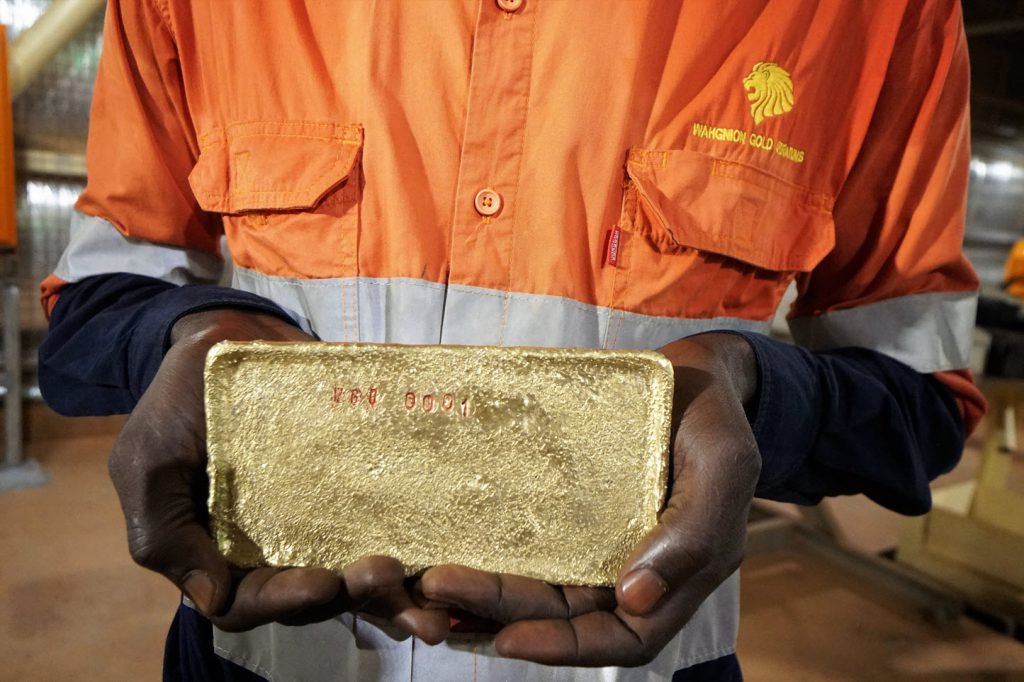
Burkina Faso’s security authorities have intensified efforts against illegal gold trading, recovering more than 10 billion CFA francs ($16.8 million) and dismantling 25 illicit gold trading offices linked to fraud networks operating throughout the country’s mining industry. The operation, led by the National Anti-Gold Fraud Brigade (BNAF), represents one of the most significant anti‑illicit trade campaigns undertaken in the country’s gold sector in recent years. Between 2023 and 2026, authorities launched 93 investigations into gold fraud and seized over 78 kilograms of illegally traded gold. The operation demonstrates a strategic shift by Burkina Faso’s authorities toward economic security enforcement, recognizing that illegal mineral trade directly impacts state revenues, national security funding, currency stability, and investor confidence.
Gold remains Burkina Faso’s largest export commodity and one of the government’s most important sources of foreign exchange earnings. According to international financial institutions, gold contributes between 14% and 18% of GDP directly and indirectly while accounting for roughly 75% of export revenues in certain years. This concentration makes the sector a critical national asset and a prime target for illicit networks.
Sources: AfDB, World Bank, IMF, EITI • Calculations & Modeling: Limitless Beliefs Consulting
Security Impact on the Economy Beyond Stolen Gold
Economic crimes within the mining sector create losses extending far beyond stolen gold. Illegal trading networks frequently facilitate money laundering activities, terrorist financing channels, cross-border smuggling operations, tax evasion schemes, capital flight, and corruption networks. The dismantling of 25 illegal gold offices suggests authorities are targeting not only criminal actors but also financial infrastructures that support illicit economic activity. If sustained, these actions could improve government revenue collection while strengthening the state’s ability to finance security operations and public services. The evidence suggests Burkina Faso’s economic security apparatus is expanding rather than contracting.
“The anti‑gold fraud campaign is not merely a law enforcement initiative it is an economic security strategy aimed at reclaiming state revenues, disrupting illicit financial networks, and improving mining governance.”
Sources: Interpol, UNODC, ECOWAS Security Reports • Calculations & Modeling: Limitless Beliefs Consulting
Employment Impact: Hiring vs Criminal Disruption
Although official hiring numbers have not been released, economic security modeling suggests anti‑fraud initiatives typically generate employment growth across judicial police services, mining inspectors, customs enforcement, financial intelligence units, border security operations, and compliance officers. Based on comparable African mining enforcement programs, Burkina Faso may require an estimated 500–1,500 additional personnel over the next several years to sustain expanded anti‑smuggling operations. Conversely, illegal operators, intermediaries, and unlicensed trading offices are likely experiencing workforce contraction as enforcement pressure increases. The training of nearly 700 Judicial Police Officers suggests authorities are building long‑term institutional capacity rather than relying solely on reactive enforcement.
Sources: EITI, World Gold Council, UNODC • Calculations & Modeling: Limitless Beliefs Consulting
The Cost of Insecurity to Business
Security risks remain one of the largest constraints on economic growth in Burkina Faso. Businesses face higher insurance costs (estimated 15–25% premium for mining‑related operations), transportation costs (up to 30% higher due to convoy requirements), private security expenses (often 5–10% of operational budgets), supply chain delays, and investment risk premiums. The World Bank and African Development Bank have repeatedly noted that insecurity reduces productive investment, limits agricultural activity, and increases the cost of doing business. The chart below indexes the relative impact of different business cost categories:
Sources: AfDB, World Bank, IFC • Calculations & Modeling: Limitless Beliefs Consulting
Gold‑Sector Security Risk Comparison Burkina Faso vs Mali vs Niger
Burkina Faso operates in a challenging security neighbourhood. Compared to Mali (which faces persistent northern insurgency and mining corridor disruptions) and Niger (where gold smuggling routes toward Libya and Benin remain active), Burkina Faso’s current anti‑fraud campaign positions it as a relative reform leader. However, all three countries face elevated risk profiles that deter mainstream institutional capital. The radar chart below compares key security and governance metrics across the three Sahelian gold producers:
Sources: UNODC, Global Initiative, ACLED • Calculations & Modeling: Limitless Beliefs Consulting
Sources: LBNN Intelligence, EITI, IMF • Calculations & Modeling: Limitless Beliefs Consulting
Sources: Fraser Institute, AfDB, World Bank • Calculations & Modeling: Limitless Beliefs Consulting
Investment Outlook: Which Regions Become Investable?
Should security stabilization continue over the next three to five years, investment interest is likely to return first to regions surrounding major mining corridors in western and southwestern Burkina Faso, particularly areas connected to Bobo‑Dioulasso and export logistics routes toward neighbouring coastal economies (Côte d’Ivoire, Ghana, Togo). Mining‑related towns that demonstrate improving governance, lower criminal activity, and stronger state presence may attract exploration capital, logistics providers, equipment suppliers, and financial services firms seeking exposure to the country’s mineral wealth. Historically, post‑stabilisation environments in Africa tend to see mining recover first because existing resource deposits already possess established demand and export markets. Agriculture often follows closely behind as transportation routes become safer and displaced populations return to productive economic activity. Logistics firms, warehousing operators, fuel distributors, telecommunications companies, and financial institutions typically become secondary beneficiaries as commercial activity expands.
Private capital is likely to target mining operations, agricultural processing, logistics corridors, energy infrastructure, telecommunications networks, and financial services. If enforcement momentum continues and broader security conditions stabilise, Burkina Faso could position itself as one of West Africa’s more attractive frontier mining investment destinations over the next decade.
Strategic Security Intelligence Assessment
Burkina Faso’s anti‑gold fraud campaign should not be viewed solely as a law enforcement initiative. It represents an economic security strategy aimed at reclaiming state revenues (estimated at $20–40 million annually from formalisation), disrupting illicit financial networks that may fund armed groups, improving mining governance, and enhancing investor confidence. The training of nearly 700 judicial police officers signals institutional capacity building. If current operations reduce illicit outflows by 50%, Burkina Faso could recover an estimated $50–80 million in annual fiscal revenues a meaningful sum relative to a national budget of approximately $3.5 billion.
Bottom Line: Burkina Faso’s anti‑gold fraud campaign involving $16.8 million recovered, 25 illegal offices dismantled, and 93 investigations represents a strategic pivot toward economic security enforcement. Gold accounts for 75% of exports and 14–18% of GDP, making illicit trade a direct threat to state revenue and stability. The training of 700 judicial police officers signals institutional capacity expansion. Compared to Mali and Niger, Burkina Faso is making measurable progress in formalising its gold sector. If the current enforcement momentum reduces illicit outflows by half, the government could recover $50–80 million in annual fiscal revenues enough to fund security operations or infrastructure. However, broader insecurity remains the binding constraint for large‑scale mining investment. The next three years will determine whether Ouagadougou can convert anti‑fraud gains into sustained investor confidence. Burkina Faso is on a path toward gold sector formalisation but the road remains long and contested.