
Desk: Uncategorized Desk
Published: May 26, 2026
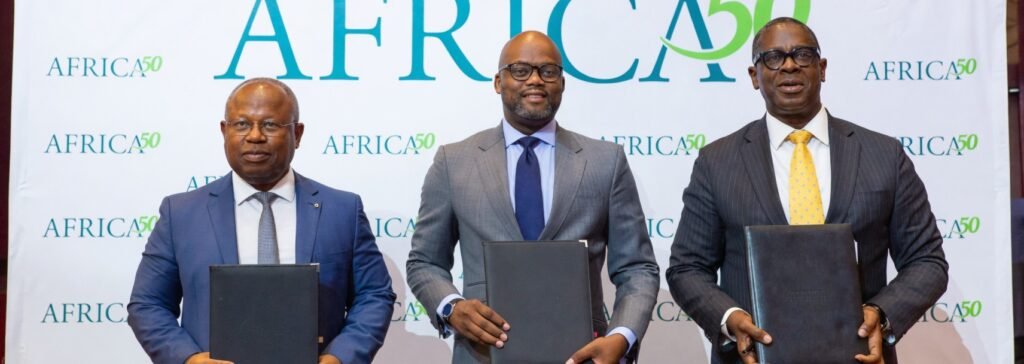
Africa’s infrastructure financing model is entering a major transformation phase after the African Development Bank (AfDB) and Africa50 formally launched a continent wide Public Asset Recycling Initiative during the AfDB Annual Meetings in Brazzaville. The initiative aims to help African governments unlock dormant capital trapped inside mature state owned infrastructure assets including highways, ports, airports, power grids, rail systems, and logistics corridors by leasing, concessioning, or partially privatizing them to institutional investors and private operators. Instead of continuously borrowing to build new infrastructure, African governments are increasingly exploring a “capital rotation” strategy: monetizing stable existing assets in order to finance entirely new infrastructure development projects.
Africa currently faces one of the world’s largest infrastructure deficits. According to development finance estimates, the continent requires between $130 billion and $170 billion annually in infrastructure spending, while financing gaps remain above $100 billion yearly. The consequences of this deficit affect nearly every part of African economic life: high logistics costs, electricity shortages, weak trade connectivity, urban congestion, port bottlenecks, and industrial inefficiencies. Many African governments are simultaneously burdened by rising debt servicing costs, making large-scale borrowing increasingly difficult. Asset recycling is therefore being positioned as a new infrastructure financing alternative rather than relying solely on sovereign debt accumulation.
Sources: AfDB, IMF, World Bank, IFC • Analysis: Limitless Beliefs Consulting
What Is Public Asset Recycling? — The Capital Rotation Model
Public asset recycling allows governments to lease existing infrastructure assets to private operators, sell minority stakes in mature public infrastructure, use concession agreements to unlock long-term capital, redirect proceeds toward new construction projects, and reduce pressure on sovereign debt balances. This strategy has been used successfully in countries such as Australia, Canada, and parts of Asia, but Africa is now attempting to adapt the model to its own infrastructure financing crisis. The key difference is scale: Africa’s infrastructure backlog is far larger relative to GDP, and institutional capital markets are less developed, making execution more challenging but potentially more transformative if successful.
The table below outlines the estimated scale of Africa’s infrastructure financing challenge:
| Category | Estimated Figures | Strategic Implication |
|---|---|---|
| Annual Infrastructure Need | $130B–$170B | |
| Annual Financing Gap | ||
| Population Impacted | ||
| Infrastructure Deficit Cost to GDP | ||
| Projected Urban Population by 2050 |
“The average African business currently spends significantly more on logistics and power generation than firms in Asia or Europe. In some African economies, logistics expenses consume up to 40% of product costs. Asset recycling could break this cycle.”
The Debate: Smart Strategy or Privatization Risk?
Supporters argue that asset recycling creates a sustainable infrastructure financing loop capable of accelerating development without overburdening public debt levels. Critics, however, warn that poorly structured concessions could transfer strategic infrastructure control away from governments without guaranteeing affordability for citizens. The table below summarizes the core trade offs:
| Potential Advantages | Potential Risks |
|---|---|
| Unlocks dormant public capital (estimated $500B+ across African state-owned assets) | |
| Accelerates infrastructure expansion (shorter project timelines) | |
| Reduces sovereign borrowing pressure (lower debt-to-GDP ratios) | |
| Attracts institutional investors (pension funds, SWFs) | |
| Improves operational efficiency (private sector management) |
The Rise of African Institutional Capital Hundreds of Billions in Domestic Pools
One of the most important aspects of the initiative is the attempt to mobilize African institutional capital itself. Africa’s pension funds, sovereign wealth funds, insurance companies, and development finance institutions collectively manage hundreds of billions of dollars in long-term capital, but much of this capital historically flowed into government bonds, foreign fixed income, short-term banking products, and international equities. Asset recycling creates opportunities for domestic capital pools to invest directly into African infrastructure cash flows. This could gradually reshape Africa’s financial architecture by turning infrastructure into a long-duration institutional asset class, reducing dependency on volatile foreign portfolio flows and external borrowing.
Sources: LBNN Intelligence, AfDB, Africa50 • Analysis: Limitless Beliefs Consulting
Job Creation & Economic Multipliers Every $1B Invested Supports Tens of Thousands of Jobs
Infrastructure recycling itself may not create immediate construction jobs, but the reinvestment of capital into new projects could significantly expand employment across engineering, construction, transportation, energy systems, port logistics, and manufacturing. Analysts estimate that every $1 billion invested into African infrastructure can support tens of thousands of direct and indirect jobs depending on sector intensity and local supply chain participation. The multiplier is highest in labor-intensive sectors like road construction (15–25 jobs per $1 million) and lower in capital intensive sectors like power transmission (5–10 jobs per $1 million).
Sources: ILO, AfDB, World Bank • Analysis: Limitless Beliefs Consulting
Which Regions and Sectors Rebound First?
Security stabilization will likely determine which African infrastructure corridors become globally competitive investment destinations over the next decade. If political and security conditions improve, several strategic regions could rapidly attract institutional capital: West African coastal logistics corridors, East African railway networks, Sahel energy transit routes, Southern African industrial zones, and Central African mining logistics systems. Infrastructure investors generally prioritize predictability. Once political volatility, insurgency risk, and transport insecurity decline, private capital often enters aggressively into roads, ports, logistics parks, and energy transmission systems.
Post-stabilization economies historically experience the fastest recovery in sectors directly tied to physical movement and commodity production: logistics and freight transport (immediate gains), agriculture supply chains (reduced spoilage), mining infrastructure (export restart), energy distribution (industrial power), and industrial manufacturing (follows infrastructure). Agriculture often rebounds first because improved roads and electricity immediately reduce spoilage, transport delays, and market inefficiencies. Mining and industrial sectors typically follow once transport reliability improves enough to support large-scale heavy cargo movement.
Private African and international institutional capital is increasingly expected to target deep sea ports, industrial parks, special economic zones, energy transmission grids, rail logistics systems, and digital infrastructure corridors. The long-term strategic objective behind asset recycling is not merely infrastructure maintenance it is creating self-sustaining economic ecosystems capable of supporting industrialization, urbanization, and continental trade integration. If executed properly, Africa’s infrastructure recycling model could become one of the continent’s most important economic policy experiments of the next decade.
Sources: AfDB, World Bank, PIDA • Analysis: Limitless Beliefs Consulting
Bottom Line: The AfDB-Africa50 Public Asset Recycling Initiative represents a structural shift in how Africa finances its infrastructure deficit moving from continuous sovereign borrowing toward a capital rotation model that monetizes mature assets to fund new construction. With an annual infrastructure financing gap of $68–108 billion and logistics costs consuming up to 40% of product prices in some economies, the need for innovative financing is acute. Asset recycling could unlock hundreds of billions in dormant state capital, attract domestic institutional investors (pension funds, insurers, SWFs), and reduce debt pressure. But the model carries risks: privatization backlash, tariff increases, and governance weaknesses could undermine public support. Success depends on transparent concessions, fair pricing, and robust regulation. If executed well, asset recycling could accelerate Africa’s infrastructure rollout by a decade. If botched, it could fuel political resistance that stalls the entire pipeline. The Brazzaville launch is a statement of intent. Implementation will determine legacy.