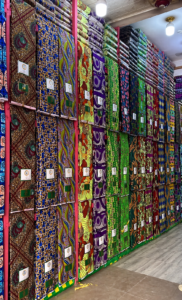
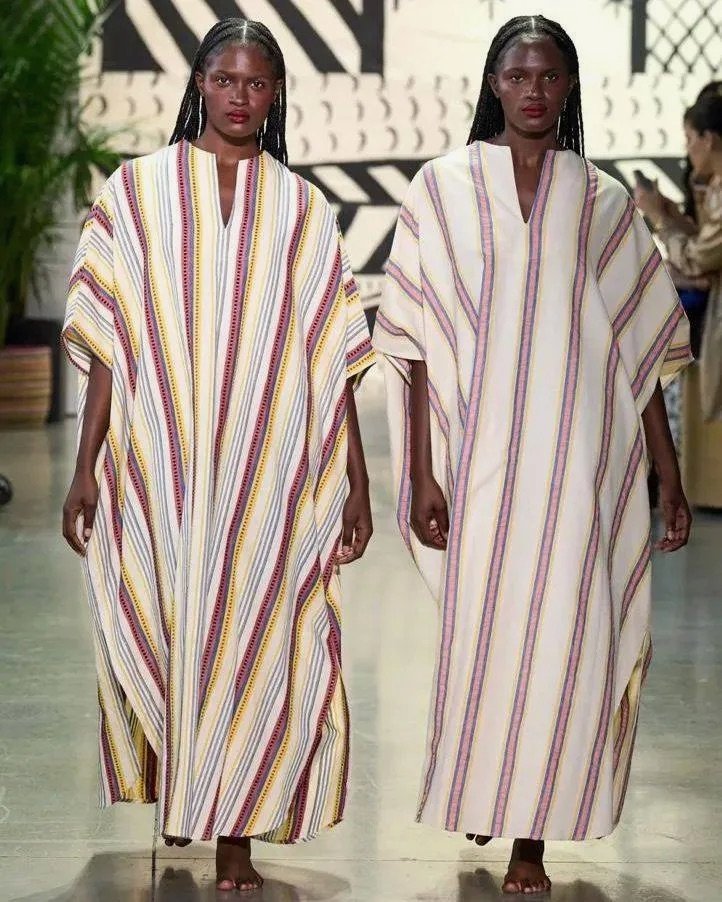
Burkina Faso produces 2.52 million bales of cotton annually yet exports nearly all of it as raw fibre, capturing the lowest-value segment of a global textile chain worth over $1.6 trillion. The country's Faso Dan Fani revival strategy, now backed by a newly inaugurated national processing centre and a government localization decree, is the most concrete attempt yet to close the gap between what Burkina Faso grows and what it earns.
Burkina Faso's textile and fashion sector is undergoing a structural shift under President Ibrahim Traoré's localization agenda, which is repositioning the country's cotton industry from a raw material export base into a domestic value-addition platform. At the centre of this strategy is Faso Dan Fani the traditional Burkinabè handwoven cotton fabric whose name translates as "woven cloth of the homeland" elevated from a cultural symbol into an explicit instrument of economic sovereignty.
The fabric's political lineage is inseparable from its economic significance. Revolutionary leader Thomas Sankara made Faso Dan Fani a patriotic emblem in 1986, declaring: "Wearing Faso Dan Fani is an economic, cultural and political act of defiance against imperialism." President Traoré's current localization drive operates within that same ideological framework deploying the fabric not only as a cultural asset but as the anchor product of an industrial policy designed to stop cotton value from leaving the country.
Sources: AfDB, Afreximbank, IMF, ITC • Calculations & Modelling: Limitless Beliefs Consulting
The Localization Decree — Policy as Demand Creation
The government's localization strategy has moved beyond aspiration into binding policy. A government decree now mandates the use of Faso Dan Fani across specific socio-professional categories including higher education teachers, administrative, judicial, and political authorities, and chiefs of administrative districts. This policy instrument does something economically significant that cultural promotion alone cannot: it creates a guaranteed, non-cyclical demand pool for domestic textile production, establishing a baseline market that reduces investment risk for producers and weavers scaling operations.
The most tangible institutional step was the inauguration of the National Center for the Support of Cotton Artisanal Processing (CNATAC) in Bobo-Dioulasso on November 9, 2025. The facility funded through a joint Burkina Faso–Italy partnership valued at over CFA 1.5 billion ($2.6 million) includes weaving, dyeing, and sewing workshops alongside incubation spaces designed to support artisans, improve competitiveness, and generate local employment in the textile sector. CNATAC is explicitly designed to be the infrastructure node that converts raw cotton into finished Faso Dan Fani at a scale that the artisanal household production model cannot reach alone.
At the international end of the value chain, Faso Dan Fani is already present in global luxury markets. GIE CABES a specialised artisan production centre in Ouagadougou operating with support from the ITC Ethical Fashion Initiative produces Faso Dan Fani for luxury brands globally. Its products have appeared in collections for Vivienne Westwood, and the centre has developed collaborations with Printemps and Celio, with an e-commerce initiative in development with Lacoste. This international demand signal validates the premium positioning of the fabric and provides a pathway for scaling artisan production into globally competitive export revenue.
“Wearing Faso Dan Fani is an economic, cultural and political act of defiance against imperialism.” — Thomas Sankara, 1986 · A declaration that is now industrial policy.
Sources: AfDB, Afreximbank, USDA Cotton and Products Annual 2024 • Calculations & Modelling: Limitless Beliefs Consulting
Cotton Output Is Growing But Processing Capacity Is the Bottleneck
The USDA Cotton and Products Annual forecast for Marketing Year 2024/25 projects Burkina Faso's cotton production at 2.52 million bales a 17% increase from the prior year driven by expanded harvested area (up 17% to 1.38 million hectares), improved fertilizer access, a favourable rainy season, and reduced pest pressure. Exports for MY 2023/24 were estimated at 2.17 million bales, up 43% from the previous year, reflecting strong global demand for Burkinabè cotton.
This production growth creates both an opportunity and a structural tension. The country is growing more cotton at a time when its localization strategy demands that more of it be processed domestically yet industrial processing capacity has not expanded at a commensurate pace. The CNATAC facility in Bobo-Dioulasso addresses the artisanal processing tier. But scaling from artisanal production to industrial output capable of capturing a meaningful share of the country's 2.52 million bale production requires spinning mills, weaving capacity, and finishing infrastructure that represent a different order of capital investment.
Regional context is instructive here. Mali Burkina Faso's neighbour and fellow Sahel cotton producer signed an agreement with China for the installation of two spinning industries in Koutiala and Bamako totalling $354 million. That level of industrial investment is the scale at which cotton-producing countries can structurally shift their position within the value chain. Burkina Faso's current $2.6 million CNATAC investment is a meaningful first step — but the distance to industrial-scale processing capability remains significant.
| Pillar | Initiative | Status / Scale |
|---|---|---|
| Cultural Policy | Government decree mandating Faso Dan Fani use across public, judicial, and administrative sectors | Active — creates guaranteed domestic demand baseline |
| Processing Infrastructure | CNATAC National Center for Cotton Artisanal Processing, Bobo-Dioulasso | Inaugurated November 9, 2025 · $2.6M · Burkina Faso + Italy co-funded |
| Global Market Access | GIE CABES / ITC Ethical Fashion Initiative — luxury brand supply | Active · Vivienne Westwood, Printemps, Celio, Lacoste e-commerce (development) |
| Raw Material Base | Cotton production MY 2024/25 forecast at 2.52M bales (+17% YoY) | Growing 1.38M hectares harvested area · export-dominated |
| Industrial Gap | Spinning and weaving mill capacity for industrial expansion processing | Not yet at scale Mali reference: $354M Chinese-funded spinning investment |
| AfCFTA Integration | Regional value chain role: West Africa cotton → North Africa / East Africa processing | Framework in place · execution depends on logistics and border facilitation |
Sources: USDA, Ecofin Agency, ITC Ethical Fashion Initiative, AfDB • Compiled by: Limitless Beliefs Consulting
Sources: AfDB, Afreximbank, World Bank • Calculations & Modelling: Limitless Beliefs Consulting
Security, Infrastructure, and the Constraint Stack
The single most significant structural constraint on Burkina Faso's textile ambitions is not policy or market access it is security. The USDA's MY 2023/24 production assessment explicitly noted that insecurity in cotton-growing areas prevented farmers from accessing their lands and reduced input availability in certain zones. The subsequent recovery in MY 2024/25 was conditional on improved security conditions allowing farmer access to fields. An industrial textile strategy built on a cotton production base that is itself contingent on security conditions introduces a fundamental fragility that no amount of processing infrastructure investment can resolve independently.
Infrastructure constraints compound this. Textile manufacturing is energy-intensive, and Burkina Faso faces chronic power supply challenges that increase production costs and reduce operational reliability for any manufacturing facility beyond artisanal scale. The IMF has highlighted macroeconomic stability and infrastructure reliability as key determinants of long-term manufacturing investment inflows conditions that the Sahelian security environment and fiscal pressures of the current transitional government make difficult to guarantee to international investors.
Afreximbank has identified textile manufacturing as a priority sector for African industrial development, emphasising the need for investment in processing facilities and integrated supply chains. But its financing instruments are most effectively deployed in environments with regulatory clarity and a stable operating context conditions that Burkina Faso must demonstrate alongside its policy commitments.
Burkina Faso's Faso Dan Fani strategy is economically coherent and culturally resonant a rare combination in African industrial policy. The CNATAC infrastructure exists. The government mandate creates demand. The luxury market access through GIE CABES validates the premium export thesis. The honest assessment is that the artisanal tier is being built effectively while the industrial tier remains structurally underfunded relative to the scale of the raw material base. Closing that gap from $2.6 million processing centres to $354 million spinning mills is the distance between a revival and a transformation.