
LIVE MARKETS
USD/NGN1,377-0.22%
USD/KES130.40+0.18%
USD/ZAR16.77+0.31%
USD/GHS11.19-0.44%
USD/EGP48.00+0.05%
|
GOLD$4,628/oz+1.15%
BRENT$69.41/bbl-0.54%
COBALT$26,800/t-1.35%
|
BTC$94,280+2.34%
ETH$3,218+1.87%
USD/NGN1,377-0.22%
GOLD$4,628/oz+1.15%
BTC$94,280+2.34%
ROAD-1
Breaking AfCFTA Secretariat: 47 of 54 member states now operational under continental free trade framework — intra-Africa trade volumes up 12% year-on-year
Home Fashion Intelligence Africa’s Fashion Supply Chain Enters Global Trade Network…
Fashion Intelligence

Africa’s Fashion Supply Chain Enters Global Trade Network as Messe Frankfurt Expands into Nairobi

Author: Zuri Barasa Desk: Uncategorized Desk Published: June 1, 2026
By Zuri Barasa · June 1, 2026 · 10 min read
Africa’s Fashion Supply Chain Enters Global Trade Network as Messe Frankfurt Expands into Nairobi
Author: Zuri Barasa
Desk: Uncategorized Desk
Published: June 1, 2026

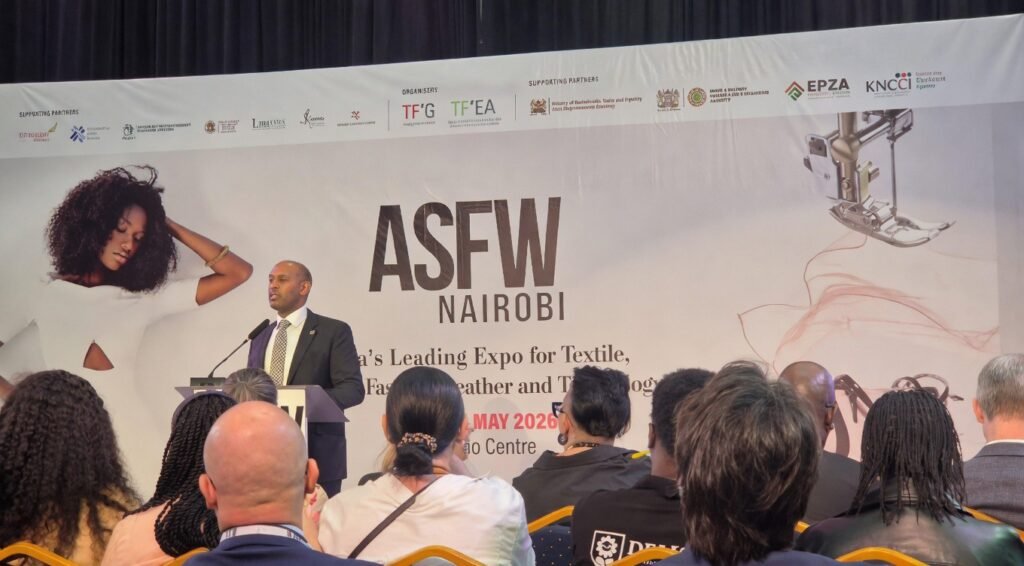
Africa’s textile and apparel industry is entering a new phase of industrial integration after global exhibition giant Messe Frankfurt officially licensed three of its flagship textile trade brands Texworld, Apparel Sourcing, and Texprocess to Nairobi beginning in 2027. The announcement came during the Africa Sourcing and Fashion Week (ASFW) in Nairobi held between April 30 and May 2, 2026, signaling one of the strongest institutional endorsements yet of East Africa’s growing role in global apparel manufacturing and supply chain diversification. The move effectively integrates East Africa into Messe Frankfurt’s global Texpertise Network, creating a direct bridge between African textile manufacturers, leather processors, apparel exporters, logistics operators, and international sourcing buyers seeking alternatives to traditional Asian production hubs.

Africa’s fashion industry is increasingly evolving beyond aesthetics and luxury branding into a serious industrial supply chain ecosystem tied to manufacturing employment, export competitiveness, women‑led entrepreneurship, cotton processing, leather value chains, and cross‑border logistics. According to multiple development finance estimates, Africa’s textile and apparel market could surpass $30 billion in annual value over the next decade if industrial bottlenecks, energy deficits, and logistics inefficiencies are reduced. East Africa has emerged as one of the continent’s strongest manufacturing corridors due to competitive labor costs, improving logistics systems, expanding industrial parks, preferential export agreements (AGOA, UK and EU trade schemes), and growing cotton production capacity.

$30B+
Projected African Apparel Market Value (Next Decade)
15M+
Direct & Indirect Fashion & Textile Jobs
60–75%
Women Workforce Participation in Apparel Manufacturing
$15B+
Annual African Textile Imports (Substitution Opportunity)

Market Intelligence
African Textile & Apparel Market Current vs 2035 Potential ($ Billions)

Sources: AfDB, IMF, World Bank, IFC  •  Analysis: Limitless Beliefs Consulting

Why This Matters for Africa’s Fashion Economy Industrialization Beyond Raw Commodities

The licensing agreement positions Nairobi as a future regional fashion sourcing hub tied directly into global apparel manufacturing networks, AfCFTA trade corridors, textile industrialization, leather processing ecosystems, regional export manufacturing, and sustainable sourcing initiatives. For African economies attempting to industrialize beyond raw commodity exports, fashion manufacturing represents one of the continent’s most scalable labor‑intensive industries. The sector’s labor‑intensive nature means it can absorb millions of semi‑skilled and entry‑level workers, particularly young women, offering a pathway out of informal employment.

The table below outlines the estimated economic impact of Africa’s fashion supply chain:

CategoryEstimated FiguresStrategic Implication
Projected African Apparel Market$30B+ potential
Estimated Fashion & Textile Jobs
Women Workforce Participation

“Global fashion supply chains are undergoing structural realignment due to rising Asian labor costs, supply chain disruptions, geopolitical tensions, and sustainability pressures. Africa is increasingly being viewed as a long‑term manufacturing diversification opportunity.”

The AfCFTA Factor Unlocking Regional Textile Value Chains

The African Continental Free Trade Area (AfCFTA) is one of the largest hidden catalysts behind the growing fashion supply chain narrative. Historically, African textile manufacturers faced fragmented tariff systems and poor regional trade integration. AfCFTA could gradually reduce those barriers by enabling cross‑border textile sourcing, regional garment manufacturing, continental logistics integration, lower tariff costs, and export competitiveness. If fully implemented, a garment made from cotton grown in Chad, spun and woven in Ethiopia, and cut‑and‑sewn in Kenya could enter South Africa duty‑free creating a truly integrated continental value chain.

Impact AreaProjected Outcome
Regional Textile TradeStrong expansion (20%+ CAGR)
Manufacturing EmploymentAccelerating growth (10–15% annual job creation)
Export DiversificationImproving with new market access
Women‑Led SME Participation

Why Global Buyers Are Looking Beyond Asia The Sustainability Premium

Global fashion supply chains are undergoing structural realignment due to rising Asian labor costs (China’s wages have doubled in a decade), supply chain disruptions (post‑COVID resilience strategies), geopolitical tensions (US‑China trade friction), sustainability pressures (European due diligence laws), and nearshoring and diversification strategies. Africa’s potential lies in its competitive labor rates (30–50% lower than coastal China), abundant cotton production (West and East Africa), and growing number of internationally certified green factories (LEED, ISO, BSCI). Countries such as Kenya, Ethiopia, Rwanda, Ghana, and Côte d’Ivoire are positioning themselves as future apparel and textile manufacturing hubs tied to AfCFTA trade infrastructure.

Forward Intelligence
Africa’s Emerging Fashion Manufacturing Corridors Post‑Stabilization Potential
Nairobi Industrial Belt
Kenya
Athi River EPZ, Export processing zones. Messe Frankfurt’s licensing will attract sourcing buyers directly to Kenyan manufacturers.
Addis Ababa Corridor
Ethiopia
Hawassa Industrial Park (world’s largest textile park). Competitive labor costs; recent political stabilization key to unlocking investment.
Mombasa Logistics Hub
Kenya
Port expansion and special economic zones. Critical for import/export of raw materials and finished garments.
Kigali Innovation Zone
Rwanda
High-tech textiles and sustainable fashion; strong policy environment and ease of doing business.

Sources: LBNN Intelligence, AfDB, World Bank  •  Analysis: Limitless Beliefs Consulting

Supply Chain Expansion Could Reshape Urban Economies Beyond Factory Walls

Fashion supply chains affect much more than designers and luxury consumers. The broader ecosystem includes cotton farmers, leather processors, factory workers, transport companies, packaging suppliers, retail distributors, and e‑commerce logistics providers. A single apparel manufacturing corridor can stimulate industrial real estate demand, electricity infrastructure investment, port utilization growth, SME manufacturing ecosystems, and urban workforce expansion. This is why several African governments increasingly view textile manufacturing as both an industrial policy strategy and a youth employment solution. For every direct job in garment assembly, an estimated 2–3 indirect jobs are created in supply chains and local services.

Risk Intelligence
Key Bottlenecks What Holds Back African Fashion Supply Chains

Sources: IMF, AfDB, IFC, World Bank  •  Analysis: Limitless Beliefs Consulting

Where Private Capital Will Move Once Risk Drops Sectoral Priorities

Despite growing optimism, Africa’s fashion industrialization push still faces major structural risks: high electricity costs (often 2–3x Asia), weak logistics systems, port congestion, limited financing access (high interest rates, short tenors), currency instability, and informal labor challenges. Without infrastructure modernization and policy consistency, Africa risks remaining primarily a raw material supplier instead of becoming a vertically integrated apparel manufacturing ecosystem. However, once political risk and supply chain instability decline, the first sectors likely to accelerate include textile manufacturing (spinning, weaving, finishing), agricultural cotton processing (ginning, lint cleaning), leather production (tanning, finishing), logistics and warehousing (cold chain for natural fibers), and industrial real estate (EPZs, industrial parks).

Private African and international capital is increasingly expected to move toward industrial garment parks, export processing zones, textile manufacturing facilities, leather processing hubs, fashion logistics infrastructure, and regional e‑commerce distribution systems. The larger strategic battle is not simply about fashion branding. It is about who controls Africa’s future manufacturing supply chains. Countries capable of integrating logistics, labor, energy infrastructure, and trade policy could become the next generation of global apparel sourcing destinations. East Africa’s combination of Messe Frankfurt’s endorsement, competitive labor, and improving infrastructure gives it a head start but execution and policy consistency will determine the winner.

Employment Intelligence
Textile & Apparel Employment Current vs 2035 Potential (Millions)

Sources: ILO, AfDB, World Bank  •  Analysis: Limitless Beliefs Consulting

Bottom Line: Messe Frankfurt’s licensing of Texworld, Apparel Sourcing, and Texprocess to Nairobi is a structural endorsement of East Africa’s potential as a global fashion manufacturing hub. The African textile and apparel market could surpass $30 billion by 2035, supporting over 15 million jobs and creating a powerful industrialisation pathway. AfCFTA integration offers the possibility of continental value chains, while sustainability pressures and rising Asian costs drive buyer diversification. But binding constraints remain: high electricity costs, logistics inefficiencies, and financing gaps. The winners of Africa’s fashion supply chain race will not be those with the lowest wages alone – they will be countries capable of delivering reliable power, efficient ports, and predictable trade policy. Nairobi’s new trade fair license is a signal. The infrastructure and policy response will determine whether it becomes a reality.