
Desk: Uncategorized Desk
Published: June 1, 2026
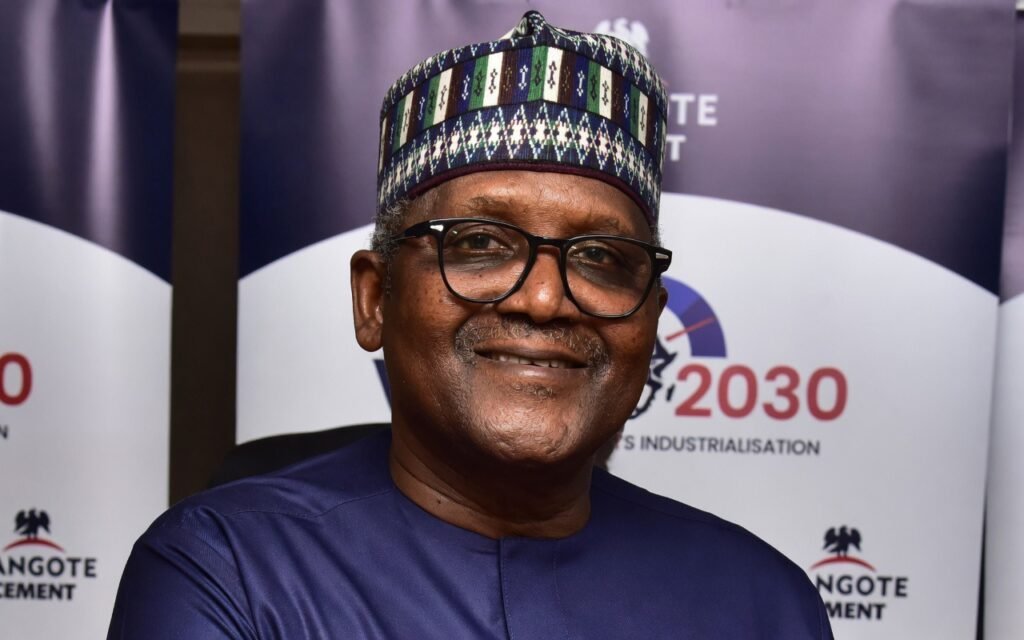
Nigeria’s energy ambitions took another major leap forward after the Dangote Petroleum Refinery emerged as the world’s largest exporter of jet fuel in April 2026, according to S&P Global Commodities at Sea data. The milestone comes amid rising geopolitical tensions in the Middle East, growing uncertainty surrounding the Strait of Hormuz, and persistent disruptions across global refined fuel supply chains. The refinery’s rise signals more than a corporate victory for billionaire industrialist Aliko Dangote. It represents a strategic repositioning of Africa within global energy logistics at a time when Europe, Asia, and parts of the Americas are searching for alternative refined fuel suppliers outside traditional Gulf markets. With capacity of 650,000 barrels per day, the Dangote Refinery has transformed Nigeria from a perennial fuel importer into a net exporter of refined products a shift with profound implications for the country’s trade balance, foreign exchange reserves, and industrial sovereignty.
The growing insecurity surrounding the Strait of Hormuz a maritime corridor responsible for nearly one-fifth of global petroleum transit has caused traders and airlines to diversify fuel sourcing strategies. As freight insurance premiums rise and shipping risks intensify in the Gulf region, refiners outside the Middle East have become increasingly important. Dangote Refinery appears to be one of the biggest beneficiaries of this shift. Analysts say the refinery’s ability to process Nigerian crude domestically while exporting refined aviation fuel to Europe, Africa, and parts of Asia has significantly improved Nigeria’s leverage in global energy markets. Jet fuel exports from the refinery grew by an estimated 145% in Q2 2026 alone, cementing its position as a critical supplier to airlines operating across three continents.
Sources: AfDB, IMF, World Bank, OPEC • Calculations & Modeling: Limitless Beliefs Consulting
Global Conflict Creates Opportunity for African Energy Players
Africa is no longer simply exporting raw crude while importing refined dependency. The Dangote refinery changes the geopolitical equation entirely. Nigeria’s economy remains heavily dependent on hydrocarbons, with oil and gas accounting for roughly 90% of foreign exchange earnings and over half of government revenues. However, the country historically lost billions annually importing refined petroleum products due to weak domestic refining capacity. The launch and expansion of Dangote Refinery is now changing that equation. Economists estimate the refinery could contribute between 1.5% and 2.5% directly to Nigeria’s GDP over the next several years through export earnings, industrial supply chains, logistics expansion, and reduced foreign exchange pressure. The table below outlines the refinery’s key economic impact channels:
| Impact Channel | Estimated Annual Effect |
|---|---|
| Reduced Fuel Import Bill | $10–15 billion saved |
| Increased Export Earnings (jet fuel, diesel, naphtha) | |
| Direct & Indirect Employment | |
| Logistics & Maritime Services Growth | |
| Petrochemical & Fertilizer Spillover |
“Africa is no longer simply exporting raw crude while importing refined dependency. The Dangote refinery changes the geopolitical equation entirely. The countries that dominate Africa’s next industrial cycle will not simply produce energy they will refine it, transport it, finance it, and export value added products globally.”
Employment, Industrialization, and Entrepreneurial Impact 30,000+ Jobs and Rising
The Dangote industrial ecosystem has become one of Africa’s largest private-sector employment generators. Construction, logistics, shipping, petrochemicals, storage, engineering, and downstream retail sectors have all experienced hiring growth linked to refinery operations. Analysts estimate that over 30,000 jobs have been directly or indirectly supported by the refinery ecosystem, while hundreds of SMEs linked to trucking, industrial maintenance, catering, logistics, and maritime services have expanded operations. The pie chart below shows the employment distribution across key refinery linked sectors:
Sources: AfDB, IEA, NNPC, World Bank • Calculations & Modeling: Limitless Beliefs Consulting
The Cost of Energy Insecurity on African Economies
Despite Nigeria’s refinery gains, energy insecurity continues to cost African economies billions annually. Fuel import dependency, weak storage infrastructure, electricity shortages, and currency volatility remain major barriers to industrial expansion across the continent. The African Development Bank estimates Africa’s infrastructure financing gap remains above $100 billion annually, while unreliable power systems reduce productivity across manufacturing sectors by as much as 30% in some countries. The Dangote model suggests African economies capable of integrating refining, logistics, petrochemicals, and export infrastructure may significantly reduce those vulnerabilities over the next decade. However, the refinery’s success also highlights the scale of investment still needed: for every dollar saved on fuel imports, Nigeria requires multiple dollars of investment in power transmission, port infrastructure, and industrial parks to fully capitalize on cheaper domestic energy.
Policy Environment: Building or Restricting African Industrial Tycoons?
Nigeria’s regulatory environment has historically been viewed as inconsistent, particularly regarding fuel subsidies, foreign exchange access, import licensing, and port congestion. However, recent reforms aimed at deregulating downstream petroleum markets and improving private-sector participation have opened space for industrial expansion. The removal of fuel subsidies (2023–2024) and the liberalization of the downstream sector created the pricing environment that makes refinery economics viable. Still, investors warn that bureaucratic bottlenecks, tax unpredictability, and infrastructure deficits continue to slow broader industrial growth. The success of Dangote Refinery may pressure other African governments to accelerate energy-sector liberalization and infrastructure modernization – but policy consistency remains the binding constraint.
Sources: LBNN Intelligence, OPEC, IEA • Calculations & Modeling: Limitless Beliefs Consulting
Post-Stabilization Investment Forecast Which Regions and Sectors Rebound First
If geopolitical tensions in the Middle East stabilize while African export infrastructure continues improving, several African regions could become significantly more investable by 2030. Nigeria’s Lekki corridor (home to the Dangote Refinery and Lekki Free Zone), Senegal’s offshore gas regions, Angola’s LNG infrastructure, and Mozambique’s northern energy zones are increasingly attracting institutional capital. Energy linked logistics corridors are expected to rebound first, followed by petrochemicals, industrial manufacturing, fertilizer production, shipping services, and aviation infrastructure. As risk premiums decline, private African capital is expected to rotate toward hard industrial assets, strategic infrastructure, ports, storage terminals, and regional trade corridors rather than remaining concentrated in speculative currency or offshore defensive positioning.
The rise of Dangote Refinery reflects a larger continental shift. Africa is gradually evolving from a fragmented commodity supplier into a more integrated industrial and refining ecosystem. The long term winners may not necessarily be the countries with the most oil reserves, but rather those capable of transforming raw resource wealth into value added industrial exports tied to logistics, manufacturing, and global trade infrastructure. The chart below tracks African refined fuel export growth projections through 2029:
Sources: IMF, AfDB, OPEC, IEA • Calculations & Modeling: Limitless Beliefs Consulting
Bottom Line: Dangote Refinery’s emergence as the world’s largest jet fuel exporter is a watershed moment for African energy sovereignty. With 650,000 bpd capacity, $10–15 billion in annual import substitution, and 30,000+ jobs supported, the refinery has transformed Nigeria from a refined fuel importer into a global export player. The timing coinciding with Strait of Hormuz instability and global supply chain fragmentation has accelerated demand for African refined products. However, the refinery’s success also exposes the scale of remaining gaps: electricity transmission, port infrastructure, and industrial policy coordination must keep pace. The countries that dominate Africa’s next industrial cycle will not simply produce energy they will refine it, transport it, finance it, and export value added products globally. Dangote has proven the model. The question is whether Nigeria and other African nations will build the ecosystem around it.