
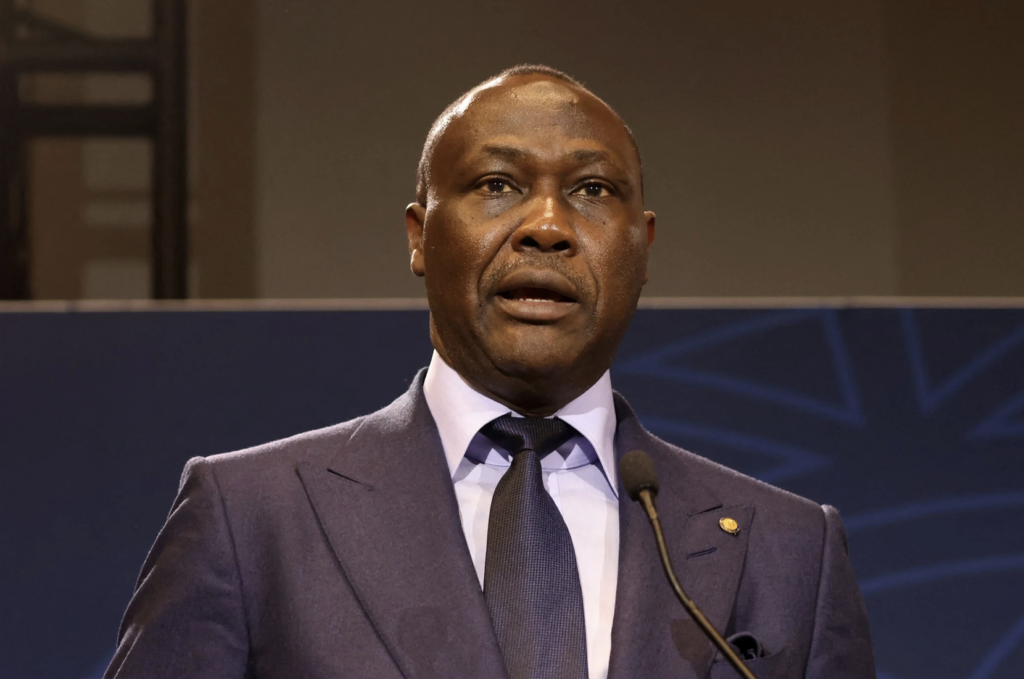
The Bank of Tanzania's equity entry into the Africa Finance Corporation on March 18, 2026 is not a financing transaction it is a positioning decision about who controls preferential access to the capital flows that will determine which African economies build infrastructure on their own terms and which remain dependent on external creditors who set the terms. AFC has deployed over $13 billion across African infrastructure with an S&P A-rating and a 48-state shareholder base. Non-shareholders queue. Shareholders negotiate.
The standard framing of this transaction "Tanzania gains access to infrastructure financing" misses the more important analytical point. Tanzania already had some access to AFC financing as a non-shareholder operating in a country where AFC deploys capital. What the equity position changes is the nature of that access: from petitioner to owner. From a country that applies for project financing to a country that sits at the table where AFC's capital allocation priorities are set, where project pipelines are surfaced, and where the terms on which structured financing is offered are influenced by institutional relationships that equity ownership creates and non-ownership categorically cannot.
In a global capital environment where Tanzania faces a $2.5–3 billion annual infrastructure financing gap, a 14–20% domestic lending rate, and private sector credit penetration below 20% of GDP, the question of who controls the architecture of capital flows into the country is not an academic one. It is the determinant of whether Tanzania's infrastructure programme executes at the pace its GDP growth trajectory requires.
Sources: AFC, AfDB, Afreximbank • Calculations & Modelling: Limitless Beliefs Consulting
AFC as Infrastructure Gatekeeper What Equity Ownership Actually Buys
The Africa Finance Corporation is not a development bank in the traditional sense it is a private sector-oriented infrastructure investor with a balance sheet, a credit rating, and a mandate to deploy long-tenor project finance into African energy, transport, and industrial projects. Its A-rating from S&P Global is the institutional signal that makes AFC's financing competitive with the multilateral alternatives that typically dominate African infrastructure capital markets. An A-rated African institution can borrow at rates that allow it to lend to African sovereigns at costs that no domestic bank or commercial creditor can match for 10–20 year project tenors.
Equity ownership in AFC converts a transactional relationship into an institutional one. The distinction matters at every stage of the project financing lifecycle from pipeline development, where shareholder relationships surface project opportunities before they are publicly tendered, through to structuring, where shareholder status creates the bilateral goodwill that influences how AFC's credit committee weighs project risk on Tanzania-originated deals. A sovereign central bank that owns equity in the institution financing its country's infrastructure is not operating through the same channel as a borrower submitting a project application.
“Tanzania did not buy infrastructure financing. It bought a seat at the table where African infrastructure capital allocation decisions are made and that seat has compounding institutional value that no individual project loan can replicate.”
Analysis: Limitless Beliefs Consulting • Sources: AFC, AfDB, IFC
14–20% Domestic Rates vs AFC Long-Tenor Finance The Cost of Capital Gap Tanzania Is Closing
Tanzania's private sector credit penetration below 20% of GDP is not primarily a demand problem there is genuine private sector demand for credit across manufacturing, logistics, and energy. It is a cost and tenor problem. At 14–20% domestic lending rates, the business case for infrastructure investment becomes marginal at best for private capital, and the debt service burden on public infrastructure projects funded through domestic markets is fiscal compression that diverts government resources from current spending priorities.
AFC's financing architecture solves both dimensions simultaneously: long-tenor project finance at rates determined by AFC's A-rated cost of funds rather than Tanzania's domestic market rates, structured to match infrastructure project cash flow timelines rather than forcing 10-year infrastructure investments into 3-year commercial loan structures. The employment multiplier from that financing becomes real only when the financing terms make the projects viable IFC's estimate of 20,000–40,000 jobs per $1 billion in infrastructure investment is the downstream benefit, but the upstream precondition is financing that enables the projects to proceed in the first place.
Sources: AfDB, Afreximbank • Calculations & Modelling: Limitless Beliefs Consulting
Sources: AfDB, IFC, Bank of Tanzania • Calculations & Modelling: Limitless Beliefs Consulting
Nigeria, Ghana, Egypt The Sovereign Equity Pattern and What It Signals
Tanzania's AFC entry joins a pattern that Nigeria, Ghana, and Egypt have all followed African sovereign entities taking equity positions in AFC and similar development finance institutions not as passive investors but as strategic positioning moves in the competition for preferential capital access. The pattern reveals something important about how African finance ministers and central bank governors are reading the capital flow landscape: the institutions that control long-tenor, investment-grade-rated infrastructure finance are the chokepoints through which African infrastructure development will be funded for the next two decades, and ownership positions at those chokepoints are worth acquiring even at the cost of short-term capital allocation that generates no immediate yield.
This is the shift from debt-passive to equity-active in African development finance from accepting the terms on which external capital is offered to co-owning the institutions that set those terms. The Bank of Tanzania's March 18 transaction is a small step in a larger directional move. What it signals about how Tanzania's monetary authorities conceptualise the relationship between central bank capital deployment and sovereign infrastructure strategy is more significant than the transaction size alone suggests.
Sources: IFC, AfDB Labour Market Data • Calculations & Modelling: Limitless Beliefs Consulting
The Bank of Tanzania's AFC equity investment will be analysed as a financing decision. It should be analysed as a capital flow control decision. AFC is the gatekeeper to $13 billion in deployed African infrastructure capital and the institutional architecture through which the next tranche will flow. Tanzania has moved from the queue to the ownership register. In a continent where the terms on which capital is accessed determine which economies develop on their own timeline and which develop on their creditors', that distinction is not a footnote to the transaction it is the transaction.