
LIVE MARKETS
USD/NGN1,377-0.22%
USD/KES130.40+0.18%
USD/ZAR16.77+0.31%
USD/GHS11.19-0.44%
USD/EGP48.00+0.05%
|
GOLD$4,628/oz+1.15%
BRENT$69.41/bbl-0.54%
COBALT$26,800/t-1.35%
|
BTC$94,280+2.34%
ETH$3,218+1.87%
USD/NGN1,377-0.22%
GOLD$4,628/oz+1.15%
BTC$94,280+2.34%
ROAD-1
Breaking AfCFTA Secretariat: 47 of 54 member states now operational under continental free trade framework — intra-Africa trade volumes up 12% year-on-year
Home Business Air Tanzania’s $157M Growth Surge: Fleet Expansion, State…
Business

Air Tanzania’s $157M Growth Surge: Fleet Expansion, State Investment, and the Economics of Building a National Carrier

Author: Lubanzi Bhule Desk: Uncategorized Desk Published: April 21, 2026 Air Tanzania recorded $157 million in revenue an 87% year-on-year surge while simultaneously posting $35 million in losses, growing its fleet from 1 to 16 aircraft in a decade, targeting 24 aircraft within five years, and planning routes to Europe, the United States, and Canada from a carrier that a decade ago operated a single plane. The revenue growth is real. The losses are the price of building a national carrier fast enough to matter. Four additional aircraft arriving in 2026 are the next instalment in Tanzania’s state-led aviation development model a deliberate government strategy that prioritises long-term economic returns from tourism connectivity and trade facilitation over short-term airline profitability. The Tanzanian government is simultaneously allocating approximately $460 million toward airport upgrades, targeting passenger traffic exceeding 6 million annually and recognising that a national carrier without competitive airport infrastructure cannot fulfil the connectivity mandate that justifies the investment. According to the AfDB, aviation contributes between 2–4% of GDP in emerging tourism-driven economies and in Tanzania, that contribution is amplified by the country’s structural dependence on international tourism, with safari parks, Kilimanjaro, and the Zanzibar coastal economy generating foreign exchange inflows that are directly gated by connectivity access. $157M Revenue 87% Year-on-Year Growth $35M Operating Loss Fleet Expansion Phase 16→24 Fleet Size Current to 5-Year Target $460M Government Airport Infrastructure Investment Financial Intelligence Air Tanzania Revenue vs Operating Loss (2024–2026, USD Millions) Sources: AfDB, IMF, Tanzania Aviation Data  •  Calculations & Modelling: Limitless Beliefs Consulting Strategic Intelligence 87% Revenue Growth and $35M in Losses The Expansion Paradox Air Tanzania’s simultaneous 87% revenue growth and $35 million loss is not a contradiction it is the predictable financial profile of a state-owned carrier in aggressive expansion mode. Fleet acquisitions are capital-intensive and front-loaded: the debt service, maintenance infrastructure, and crew training costs of adding new aircraft are incurred before those aircraft generate the route revenue that justifies their acquisition. When an airline grows from 1 aircraft to 16 in a decade, it is perpetually in the early stage of amortising the last aircraft added while adding the next one. The more analytically significant number in this result is the revenue trajectory, not the loss. An 87% year-on-year revenue increase from $84 million to $157 million demonstrates that demand for Air Tanzania’s capacity is real, that routes are filling, and that the market validation exists for the expansion programme. The $35 million loss is a capital cost, not a demand signal. The question for the airline’s sustainability is whether the revenue growth compounds fast enough to absorb the fixed cost base being built by fleet expansion and whether the government is willing to continue subsidising the gap in the interim. “Air Tanzania’s $35M loss is not evidence that the model is failing. It is evidence that Tanzania is paying the entry fee for a national carrier that can compete in the global aviation market and that fee is non-negotiable.” Capacity Intelligence Air Tanzania Passenger & Cargo Capacity Targets Sources: Afreximbank, AfDB Trade Data  •  Calculations & Modelling: Limitless Beliefs Consulting Tourism Intelligence Safari, Kilimanjaro, Zanzibar Connectivity as Economic Infrastructure Air Tanzania’s expansion targets 1.4 million passengers and 7,000 tonnes of cargo, with new routes to Europe, the US, and Canada are as much tourism policy as aviation strategy. Every direct long-haul route from Dar es Salaam or Kilimanjaro to a European or North American gateway is a booking conversion path for Tanzania’s tourism sector that currently routes through Nairobi, Addis Ababa, or Doha because a direct Air Tanzania option does not exist. Each additional routing hub in that chain is a booking that doesn’t happen, a tourist who chooses Kenya or Ethiopia’s easier connection, a night of hotel revenue that doesn’t materialise in Tanzania. The $460 million airport infrastructure investment running in parallel is the physical prerequisite for this connectivity strategy. A long-haul carrier cannot attract international passengers to airports without competitive terminal infrastructure, adequate airside capacity, and reliable ground handling. Tanzania is building the infrastructure and the carrier simultaneously the integrated approach that makes the combined investment more likely to succeed than either component alone would be. Economic Intelligence Aviation GDP Contribution Index Tanzania (2019–2025) Sources: AfDB, World Bank, IMF  •  Calculations & Modelling: Limitless Beliefs Consulting Cost Intelligence Air Tanzania Operating Cost Structure Sources: AfDB, IATA, IMF  •  Calculations & Modelling: Limitless Beliefs Consulting Risk Intelligence Fuel Exposure, Hormuz Tension, and the African Carrier Cost Penalty Jet fuel at 25–35% of total operating costs is the variable that Air Tanzania cannot control and cannot hedge cheaply at its current scale. Global oil price movements driven by Strait of Hormuz geopolitical tension, OPEC+ production decisions, and the broader energy transition uncertainty create margin volatility that is structurally more damaging for a growing carrier than for a mature one because a growing carrier has higher fixed costs per available seat kilometre while it builds toward the load factors that make those costs sustainable. Afreximbank estimates that African airlines face operating costs 15–20% higher than global averages a structural penalty from infrastructure limitations, currency volatility, and imported aviation inputs that Air Tanzania cannot eliminate through operational efficiency alone. Managing this cost penalty requires scale, which requires fleet expansion, which requires capital, which requires accepting losses in the interim. It is a cycle that every successful African airline has navigated — and the ones that didn’t survive were the ones governments stopped funding before the cycle completed. Workforce Intelligence Air Tanzania Workforce Expansion Model Growth Phase Sources: IFC, AfDB Aviation Data  •  Calculations & Modelling: Limitless Beliefs Consulting Employment dynamics within Air Tanzania reflect a growth-phase model where IFC benchmarks indicate expanding carriers typically increase workforce capacity by 10–20% annually concentrated in operations, maintenance, and customer service. The long-haul international route expansion adds a further hiring dimension: ICAO-certified pilots for long-haul operations, international route management expertise, and the compliance infrastructure required to operate in European and North American airspace all require capabilities that East African
By Lubanzi Bhule · April 21, 2026 · 11 min read
Air Tanzania’s $157M Growth Surge: Fleet Expansion, State Investment, and the Economics of Building a National Carrier

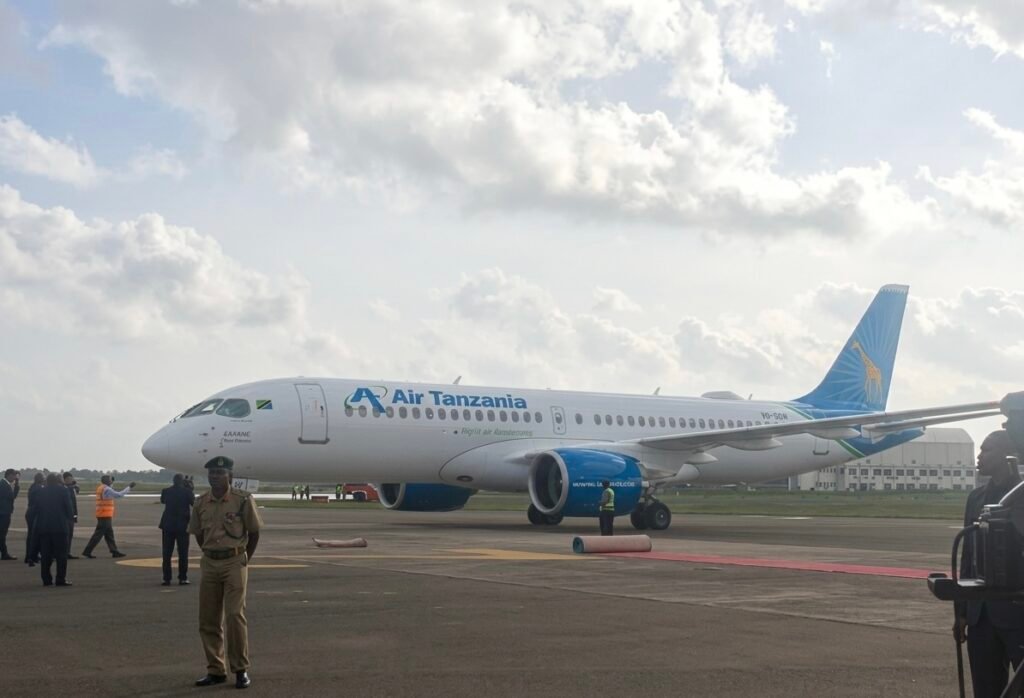
Air Tanzania recorded $157 million in revenue an 87% year-on-year surge while simultaneously posting $35 million in losses, growing its fleet from 1 to 16 aircraft in a decade, targeting 24 aircraft within five years, and planning routes to Europe, the United States, and Canada from a carrier that a decade ago operated a single plane. The revenue growth is real. The losses are the price of building a national carrier fast enough to matter.

Four additional aircraft arriving in 2026 are the next instalment in Tanzania's state-led aviation development model a deliberate government strategy that prioritises long-term economic returns from tourism connectivity and trade facilitation over short-term airline profitability. The Tanzanian government is simultaneously allocating approximately $460 million toward airport upgrades, targeting passenger traffic exceeding 6 million annually and recognising that a national carrier without competitive airport infrastructure cannot fulfil the connectivity mandate that justifies the investment.

According to the AfDB, aviation contributes between 2–4% of GDP in emerging tourism-driven economies and in Tanzania, that contribution is amplified by the country's structural dependence on international tourism, with safari parks, Kilimanjaro, and the Zanzibar coastal economy generating foreign exchange inflows that are directly gated by connectivity access.

$157M
Revenue 87% Year-on-Year Growth
$35M
Operating Loss Fleet Expansion Phase
16→24
Fleet Size Current to 5-Year Target
$460M
Government Airport Infrastructure Investment

Financial Intelligence
Air Tanzania Revenue vs Operating Loss (2024–2026, USD Millions)

Sources: AfDB, IMF, Tanzania Aviation Data  •  Calculations & Modelling: Limitless Beliefs Consulting

87% Revenue Growth and $35M in Losses The Expansion Paradox

Air Tanzania's simultaneous 87% revenue growth and $35 million loss is not a contradiction it is the predictable financial profile of a state-owned carrier in aggressive expansion mode. Fleet acquisitions are capital-intensive and front-loaded: the debt service, maintenance infrastructure, and crew training costs of adding new aircraft are incurred before those aircraft generate the route revenue that justifies their acquisition. When an airline grows from 1 aircraft to 16 in a decade, it is perpetually in the early stage of amortising the last aircraft added while adding the next one.

The more analytically significant number in this result is the revenue trajectory, not the loss. An 87% year-on-year revenue increase from $84 million to $157 million demonstrates that demand for Air Tanzania's capacity is real, that routes are filling, and that the market validation exists for the expansion programme. The $35 million loss is a capital cost, not a demand signal. The question for the airline's sustainability is whether the revenue growth compounds fast enough to absorb the fixed cost base being built by fleet expansion and whether the government is willing to continue subsidising the gap in the interim.

“Air Tanzania's $35M loss is not evidence that the model is failing. It is evidence that Tanzania is paying the entry fee for a national carrier that can compete in the global aviation market and that fee is non-negotiable.”

Capacity Intelligence
Air Tanzania Passenger & Cargo Capacity Targets

Sources: Afreximbank, AfDB Trade Data  •  Calculations & Modelling: Limitless Beliefs Consulting

Safari, Kilimanjaro, Zanzibar Connectivity as Economic Infrastructure

Air Tanzania's expansion targets 1.4 million passengers and 7,000 tonnes of cargo, with new routes to Europe, the US, and Canada are as much tourism policy as aviation strategy. Every direct long-haul route from Dar es Salaam or Kilimanjaro to a European or North American gateway is a booking conversion path for Tanzania's tourism sector that currently routes through Nairobi, Addis Ababa, or Doha because a direct Air Tanzania option does not exist. Each additional routing hub in that chain is a booking that doesn't happen, a tourist who chooses Kenya or Ethiopia's easier connection, a night of hotel revenue that doesn't materialise in Tanzania.

The $460 million airport infrastructure investment running in parallel is the physical prerequisite for this connectivity strategy. A long-haul carrier cannot attract international passengers to airports without competitive terminal infrastructure, adequate airside capacity, and reliable ground handling. Tanzania is building the infrastructure and the carrier simultaneously the integrated approach that makes the combined investment more likely to succeed than either component alone would be.


Economic Intelligence
Aviation GDP Contribution Index Tanzania (2019–2025)

Sources: AfDB, World Bank, IMF  •  Calculations & Modelling: Limitless Beliefs Consulting

Cost Intelligence
Air Tanzania Operating Cost Structure

Sources: AfDB, IATA, IMF  •  Calculations & Modelling: Limitless Beliefs Consulting

Fuel Exposure, Hormuz Tension, and the African Carrier Cost Penalty

Jet fuel at 25–35% of total operating costs is the variable that Air Tanzania cannot control and cannot hedge cheaply at its current scale. Global oil price movements driven by Strait of Hormuz geopolitical tension, OPEC+ production decisions, and the broader energy transition uncertainty create margin volatility that is structurally more damaging for a growing carrier than for a mature one because a growing carrier has higher fixed costs per available seat kilometre while it builds toward the load factors that make those costs sustainable.

Afreximbank estimates that African airlines face operating costs 15–20% higher than global averages a structural penalty from infrastructure limitations, currency volatility, and imported aviation inputs that Air Tanzania cannot eliminate through operational efficiency alone. Managing this cost penalty requires scale, which requires fleet expansion, which requires capital, which requires accepting losses in the interim. It is a cycle that every successful African airline has navigated — and the ones that didn't survive were the ones governments stopped funding before the cycle completed.

Workforce Intelligence
Air Tanzania Workforce Expansion Model Growth Phase

Sources: IFC, AfDB Aviation Data  •  Calculations & Modelling: Limitless Beliefs Consulting

Employment dynamics within Air Tanzania reflect a growth-phase model where IFC benchmarks indicate expanding carriers typically increase workforce capacity by 10–20% annually concentrated in operations, maintenance, and customer service. The long-haul international route expansion adds a further hiring dimension: ICAO-certified pilots for long-haul operations, international route management expertise, and the compliance infrastructure required to operate in European and North American airspace all require capabilities that East African aviation talent markets have limited supply of.

Air Tanzania's $157 million revenue result and $35 million loss are two data points in a decade-long trajectory from a single aircraft to a continental and intercontinental carrier. The model is state-led aviation development expensive in the short term, transformative in the long term if executed with the discipline to turn revenue momentum into operational efficiency before the loss accumulation becomes politically unsustainable. Tanzania is building the right thing. The question is whether it is building it fast enough to outrun the cost curve, and whether the government has the patience to fund the gap between where the airline is now and where it needs to be to sustain itself.


🌍
ROAD-1 Intelligence
Get port friction scores, PAPSS settlement data, FX volatility signals, and corridor analysis for the trade routes in this story.
Access ROAD-1 →