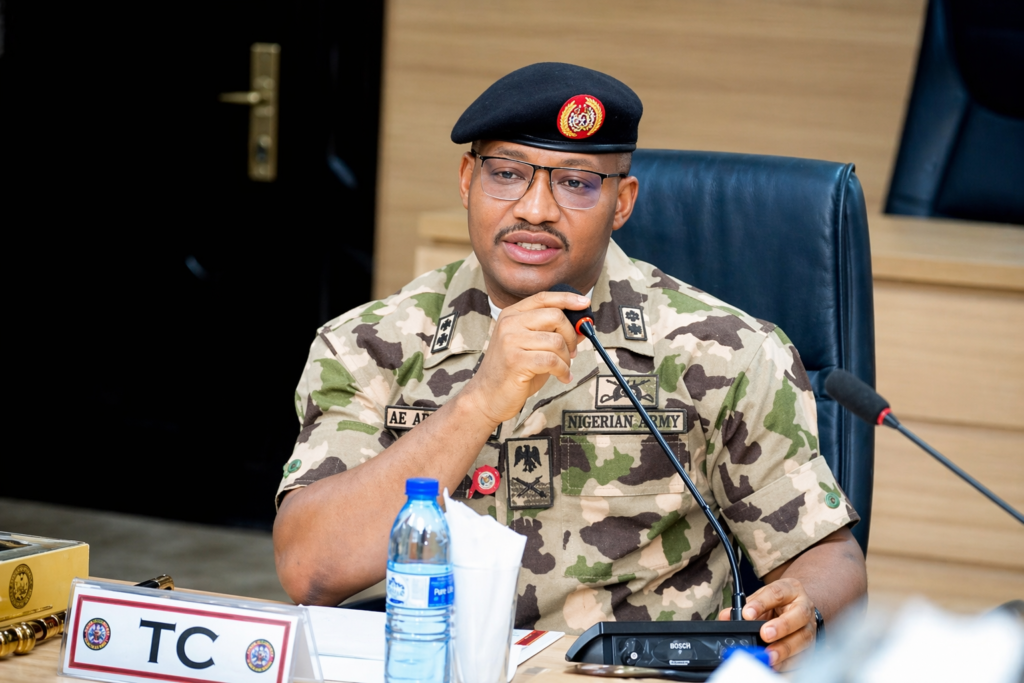
Operation Hadin Kai's precision airstrikes in northern Borno State and the arrest of an ISWAP logistics courier in Monguno represent real tactical progress and $15–20 billion in cumulative economic losses over a decade, 2.5 million displaced persons across the Lake Chad Basin, and annual GDP suppression of 2–3 percentage points in conflict-affected states represent the structural reality that tactical wins cannot resolve without the economic recovery and governance investment that has not yet materialised at the scale the security gains require.
The strategic evolution in Operation Hadin Kai is analytically significant: Nigeria's counter-insurgency approach has shifted from territorial control which produced temporary results when insurgents simply relocated toward supply chain disruption. The Monguno arrest, with recovered items including mosquito coils, food supplies, and communication devices, illustrates precisely this pivot. Mosquito coils are not headline weapons. They are the unglamorous logistics of keeping fighters operational in the Lake Chad axis, where malaria is a front-line attrition factor. Intercepting that logistics chain however mundane the items degrades insurgent operational sustainability in ways that direct combat cannot achieve alone.
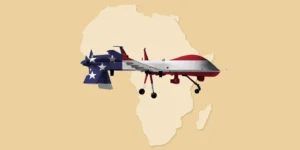
The intelligence-led warfare model, supported by US ISR capability transfer and improved regional coordination, is producing more precise targeting outcomes than the broad-area operations of the previous decade. But the economics of ISWAP recruitment which draws directly from the pool of unemployed, displaced, and economically marginalised young men that a decade of conflict has created means tactical degradation of existing fighters is offset by a structural recruitment pipeline that military operations alone cannot close.
Sources: AfDB, IMF, World Bank, Interpol • Calculations & Modelling: Limitless Beliefs Consulting
Supply Chain Disruption Why Mosquito Coils Are a Strategic Target
The evolution from territorial to supply chain counter-insurgency strategy reflects a hard lesson from a decade of operations: holding territory against a non-state actor with no territory of its own to defend is a tactically indefinite commitment. ISWAP's operational model requires fuel, food, communication devices, medical supplies, and the full logistics stack that sustains any armed force but sourced through informal networks, mobile couriers, and complicit border communities rather than formal supply chains. Disrupting that network is more operationally sustainable than attempting to hold every village and road junction in a geography the size of Belgium.
The Monguno arrest demonstrates how granular this supply chain intelligence has become. Identifying a logistics courier by specific recovery items not weapons, but consumables that sustain human beings in the field requires the kind of embedded intelligence network and source development that takes years to build and that US ISR support has materially accelerated. The question is whether that intelligence infrastructure can be sustained at sufficient depth across the full Lake Chad axis, or whether it is concentrated in accessible areas while the network's periphery remains intact.
“Nigeria can degrade ISWAP's operational capacity indefinitely through supply chain disruption. It cannot degrade ISWAP's recruitment pipeline without addressing the economic conditions that make insurgency a rational livelihood choice for young men in Borno and Yobe.”
Analysis: Limitless Beliefs Consulting • Sources: AfDB, Interpol, IFC
$15–20 Billion Over a Decade The Investment Case That Doesn't Exist Yet
The $15–20 billion in cumulative North-East economic losses is not simply a humanitarian cost it is a foregone investment thesis. Borno, Yobe, and Adamawa states contain significant agricultural potential, livestock corridors, and mineral resource profiles that would attract private capital in a stable security environment. The Lake Chad basin trade routes connecting Nigeria, Niger, Chad, and Cameroon carried substantial commerce before insurgency disrupted them. The logistics infrastructure that a stable North-East would generate would be regionally significant.
None of that investment is happening. Transport and logistics costs carry conflict risk premiums that make business models unviable. Agricultural productivity in Borno and Yobe has declined severely as farmers abandon fields in insecure areas, reducing both food production and the rural income base that sustains local commerce. Infrastructure damage accumulates without the private sector repair investment that would occur in a stable environment. The $15–20 billion figure is the sum of those foregone economic activities compounded across a decade and it grows with each year of continued instability.
Sources: AfDB, IMF, World Bank, Interpol • Calculations & Modelling: Limitless Beliefs Consulting
Sources: AfDB, IFC Investment Framework Data • Calculations & Modelling: Limitless Beliefs Consulting
Border Towns, Agricultural Corridors, Logistics Hubs The Post-Stabilisation Investment Thesis
If Operation Hadin Kai's supply chain disruption strategy continues to degrade ISWAP's operational capacity over the next 18–24 months, specific geographies within Borno, Yobe, and Adamawa will begin the transition toward investability not simultaneously and not uniformly, but in a sequence that follows the logic of risk reduction. Border towns connected to the Niger and Chad trade corridors are the first likely investment destinations: their commercial infrastructure was functional before the insurgency, their logistics networks are reactivatable, and their trade volumes will recover quickly once security risk premiums fall to commercially manageable levels.
Agriculture recovers fastest post-conflict because the productive inputs land, labour, seasonal knowledge are locally available and the capital requirement for restoration is relatively low. Livestock corridor restoration along the Borno-Chad border, combined with food processing investment in Maiduguri, represents the first wave of commercially viable private investment. Logistics infrastructure follows as supply chains reconnect and transport risk premiums normalise. Mining and energy investment comes last, requiring the multi-year security stability record that development finance institutions require before committing capital to long-cycle resource projects.
The displacement factor is the critical variable: 2.5 million displaced persons represent both the human cost of the conflict and a potential economic reactivation multiplier when stability allows return. Displaced agricultural workers returning to productive land, fishing communities returning to the Lake Chad basin, and informal traders restoring border commerce represent a demand surge that would support rapid economic recovery in a genuinely post-conflict environment.
Operation Hadin Kai's tactical gains are real, the strategic evolution from territorial to supply chain disruption is correct, and the intelligence-led precision of current operations represents genuine progress against an adversary that operated with relative impunity for too long. But the $15–20 billion in cumulative losses, 2.5 million displaced persons, and 2–3% annual GDP suppression cannot be addressed by military operations alone and every year that economic recovery investment fails to follow military progress is a year that ISWAP's recruitment pipeline remains open. The tactical fight is being won more consistently than before. The structural fight has barely started.