
Desk: Uncategorized Desk
Published: May 7, 2026
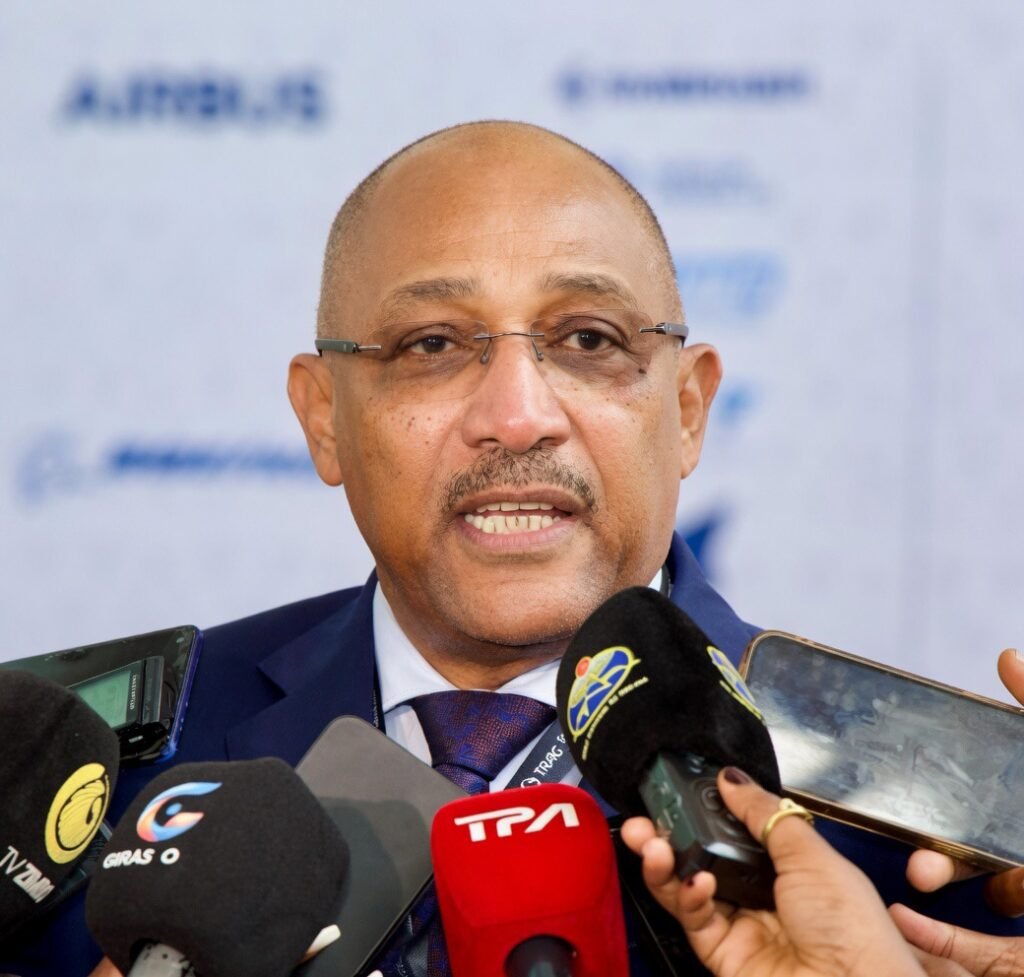
Under the leadership of CEO Nelson Pedro Rodrigues de Oliveira, TAAG Angola Airlines is undergoing a structural transformation aimed at reducing losses, improving operational efficiency, and positioning the airline for partial privatization in 2026. While the carrier is not expected to achieve profitability this year, projected losses are narrowing to approximately $90 million, down from over $120 million in 2024. This shift reflects broader dynamics within Africa’s aviation sector growing demand constrained by high operating costs, low passenger affordability, and structural inefficiencies that limit scalability. The question is not whether TAAG can grow fleet expansion to 25 aircraft by end 2026 and 50 by 2030 answers that. The question is whether Angola can make aviation accessible enough to unlock mass market demand.
TAAG’s restructuring is not a turnaround story yet it is a stabilization phase. The airline’s ability to reduce losses while expanding operations signals progress, but profitability will depend on deeper structural reforms across Angola’s aviation ecosystem. Fuel costs alone consume 30–40% of operating expenses, and currency volatility continues to pressure maintenance and leasing costs denominated in dollars. The planned partial privatization in 2026 is the critical inflection point bringing in private capital and management expertise could accelerate efficiency gains, but success depends on regulatory reform, transparency, and attracting credible strategic partners.
Sources: TAAG financial reports, AfDB, IMF • Analysis: Limitless Beliefs Consulting
Financial Trajectory Loss Reduction but Not Profitability
TAAG’s restructuring strategy focuses on three pillars: cost discipline (renegotiating contracts, optimizing routes), fleet modernization (introducing more fuel-efficient Boeing 787 Dreamliners), and network optimization (cutting underperforming routes while expanding profitable ones). The results are visible: losses narrowed from $120M (2024) to an estimated $105M (2025) to $90M (2026). But profitability remains elusive due to structural factors beyond the airline’s immediate control.
The table below breaks down TAAG’s cost structure and the constraints on further loss reduction:
| Cost Category | Share of Operating Expenses | Constraint / Volatility Factor |
|---|---|---|
| Jet Fuel | 30–40% | Global oil price volatility; limited local refining capacity |
| Aircraft Maintenance & Leasing | 15–20% | Dollar-denominated costs; currency volatility (kwanza depreciation) |
| Staff & Operations | 20–25% | Workforce optimization ongoing; limited automation |
| Navigation & Airport Fees | 10–15% | High African air navigation charges vs global benchmarks |
| Sales & Distribution | 5–10% | Low digital adoption; reliance on traditional channels |
“Africa accounts for nearly 20% of the global population but less than 3% of global air traffic. This is not a demand problem. It is an accessibility problem.”
Affordability Gap The Binding Constraint on Aviation Growth
The most significant constraint on Angola’s aviation sector is not airline efficiency it is passenger affordability. With average monthly incomes ranging from $200–$300, a domestic flight costing $150–$250 represents 50–100% of monthly income for the average Angolan. A one-hour flight from Luanda to Cabinda can cost more than a monthly salary. This pricing reality means less than 10% of the population can afford regular air travel. Aviation demand is concentrated among corporate travelers, government officials, and the high-income minority. Tourism growth remains constrained by pricing barriers that exclude the mass market segment.
The affordability ratio chart below illustrates the gap between income and flight costs a gap that no airline efficiency measure alone can close.
Sources: AfDB, World Bank, IFC • Analysis: Limitless Beliefs Consulting
The Continental Context Africa’s 3% Air Traffic Paradox
Angola’s aviation challenges reflect a broader continental pattern. Africa accounts for nearly 20% of the global population but less than 3% of global air traffic (measured by passenger-kilometers). This structural gap is driven by: high ticket prices due to taxes, fees, and fuel costs that are not subsidized as in other regions; bilateral air service restrictions that limit competition and keep fares high; limited low-cost carrier penetration (Africa has far fewer LCCs per capita than Europe, Southeast Asia, or Latin America); and infrastructure deficits at secondary airports that prevent hub-and-spoke efficiency.
The comparison table below positions Angola’s aviation metrics against continental benchmarks:
| Metric | Angola | Africa Average | Global Benchmark |
|---|---|---|---|
| Air Travel Affordability (flight cost as % of monthly income) | 72% | 45–60% | 2–5% |
| Aviation GDP Contribution ($B) | $1.2–1.5B | $55B (continent) | ~4% of GDP (global avg) |
| Passenger Load Factor (TAAG regional) | 65–70% | 70–75% | 80–85% |
| Fleet Size (National Carrier) | ~20 (2025) → 25 (2026) | Varies widely | 200+ (major global carriers) |
Sources: TAAG, Boeing, Airbus • Analysis: Limitless Beliefs Consulting
Privatization Inflection Point or Structural Risk?
The planned partial privatization of TAAG in 2026 is the most significant event for Angola’s aviation sector since the airline’s founding. Bringing in private investors could: improve operational efficiency through professional management; reduce the government’s financial burden (currently absorbing $90–120M in annual losses); and introduce international management expertise and global partnerships (codeshares, maintenance agreements, etc.).
However, success is not guaranteed. Several African state-owned airline privatizations have underperformed due to: regulatory unpredictability (changes in aviation policy post-privatization); difficulty attracting credible strategic partners (African aviation remains a challenging investment thesis); and legacy debt and labor obligations that transfer to private owners. For TAAG’s privatization to succeed, Angola must offer: transparent financials that allow accurate valuation; a clear regulatory framework post-privatization; and a competitive environment that allows private operation without political interference.
Sources: IATA, AfDB, Angola Ministry of Transport • Analysis: Limitless Beliefs Consulting
Expanding vs Improving The Two-Speed Reality
The Angolan aviation sector is expanding structurally but not yet improving financially for the national carrier. Positive indicators include: new airport infrastructure (Luanda’s new international airport is designed as a regional hub); fleet modernization programs (Boeing 787s for long-haul efficiency); and increased regional route connectivity (Lagos, Abidjan, and potentially more Southern African routes). But constraints remain binding: high operational costs that prevent low-fare offerings; limited passenger affordability that caps addressable market size; and weak intra-African air traffic integration due to bilateral restrictions and high navigation fees.
The path forward requires parallel action on multiple fronts. TAAG must continue cost discipline and network optimization. The government must address the affordability gap through targeted subsidies or tourism development incentives that increase load factors. Regional cooperation must improve through accelerated implementation of the Single African Air Transport Market (SAATM) a continental initiative that remains underutilized. And the privatization process must be executed transparently to attract the right partners.
Bottom Line: TAAG Angola Airlines is stabilizing, not yet turning around. Losses narrowing from $120M to $90M is progress. Fleet expansion to 25 aircraft (and a target of 50 by 2030) signals ambition. But the fundamental constraint on Angola’s aviation growth is not airline efficiency it is passenger affordability. A domestic flight costing $180 against an average monthly income of $250 means less than 10% of Angolans can fly. No airline can achieve profitability at scale with that addressable market size. The 2026 privatization is a critical test: private capital can improve operational efficiency, but it cannot solve the affordability gap alone. Angola’s aviation future depends on making flying accessible through lower costs, higher incomes, or both. Until then, TAAG will remain a carrier for the elite, not the nation.