
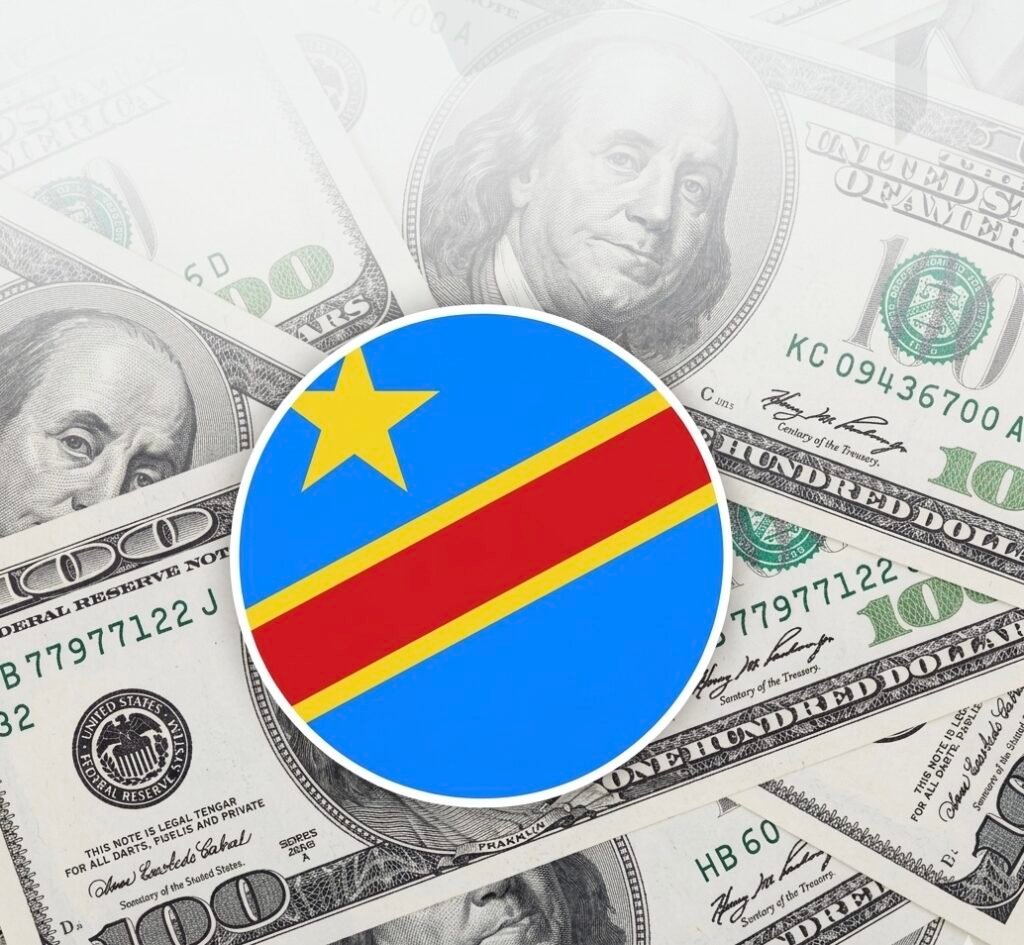
The Central Bank of Congo (BCC) announced on April 10, 2026 that from April 9, 2027, no individual or legal entity will be permitted to conduct cash transactions in foreign currencies and no commercial bank will be authorised to physically import foreign currency. It is the DRC's most aggressive de-dollarization move yet, and the third major attempt to dislodge the dollar from a country where it has dominated everyday commerce since inflation hit 2,000% annually in the 1990s.
The policy, announced by BCC Governor André Wameso following a Monetary Policy Committee meeting, will channel all foreign currency transactions exclusively into electronic banking systems. The central bank will become the sole entity authorised to import foreign banknotes. The stated objectives are threefold: strengthen the Congolese franc, improve control over monetary flows, and continue the fight against money laundering and terrorist financing a directly referenced goal tied to the DRC's status on the Financial Action Task Force (FATF) grey list.
In a notably positive macro context for the announcement, the BCC simultaneously cut its key interest rate by 150 basis points from 15% to 13.5%, citing contained inflation and macroeconomic stability. Inflation stood at 2.2% year-on-year at end-March 2026, down sharply from 10.1% in the same period a year earlier. GDP growth is projected at 6.2% for 2026, up from 5.8% in 2025, driven by the extractive sector and non-mining activity.
Sources: AfDB, IMF, World Bank, Ecofin Agency • Calculations & Modelling: Limitless Beliefs Consulting
The Dollar's Roots and Why Three Attempts Have Failed
The dollar's dominance in the DRC is not a recent phenomenon it is a structural response to three decades of monetary instability. The US dollar entered the Congolese economy in the 1990s when annual inflation reached approximately 2,000%, effectively destroying public confidence in the Congolese franc as a store of value. That confidence has never fully recovered. Today, most transactions above the value of $5 are conducted in dollars, and the franc trades at approximately 2,300 per dollar compared to 920 per dollar in 2010 reflecting a long-term depreciation trend that has reinforced dollarization rather than reversed it.
Previous attempts to reverse this dynamic have failed at execution. In 2024, the BCC directed banks and financial institutions to configure electronic payment terminals to accept only the Congolese franc a directive that had limited impact as dollar usage remained widespread, particularly in the informal economy. The 2027 ban differs in scope: it targets the physical supply of dollars rather than just the payment interface, removing the mechanism by which commercial banks have historically re-stocked dollar cash that circulates outside formal channels.
The structural challenge is demographic and infrastructural as much as monetary. Fewer than 20% of Congolese are banked, according to assessments cited by East African economic analysts. In an economy where the majority of transactions occur in cash and outside the formal banking system, mandating electronic channels for foreign currency is only as effective as the digital infrastructure and banking access that underpins it.
“If the dollar remains in demand but becomes difficult to use officially, a parallel market could flourish and further complicate the 'king dollar' issue in the DRC.”
Sources: IMF, Interpol, AfDB • Calculations & Modelling: Limitless Beliefs Consulting
The Grey List What It Actually Costs the DRC
The FATF grey list designation is not an abstract reputational concern it carries direct and measurable economic costs. Countries on the grey list face increased scrutiny from correspondent banks, higher transaction costs for international settlements, reduced foreign direct investment inflows, and tighter conditions on access to multilateral financing. For the DRC a country dependent on extractive sector export revenues denominated in dollars and increasingly seeking to attract foreign capital into its mining and infrastructure sectors FATF compliance is a material financial objective, not merely a regulatory checkbox.
The IMF has consistently identified the opacity of cash-based foreign currency systems as a primary channel for illicit financial flows in fragile and conflict-affected economies. By eliminating physical dollar circulation and routing all foreign currency through auditable electronic banking channels, the BCC creates the transaction visibility that FATF frameworks require: every foreign currency movement becomes traceable, reportable, and subject to anti-money laundering compliance checks.
Interpol assessments similarly identify cash-heavy dollarized environments as high-risk vectors for terrorist financing a specific concern in the DRC's eastern provinces where armed group activity intersects with artisanal mining revenues, cross-border cash flows, and limited formal banking penetration. The policy's AML/CFT logic is therefore strongest in the zones where enforcement will be hardest.
| Date | Development | Outcome / Status |
|---|---|---|
| 1990s | Annual inflation reaches 2,000%; USD enters circulation as store of value | Dollar dominance entrenched; franc confidence collapses |
| 2010 | CDF trades at 920 per USD | Baseline reference; franc has since lost 60% of value |
| 2024 | BCC directs banks to configure payment terminals to accept CDF only | Limited impact dollar usage remained widespread informally |
| April 9, 2026 | BCC MPC announces full cash dollar ban from April 2027; rate cut 150bps to 13.5% | Active implementation date set · FATF grey list exit objective stated |
| March 2026 | Inflation at 2.2% YoY (vs 10.1% March 2025); GDP projected 6.2% for 2026 | Most favourable macro window for reform attempt in a decade |
| April 9, 2027 | Full ban takes effect no cash FX transactions; no commercial bank FX imports | Implementation target enforcement and infrastructure the key variables |
Sources: BCC, Ecofin Agency, AFP, World Bank Spring 2026 Africa Economic Update • Compiled by: Limitless Beliefs Consulting
Short-Term Disruption vs Long-Term Monetary Sovereignty
The macro context for this attempt is materially better than any prior de-dollarization effort. Inflation at 2.2% is the lowest in years, GDP growth is accelerating, the BCC cut rates simultaneously signalling confidence in franc stability and the World Bank's Spring 2026 Africa Economic Update noted the DRC's fiscal surplus at 0.4% of GDP in 2025, describing early signs of macroeconomic stabilisation. The BCC has never announced a dollar ban from a stronger domestic macro foundation.
However, structural execution risks are substantial. Afreximbank has emphasised that financial system modernisation is essential for enabling intra-African trade and investment flows but transitions away from cash-based systems require parallel investments in banking access, digital infrastructure, and financial inclusion that the DRC has not yet made at the scale required. With fewer than 20% of the population banked and a vast informal economy, the policy's reach will depend entirely on whether digital financial services can earn the public trust that the franc has historically failed to command.
The parallel market risk identified by Congolese economists is the most credible near-term threat to the policy's effectiveness. If demand for physical dollars persists and the structural reasons for that demand (inflation memory, franc depreciation history, political instability in the east) have not been addressed a prohibition on official cash dollars does not eliminate dollar usage. It relocates it to informal channels where the BCC has even less visibility and control than it does today.
The DRC's dollar ban is its boldest attempt at monetary sovereignty in a generation announced from the strongest macro position in years, with a clear FATF exit rationale and an explicit 12-month implementation runway. The policy logic is sound. The execution environment is the variable that has defeated every prior attempt. With fewer than 20% of Congolese banked and a parallel market waiting to absorb any enforcement gap, the BCC is not just banning a currency it is betting that a country with a 30-year dollar dependency can build the digital financial infrastructure, institutional trust, and enforcement capacity to replace it within twelve months. That is an ambitious timeline. Whether it holds will determine whether the DRC's de-dollarization becomes a continental template or another cautionary case study.