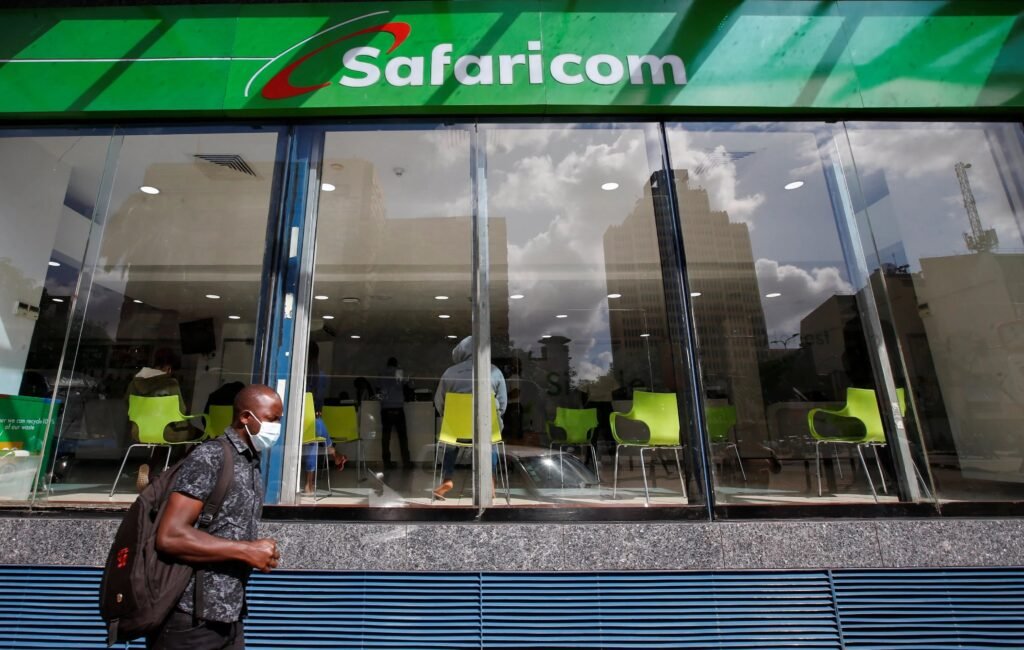
Safaricom Ethiopia represents one of East Africa’s most ambitious telecom liberalization plays. After securing its license in 2021 with an $850 million payment the largest single FDI in Ethiopia’s telecom history the subsidiary launched commercial services in 2022. As of Q3 FY2026 (ended December 2025), it reported 12.2 million three-month active customers (+71.7% YoY), 9.6 million one-month active customers (+70.4%), and service revenue of KES 9.68–9.97 billion in the quarter (+54.2% YoY). Mobile data contributed 67% of service revenue, with average usage at 6.8GB per user (+2.9% YoY). M-Pesa three-month active customers reached 5.2 million (+258.5%), with transaction values surging 102.8% to ETB 20.37 billion after EthSwitch interoperability in October 2025.
Cumulative investment exceeds USD 2.27–3 billion (including license and infrastructure), with shareholders committing further capital. CEO Wim Vanhelleputte has indicated an additional USD 4–5 billion needed over the next 3–5 years to fully scale. In HY2026, losses narrowed significantly (net loss improved to KES 15.5 billion from higher prior levels), while group-level contributions from Ethiopia supported Safaricom Plc’s overall profitability growth.
Financing and Execution Mechanics
The expansion is capital-intensive, with initial heavy capex on network rollout (3,483 4G sites covering 55–57% of the population across >150 towns/cities as of late 2025). Funding comes via shareholder equity (Global Partnership for Ethiopia consortium), vendor financing, and third-party debt. As rollout matures, capex has moderated (down 66% in HY2026), shifting focus to monetization and efficiency. This creates a classic feedback loop: high upfront investment and birr depreciation pressure short-term losses, but scaling customers and data usage improve revenue mix and narrow EBIT losses, supporting further debt/equity capacity for densification and 5G readiness.
Quantified Implications for East African Digital Supply Chains
Safaricom’s entry has driven Ethiopia’s mobile penetration from 37% in 2019 to over 60% by 2024–2025, with competition spurring affordability and innovation. For digital supply chains, reliable 4G and growing M-Pesa adoption reduce transaction friction for MSMEs and fintech players M-Pesa transaction volumes grew 191.8% YoY in Q3. Lower latency and interoperable mobile money enable faster cross-border remittances (Kenya-Ethiopia corridor) and real-time supply-chain visibility in agro-processing or trade logistics, potentially cutting financial inclusion gaps that previously raised costs for small businesses by 15–30% in cash-heavy environments.
AfCFTA Digital Trade Angle
The Kenya-Ethiopia telecom corridor advances AfCFTA’s digital protocol goals by facilitating seamless data flows and financial services across two major East African economies. Stronger connectivity supports intra-regional e-commerce, digital trade in services, and enterprise integration for example, enabling Kenyan fintech models to scale into Ethiopia while boosting Ethiopian exporters’ access to regional platforms. However, full benefits require regulatory harmonization on interconnect rates, infrastructure sharing, and data policies; asymmetric competition with Ethio Telecom (still dominant) and security/inflation risks can slow realization.
Macro risks persist: currency depreciation, inflation, and security issues have delayed timelines and inflated costs. Competition with Ethio Telecom’s Telebirr remains intense, with the incumbent holding early-mover advantages in mobile money. Yet Safaricom’s technology transfer (M-Pesa ecosystem) and network quality are driving overall market improvements in service and pricing.
Safaricom Ethiopia illustrates the mechanics of FDI-driven liberalization: rapid customer acquisition and data monetization offset initial losses, while cross-border integration creates strategic optionality for East African digital value chains. Break-even trajectory (targeted FY2027) will depend on sustained execution, forex stability, and fair regulatory play. As coverage expands toward 70+ million potential subscribers long-term, the Ethiopia play could evolve from a drag to a growth engine, reinforcing East Africa’s role in Africa’s digital economy.