
LIVE MARKETS
USD/NGN1,377-0.22%
USD/KES130.40+0.18%
USD/ZAR16.77+0.31%
USD/GHS11.19-0.44%
USD/EGP48.00+0.05%
|
GOLD$4,628/oz+1.15%
BRENT$69.41/bbl-0.54%
COBALT$26,800/t-1.35%
|
BTC$94,280+2.34%
ETH$3,218+1.87%
USD/NGN1,377-0.22%
GOLD$4,628/oz+1.15%
BTC$94,280+2.34%
ROAD-1
Breaking AfCFTA Secretariat: 47 of 54 member states now operational under continental free trade framework — intra-Africa trade volumes up 12% year-on-year
Home Telecoms Niger Telecoms Loses Ground as Market Share Drops…
Telecoms

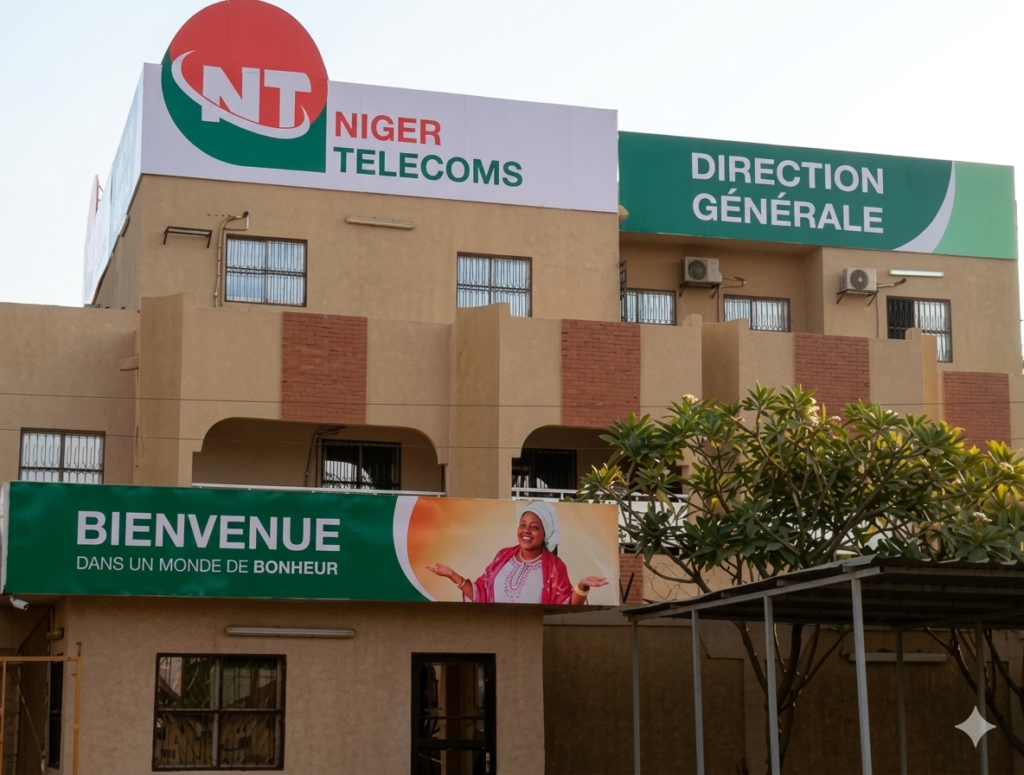
Niger Telecoms Loses Ground as Market Share Drops Below 6% Amid Intensifying Competition

Author: Chukwuemeka Okeoma Desk: Uncategorized Desk Published: April 21, 2026 Niger Telecoms has lost 24% of its subscriber base since 2021 falling from 1.2 million to 908,692 users while its mobile internet market share collapsed to just 3%, as Airtel Niger commands 47% of a $550 million market that is growing at 5.29% CAGR and directing virtually none of that growth toward the state operator that officials now describe as suffering from financial imbalances, weak staff engagement, and misaligned investment strategy. The decline reflects structural challenges that are not unique to Niger Telecoms but are more advanced here than in most comparable state-owned telecom operators on the continent. Weak capital investment has created a network quality gap that private competitors have systematically exploited. Operational inefficiencies have compounded cost disadvantages in an industry where cost discipline determines margin. And the dominance of Airtel Niger and Moov Africa in both mobile voice and data has created a competitive moat that a restructuring effort without serious capital injection will struggle to breach. The telecommunications sector contributes an estimated 8–10% of Niger’s GDP, enabling financial inclusion, digital payments, and business connectivity across urban and rural regions. That macro contribution is real. But the distribution of that contribution is heavily concentrated in private operator balance sheets, not the state entity that was originally positioned as the nation’s digital infrastructure backbone. 5.24% Niger Telecoms Market Share (Mid-2025) 3% Mobile Internet Market Share 47% Airtel Niger Market Share Dominant Position $550M Niger Telecom Market Size (2025 Est.) Market Intelligence Niger Telecoms Subscriber Decline (2021–2025) Sources: AfDB, IMF, World Bank  •  Calculations & Modelling: Limitless Beliefs Consulting Structural Intelligence From 1.2 Million to 908,692 The State Operator’s Contraction A loss of 291,308 subscribers in four years is not a cyclical fluctuation it is a structural retreat. Niger Telecoms is losing customers who have access to alternatives, and the acceleration of that loss in the data segment where the company holds just 3% of internet subscribers is the most diagnostically significant data point in this story. Voice subscribers churn slowly; data subscribers churn to whoever has the fastest, most reliable network. A 3% data share in a market growing at 5.29% CAGR means Niger Telecoms is not merely declining relative to its starting position it is declining in absolute terms as the market expands around it. Officials have cited financial imbalances, weak staff engagement, and misaligned investment strategies as the primary drivers. These are the institutional failure modes that characterise state-owned telecom operators across Africa: undercapitalisation relative to private competitors, governance structures that prioritise employment over operational efficiency, and capital allocation decisions driven by political considerations rather than network economics. None of these are unique to Niger Telecoms, but all three are present simultaneously which is why the subscriber loss curve looks the way it does. “Niger Telecoms is not losing a market share battle. It is losing a capital allocation battle and in telecoms, those two things are the same.” Digital Intelligence Mobile Internet Market Share — Niger Telecoms vs Competitors Sources: AfDB, World Bank Digital Data  •  Calculations & Modelling: Limitless Beliefs Consulting Competitive Intelligence Niger Telecom Sector Market Share Distribution (2025) Sources: AfDB, IMF Telecom Data  •  Calculations & Modelling: Limitless Beliefs Consulting Market Intelligence Airtel’s 47% and the Private Sector Concentration Thesis Airtel Niger’s 47% market share is not simply a commercial success story it is a signal about what happens when a well-capitalised private operator enters a market that a state-owned incumbent has underinvested in for years. Moov Africa’s position and Zamani Telecom’s emergence generating approximately $46.3 million and $15.3 million in revenue respectively confirm that Niger’s telecom market has genuine growth momentum. The problem for Niger Telecoms is that it is structurally positioned to capture the least of it. Despite this competitive environment, Niger’s telecom market is projected to grow at a CAGR of 5.29% through 2030, reaching a scale that justifies the capital investment that private operators are deploying. The growth is real. The question for Niger Telecoms is whether it can restructure its operations, secure government capital support, and modernise its network infrastructure at a pace that allows it to participate in that growth or whether it continues on the current trajectory of absolute subscriber loss in an expanding market. Growth Intelligence Niger Telecom Market Growth Trajectory (2025–2030 CAGR) Sources: AfDB, IMF Market Projections  •  Calculations & Modelling: Limitless Beliefs Consulting Economic Intelligence Telecom Sector GDP Contribution Niger (Activity Range) Sources: AfDB, World Bank  •  Calculations & Modelling: Limitless Beliefs Consulting Operational Intelligence Energy Costs, Infrastructure Gaps, and the State Operator’s Cost Trap Operating costs in Niger’s telecom industry are structurally elevated by infrastructure challenges and energy dependency. West African telecom operators typically allocate 30–40% of operating costs to energy and infrastructure driven by diesel-powered networks in areas with limited grid stability. For a private operator like Airtel with scale economics and global procurement leverage, this cost burden is manageable. For Niger Telecoms, operating with a shrinking subscriber base and limited capital for network modernisation, the same cost structure is increasingly unsustainable per-subscriber. Employment within the telecom sector supports thousands of direct jobs and tens of thousands of indirect roles through mobile money agents, infrastructure vendors, and distribution networks. Niger Telecoms’ declining performance introduces workforce restructuring risk not because the sector is contracting, but because a declining operator with fixed employment costs and falling revenue has limited structural options other than workforce adjustment unless the revenue trajectory reverses. Employment Intelligence Telecom Sector Employment Impact Direct vs Indirect (Niger) Sources: AfDB, IFC Labour Data  •  Calculations & Modelling: Limitless Beliefs Consulting Cost Intelligence Telecom Operating Cost Structure West Africa Sources: IFC, Afreximbank  •  Calculations & Modelling: Limitless Beliefs Consulting Niger Telecoms’ trajectory is the most common story in African state-owned telecom operations and the most preventable. A market that is growing at 5.29% CAGR should not be producing absolute subscriber losses for any operator with existing infrastructure and a national licence. The fact that it is producing those losses at Niger
By Chukwuemeka Okeoma · April 21, 2026 · 11 min read
Niger Telecoms Loses Ground as Market Share Drops Below 6% Amid Intensifying Competition

Niger Telecoms has lost 24% of its subscriber base since 2021 falling from 1.2 million to 908,692 users while its mobile internet market share collapsed to just 3%, as Airtel Niger commands 47% of a $550 million market that is growing at 5.29% CAGR and directing virtually none of that growth toward the state operator that officials now describe as suffering from financial imbalances, weak staff engagement, and misaligned investment strategy.

The decline reflects structural challenges that are not unique to Niger Telecoms but are more advanced here than in most comparable state-owned telecom operators on the continent. Weak capital investment has created a network quality gap that private competitors have systematically exploited. Operational inefficiencies have compounded cost disadvantages in an industry where cost discipline determines margin. And the dominance of Airtel Niger and Moov Africa in both mobile voice and data has created a competitive moat that a restructuring effort without serious capital injection will struggle to breach.

The telecommunications sector contributes an estimated 8–10% of Niger's GDP, enabling financial inclusion, digital payments, and business connectivity across urban and rural regions. That macro contribution is real. But the distribution of that contribution is heavily concentrated in private operator balance sheets, not the state entity that was originally positioned as the nation's digital infrastructure backbone.

5.24%
Niger Telecoms Market Share (Mid-2025)
3%
Mobile Internet Market Share
47%
Airtel Niger Market Share Dominant Position
$550M
Niger Telecom Market Size (2025 Est.)

Market Intelligence
Niger Telecoms Subscriber Decline (2021–2025)

Sources: AfDB, IMF, World Bank  •  Calculations & Modelling: Limitless Beliefs Consulting

From 1.2 Million to 908,692 The State Operator's Contraction

A loss of 291,308 subscribers in four years is not a cyclical fluctuation it is a structural retreat. Niger Telecoms is losing customers who have access to alternatives, and the acceleration of that loss in the data segment where the company holds just 3% of internet subscribers is the most diagnostically significant data point in this story. Voice subscribers churn slowly; data subscribers churn to whoever has the fastest, most reliable network. A 3% data share in a market growing at 5.29% CAGR means Niger Telecoms is not merely declining relative to its starting position it is declining in absolute terms as the market expands around it.

Officials have cited financial imbalances, weak staff engagement, and misaligned investment strategies as the primary drivers. These are the institutional failure modes that characterise state-owned telecom operators across Africa: undercapitalisation relative to private competitors, governance structures that prioritise employment over operational efficiency, and capital allocation decisions driven by political considerations rather than network economics. None of these are unique to Niger Telecoms, but all three are present simultaneously which is why the subscriber loss curve looks the way it does.

“Niger Telecoms is not losing a market share battle. It is losing a capital allocation battle and in telecoms, those two things are the same.”

Digital Intelligence
Mobile Internet Market Share — Niger Telecoms vs Competitors

Sources: AfDB, World Bank Digital Data  •  Calculations & Modelling: Limitless Beliefs Consulting

Competitive Intelligence
Niger Telecom Sector Market Share Distribution (2025)

Sources: AfDB, IMF Telecom Data  •  Calculations & Modelling: Limitless Beliefs Consulting

Airtel's 47% and the Private Sector Concentration Thesis

Airtel Niger's 47% market share is not simply a commercial success story it is a signal about what happens when a well-capitalised private operator enters a market that a state-owned incumbent has underinvested in for years. Moov Africa's position and Zamani Telecom's emergence generating approximately $46.3 million and $15.3 million in revenue respectively confirm that Niger's telecom market has genuine growth momentum. The problem for Niger Telecoms is that it is structurally positioned to capture the least of it.

Despite this competitive environment, Niger's telecom market is projected to grow at a CAGR of 5.29% through 2030, reaching a scale that justifies the capital investment that private operators are deploying. The growth is real. The question for Niger Telecoms is whether it can restructure its operations, secure government capital support, and modernise its network infrastructure at a pace that allows it to participate in that growth or whether it continues on the current trajectory of absolute subscriber loss in an expanding market.


Growth Intelligence
Niger Telecom Market Growth Trajectory (2025–2030 CAGR)

Sources: AfDB, IMF Market Projections  •  Calculations & Modelling: Limitless Beliefs Consulting

Economic Intelligence
Telecom Sector GDP Contribution Niger (Activity Range)

Sources: AfDB, World Bank  •  Calculations & Modelling: Limitless Beliefs Consulting

Energy Costs, Infrastructure Gaps, and the State Operator's Cost Trap

Operating costs in Niger's telecom industry are structurally elevated by infrastructure challenges and energy dependency. West African telecom operators typically allocate 30–40% of operating costs to energy and infrastructure driven by diesel-powered networks in areas with limited grid stability. For a private operator like Airtel with scale economics and global procurement leverage, this cost burden is manageable. For Niger Telecoms, operating with a shrinking subscriber base and limited capital for network modernisation, the same cost structure is increasingly unsustainable per-subscriber.

Employment within the telecom sector supports thousands of direct jobs and tens of thousands of indirect roles through mobile money agents, infrastructure vendors, and distribution networks. Niger Telecoms' declining performance introduces workforce restructuring risk not because the sector is contracting, but because a declining operator with fixed employment costs and falling revenue has limited structural options other than workforce adjustment unless the revenue trajectory reverses.

Employment Intelligence
Telecom Sector Employment Impact Direct vs Indirect (Niger)

Sources: AfDB, IFC Labour Data  •  Calculations & Modelling: Limitless Beliefs Consulting

Cost Intelligence
Telecom Operating Cost Structure West Africa

Sources: IFC, Afreximbank  •  Calculations & Modelling: Limitless Beliefs Consulting

Niger Telecoms' trajectory is the most common story in African state-owned telecom operations and the most preventable. A market that is growing at 5.29% CAGR should not be producing absolute subscriber losses for any operator with existing infrastructure and a national licence. The fact that it is producing those losses at Niger Telecoms is entirely a function of capital allocation, governance, and investment strategy failures that are institutional rather than market-driven. The market is not the problem. Niger Telecoms is the problem. And the question for government stakeholders is whether the political will exists to fund the restructuring that would make that statement no longer true.


🌍
ROAD-1 Intelligence
Get port friction scores, PAPSS settlement data, FX volatility signals, and corridor analysis for the trade routes in this story.
Access ROAD-1 →