
Desk: Uncategorized Desk
Published: June 8, 2026
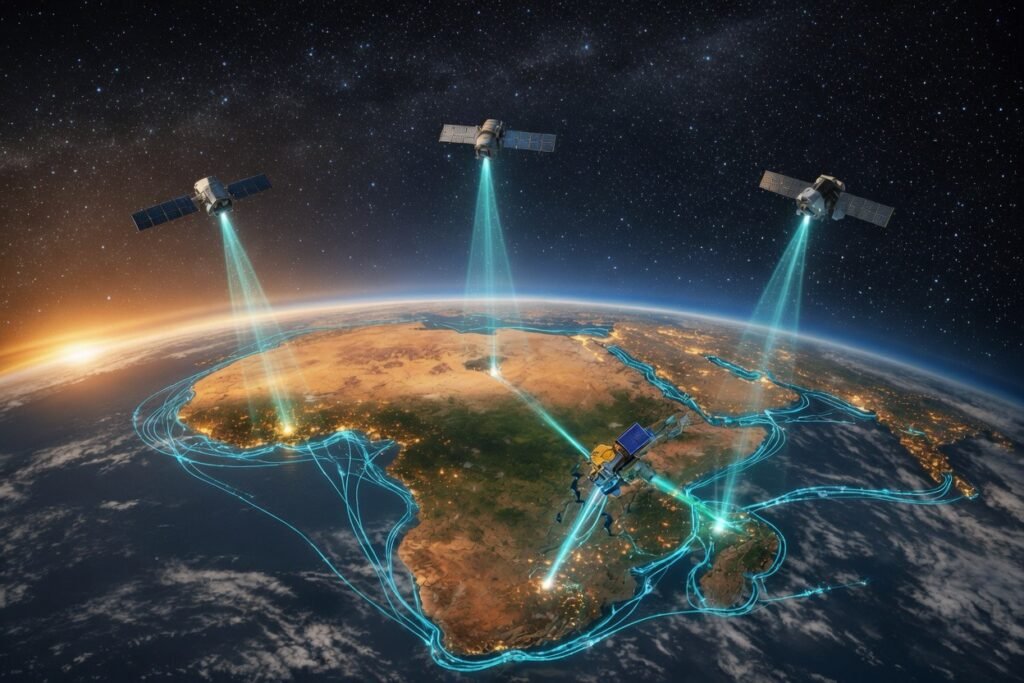
Madagascar’s telecommunications sector is entering a new phase of digital transformation following the June 2026 announcement of an expanded partnership between Airtel Madagascar and satellite operator Eutelsat. The initiative aims to integrate next-generation satellite broadband directly into existing fiber optic and 4G networks, creating a hybrid communications infrastructure capable of extending high-speed internet access into some of the country’s most remote regions. The partnership represents a significant shift away from traditional telecommunications deployment models. Rather than relying exclusively on expensive terrestrial fiber rollouts or standalone satellite services, the project combines both technologies into a unified digital ecosystem designed to improve connectivity, lower network gaps, strengthen logistics operations, and support economic development across Madagascar and the wider Indian Ocean region.
Madagascar remains one of Africa’s least connected large island economies despite significant progress in mobile adoption. Geographic isolation, mountainous terrain, dense forests and dispersed rural populations have historically increased the cost of broadband deployment. According to international telecommunications estimates, millions of Malagasy citizens still face limited access to reliable broadband services, creating barriers to education, healthcare delivery, e‑commerce participation, financial inclusion and business growth. The hybrid satellite‑fiber model could significantly reduce the cost of connecting underserved communities while accelerating rural broadband deployment timelines, with field tests reportedly demonstrating download speeds reaching 100 Mbps aboard moving trains.
Sources: World Bank, ITU, AfDB • Calculations & Modeling: Limitless Beliefs Consulting
Economic Impact of Broadband Infrastructure 10% Increase → 1–2% GDP Growth
Telecommunications infrastructure has become one of the strongest drivers of economic productivity globally. World Bank research suggests that a 10% increase in broadband penetration can contribute between 1% and 2% additional GDP growth in developing economies through productivity gains, digital commerce expansion and improved business efficiency. For Madagascar, improved broadband coverage could strengthen several strategic sectors simultaneously: tourism (online booking, digital marketing), agriculture (market information, weather forecasting), logistics (real‑time tracking), financial services (mobile money, digital lending), mining (remote monitoring) and digital entrepreneurship. The ability to deliver speeds approaching 100 Mbps across difficult terrain represents a significant advancement in the country’s digital infrastructure capacity.
“Satellite technology is increasingly emerging as a complementary solution rather than a competing alternative to fiber infrastructure. The hybrid model can expand coverage while maintaining cost efficiency a blueprint for other geographically challenging African markets.”
Employment Impact and Workforce Development Thousands of Jobs Across the Digital Ecosystem
Telecommunications projects typically create both direct and indirect employment opportunities throughout their lifecycle. While Airtel Madagascar and Eutelsat have not released official hiring projections, comparable broadband infrastructure projects across Africa suggest the initiative could support thousands of jobs across network deployment, engineering, maintenance, software services, customer support and digital entrepreneurship ecosystems. Potential employment beneficiaries include telecommunications engineers, fiber installation technicians, satellite network specialists, software developers, cybersecurity professionals, data center operators, digital entrepreneurs, and rural internet service providers. Unlike traditional infrastructure projects, telecommunications investments often continue generating employment opportunities long after construction is completed due to ongoing digital ecosystem development. The pie chart below illustrates the estimated job distribution:
Sources: ILO, AfDB, World Bank • Calculations & Modeling: Limitless Beliefs Consulting
Satellite Integration Creates New Logistics Opportunities
One of the most significant developments emerging from the project involves transportation and logistics applications. Field tests reportedly demonstrated download speeds reaching 100 Mbps aboard moving trains, highlighting the growing role of satellite‑enabled communications in transportation management. Advanced connectivity solutions can support real‑time cargo tracking, fleet management systems, railway monitoring, maritime logistics coordination, supply chain visibility platforms, and cross‑border trade management. As African logistics corridors continue modernizing under AfCFTA objectives, communications infrastructure is increasingly becoming as important as physical infrastructure. Airtel‑Eutelsat’s hybrid model could be replicated across rail and road corridors throughout the continent.
Sources: LBNN Intelligence, ITU, World Bank • Calculations & Modeling: Limitless Beliefs Consulting
Telecommunications Costs and Ease of Doing Business
Historically, limited competition and difficult geography have contributed to elevated connectivity costs across many African markets. Hybrid satellite‑fiber deployments can help reduce network expansion expenses by eliminating the need for extensive terrestrial infrastructure in challenging environments. For businesses operating in rural regions, improved connectivity can reduce operational costs associated with travel, administration, banking access and communications. Enhanced broadband access also supports mobile banking expansion, e‑commerce development, remote work capabilities, telemedicine services, digital education platforms, and cross‑border trade facilitation. These improvements can collectively enhance national competitiveness and improve the ease of doing business.
Impact on East African and Indian Ocean Digital Corridors
The implications of the Airtel‑Eutelsat initiative extend beyond Madagascar. As East African economies increasingly integrate digitally, reliable communications infrastructure is becoming a strategic asset supporting regional trade, logistics and investment flows. Countries such as Kenya, Tanzania, Rwanda, Uganda, Mozambique and Mauritius are simultaneously expanding digital infrastructure investments, creating a broader regional trend toward advanced connectivity deployment. The chart below shows projected telecom sector growth across the region:
Sources: ITU, IFC, AfDB • Calculations & Modeling: Limitless Beliefs Consulting
Investment Outlook: Which Regions Become Investable?
If political stability and security conditions continue improving across East Africa and the Indian Ocean region, connectivity improvements could significantly increase investor interest in previously underserved regions. Northern Madagascar, logistics corridors connected to major ports (Toamasina, Mahajanga), tourism zones (Nosy Be, Île Sainte‑Marie) and agricultural production hubs may become increasingly attractive destinations for private capital. Improved digital infrastructure reduces information asymmetry and operational risks, allowing investors to evaluate opportunities in regions that previously suffered from poor communications coverage. Connectivity is increasingly becoming a prerequisite for investment rather than a luxury.
Sector Forecast: Which Industries Rebound First?
The sectors most likely to benefit immediately from expanded broadband access include logistics, financial services, tourism and agriculture. Digital communications enable more efficient market access, mobile payments, supply chain management and customer engagement. Agriculture may experience particularly strong gains through access to market information, weather forecasting, digital financing platforms and logistics coordination systems. Mining operators could also benefit through improved remote operations and asset monitoring capabilities. As connectivity risks decline, private capital is likely to flow toward technology enabled industries including fintech, logistics technology, e‑commerce platforms, cloud services, digital education providers and telecommunications infrastructure itself. Investors may also increase exposure to tourism developments, industrial zones, smart agriculture projects and regional logistics hubs supported by improved communications networks.
Sources: AfDB, IMF, World Bank • Calculations & Modeling: Limitless Beliefs Consulting
African Telecom Outlook A Blueprint for Hybrid Networks
Africa’s telecommunications sector continues to attract significant investment as governments, operators and development finance institutions seek to close the continent’s digital divide. Satellite technology is increasingly emerging as a complementary solution rather than a competing alternative to fiber infrastructure. The Airtel Madagascar‑Eutelsat partnership may serve as a blueprint for other African markets facing similar geographic challenges (DRC, Central African Republic, Republic of Congo, and island nations). By combining satellite, fiber and mobile infrastructure into a unified network architecture, operators can expand coverage while maintaining cost efficiency. As broadband access improves across the continent, telecommunications infrastructure is expected to become one of the most important drivers of economic growth, financial inclusion and private sector development during the coming decade.
Bottom Line: Airtel Madagascar and Eutelsat’s hybrid satellite‑fiber broadband initiative represents a strategic shift in African telecom infrastructure deployment moving from single‑technology rollouts to integrated, terrain‑agnostic networks. With 100 Mbps speeds demonstrated on moving trains and a 10% broadband penetration increase historically linked to 1–2% GDP growth, the economic stakes are significant. Madagascar’s current internet penetration (45%) lags African peers, leaving millions unconnected. The hybrid model could reduce deployment costs, accelerate rural coverage, and support logistics, agriculture, tourism, and financial inclusion. Thousands of direct and indirect jobs will be created across engineering, deployment, and digital services. The partnership also offers a replicable blueprint for other geographically challenging markets. The binding constraints are no longer technological they are regulatory and financial. If African governments prioritise infrastructure sharing, spectrum allocation, and universal service funding, hybrid networks could close the digital divide within a decade. Madagascar is an early test case. Its success will inform connectivity strategies across the continent.