
LIVE MARKETS
USD/NGN1,377-0.22%
USD/KES130.40+0.18%
USD/ZAR16.77+0.31%
USD/GHS11.19-0.44%
USD/EGP48.00+0.05%
|
GOLD$4,628/oz+1.15%
BRENT$69.41/bbl-0.54%
COBALT$26,800/t-1.35%
|
BTC$94,280+2.34%
ETH$3,218+1.87%
USD/NGN1,377-0.22%
GOLD$4,628/oz+1.15%
BTC$94,280+2.34%
ROAD-1
Breaking AfCFTA Secretariat: 47 of 54 member states now operational under continental free trade framework — intra-Africa trade volumes up 12% year-on-year
Home Telecoms Liquid Intelligent Technologies: Fiber Backbone and the Business…
Telecoms

Liquid Intelligent Technologies: Fiber Backbone and the Business Case for Pan-African Digital Connectivity

Author: Chukwuemeka Okeoma Desk: Uncategorized Desk Published: April 10, 2026 Liquid Intelligent Technologies, a core subsidiary of Cassava Technologies, operates Africa’s largest independent fiber-optic network, spanning over 110,000 km across 15+ countries as of late 2025. The network connects more than 100 million people in over 600 towns and cities, integrating with major subsea cables (SAT3, WACS, EASSy) to link African markets directly to Europe, Asia, and global data hubs. This infrastructure positions Liquid as a strategic enabler of broadband, enterprise connectivity, cloud services, and data center expansion across sub-Saharan Africa. In Q3 FY2025-26 (ended 30 November 2025), Liquid reported record quarterly revenue of nearly $210 million, up almost 40% year-on-year, with EBITDA doubling and high cash conversion. Full-year FY2024-25 revenue reached $693.5 million (+1%), adjusted EBITDA $265 million (+3%), and the group has pursued debt refinancing, including a $300 million senior secured notes offering in early 2026 to retire maturing debt and strengthen the balance sheet. These metrics reflect improving monetization of the fiber asset base alongside growth in cloud and cybersecurity segments (+31% in Q3). Financing and Strategic Advancements Institutional backing has been instrumental. The International Finance Corporation (IFC) has provided approximately $250 million in equity and debt facilities to support fiber rollout and hyperscale data centers in key markets including Nigeria, Kenya, Egypt, and South Africa. Cassava Technologies has pledged additional capital, including contributions to a R3.6 billion investment in South Africa focused on network optimization and intelligent, self-healing infrastructure. Recent refinancing moves aim to extend debt maturities and lower overall financing costs, freeing capacity for further capex estimated at $60–70 million in the current year. Fiber infrastructure addresses a core limitation of Africa’s mobile-dominated telecom landscape (up to 99% of traffic in some markets). Afreximbank and AfDB analyses emphasize that sustainable digital transformation requires robust fixed backbones for high-capacity, low-latency transmission essential to cloud computing, AI applications, fintech, and e-commerce. Liquid’s cross-border routes reduce reliance on fragmented national networks, creating digital corridors analogous to energy and transport interconnectors. Quantified Implications for Digital Supply Chains Reliable fiber lowers latency and bandwidth costs for enterprise users, directly impacting digital supply chains. In fintech and e-commerce, reduced latency can improve transaction success rates and enable real-time services; industry estimates suggest high-quality connectivity can cut data-related operational friction by 20–40% for cloud-dependent businesses. For African enterprises, local data centers (via Africa Data Centres, part of the Liquid ecosystem) reduce reliance on overseas routing, lowering latency, enhancing cybersecurity, and supporting data localization policies critical as digital trade volumes grow. AfCFTA Digital Trade Angle Liquid’s model aligns with AfCFTA’s digital protocol ambitions for seamless cross-border data flows that facilitate intra-African e-commerce and services trade. By providing scalable backbone capacity, fiber networks help manufacturers and service providers integrate regional value chains more efficiently for example, enabling faster data exchange for supply-chain visibility in agro-processing or financial inclusion platforms. However, realization depends on regulatory harmonization and last-mile economics; without these, backbone overcapacity risks persist amid Africa’s still-limited data center footprint (0.6% of global capacity with 1/3 occupancy). Execution remains capital-intensive with long payback periods. Navigating multi-jurisdictional regulations, rights-of-way, and varying stability levels creates feedback loops: delays or cost overruns can pressure margins, while successful monetization (via wholesale, enterprise, and cloud revenue) improves EBITDA and supports further debt reduction. Competition from mobile operators expanding fiber (e.g., Airtel’s 81,500+ km) and new entrants is driving down wholesale prices, benefiting end-users but squeezing infrastructure returns unless differentiated by reliability and integrated services. Despite rural and last-mile gaps, Liquid’s vertical integration fiber + data centers + cloud/cybersecurity creates a resilient ecosystem. As data demand surges with urbanization and smartphone penetration, control over transmission networks becomes a competitive moat for digital economy participation. For telecoms business readers on LBNNTV.com, Liquid exemplifies strategic advancement: scaling infrastructure assets while improving financial metrics and positioning for AfCFTA-enabled digital trade. Success will hinge on converting network scale into sustainable, high-margin recurring revenue amid execution and competitive pressures. The outcome offers a reference case for how pan-African fiber plays can drive and benefit from Africa’s broader digital economy growth.
By Chukwuemeka Okeoma · April 10, 2026 · 3 min read
Liquid Intelligent Technologies: Fiber Backbone and the Business Case for Pan-African Digital Connectivity

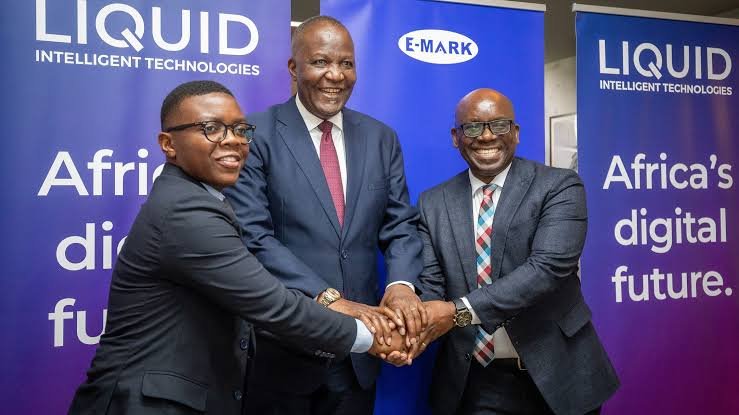
Liquid Intelligent Technologies, a core subsidiary of Cassava Technologies, operates Africa’s largest independent fiber-optic network, spanning over 110,000 km across 15+ countries as of late 2025. The network connects more than 100 million people in over 600 towns and cities, integrating with major subsea cables (SAT3, WACS, EASSy) to link African markets directly to Europe, Asia, and global data hubs. This infrastructure positions Liquid as a strategic enabler of broadband, enterprise connectivity, cloud services, and data center expansion across sub-Saharan Africa.

In Q3 FY2025-26 (ended 30 November 2025), Liquid reported record quarterly revenue of nearly $210 million, up almost 40% year-on-year, with EBITDA doubling and high cash conversion. Full-year FY2024-25 revenue reached $693.5 million (+1%), adjusted EBITDA $265 million (+3%), and the group has pursued debt refinancing, including a $300 million senior secured notes offering in early 2026 to retire maturing debt and strengthen the balance sheet. These metrics reflect improving monetization of the fiber asset base alongside growth in cloud and cybersecurity segments (+31% in Q3).

Financing and Strategic Advancements
Institutional backing has been instrumental. The International Finance Corporation (IFC) has provided approximately $250 million in equity and debt facilities to support fiber rollout and hyperscale data centers in key markets including Nigeria, Kenya, Egypt, and South Africa. Cassava Technologies has pledged additional capital, including contributions to a R3.6 billion investment in South Africa focused on network optimization and intelligent, self-healing infrastructure. Recent refinancing moves aim to extend debt maturities and lower overall financing costs, freeing capacity for further capex estimated at $60–70 million in the current year.

Fiber infrastructure addresses a core limitation of Africa’s mobile-dominated telecom landscape (up to 99% of traffic in some markets). Afreximbank and AfDB analyses emphasize that sustainable digital transformation requires robust fixed backbones for high-capacity, low-latency transmission essential to cloud computing, AI applications, fintech, and e-commerce. Liquid’s cross-border routes reduce reliance on fragmented national networks, creating digital corridors analogous to energy and transport interconnectors.

Quantified Implications for Digital Supply Chains
Reliable fiber lowers latency and bandwidth costs for enterprise users, directly impacting digital supply chains. In fintech and e-commerce, reduced latency can improve transaction success rates and enable real-time services; industry estimates suggest high-quality connectivity can cut data-related operational friction by 20–40% for cloud-dependent businesses. For African enterprises, local data centers (via Africa Data Centres, part of the Liquid ecosystem) reduce reliance on overseas routing, lowering latency, enhancing cybersecurity, and supporting data localization policies critical as digital trade volumes grow.

AfCFTA Digital Trade Angle
Liquid’s model aligns with AfCFTA’s digital protocol ambitions for seamless cross-border data flows that facilitate intra-African e-commerce and services trade. By providing scalable backbone capacity, fiber networks help manufacturers and service providers integrate regional value chains more efficiently for example, enabling faster data exchange for supply-chain visibility in agro-processing or financial inclusion platforms. However, realization depends on regulatory harmonization and last-mile economics; without these, backbone overcapacity risks persist amid Africa’s still-limited data center footprint (0.6% of global capacity with 1/3 occupancy).

Execution remains capital-intensive with long payback periods. Navigating multi-jurisdictional regulations, rights-of-way, and varying stability levels creates feedback loops: delays or cost overruns can pressure margins, while successful monetization (via wholesale, enterprise, and cloud revenue) improves EBITDA and supports further debt reduction. Competition from mobile operators expanding fiber (e.g., Airtel’s 81,500+ km) and new entrants is driving down wholesale prices, benefiting end-users but squeezing infrastructure returns unless differentiated by reliability and integrated services.

Despite rural and last-mile gaps, Liquid’s vertical integration fiber + data centers + cloud/cybersecurity creates a resilient ecosystem. As data demand surges with urbanization and smartphone penetration, control over transmission networks becomes a competitive moat for digital economy participation.

For telecoms business readers on LBNNTV.com, Liquid exemplifies strategic advancement: scaling infrastructure assets while improving financial metrics and positioning for AfCFTA-enabled digital trade. Success will hinge on converting network scale into sustainable, high-margin recurring revenue amid execution and competitive pressures. The outcome offers a reference case for how pan-African fiber plays can drive and benefit from Africa’s broader digital economy growth.


🌍
ROAD-1 Intelligence
Get port friction scores, PAPSS settlement data, FX volatility signals, and corridor analysis for the trade routes in this story.
Access ROAD-1 →