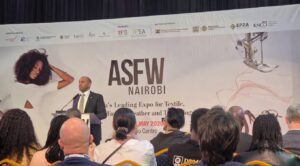
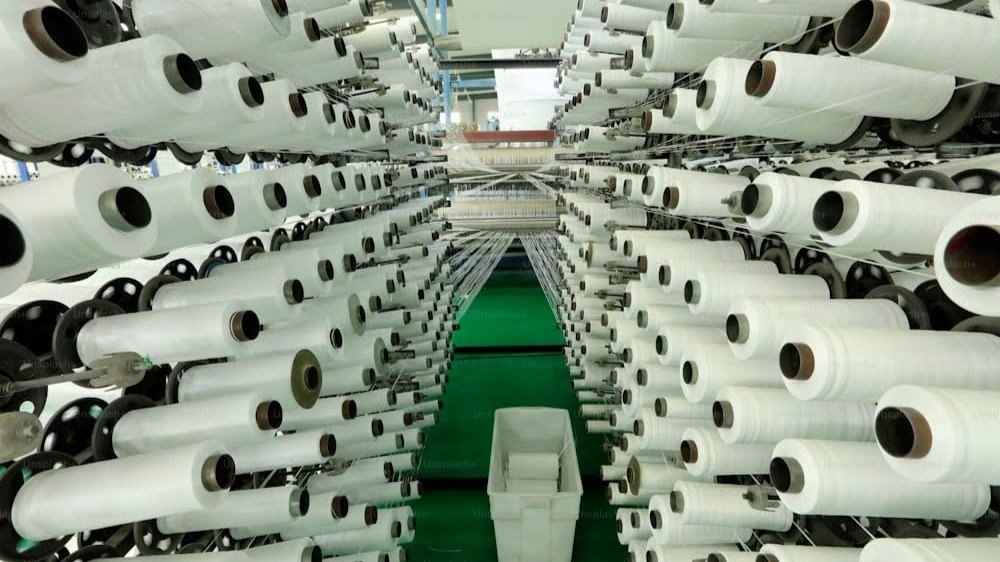
Africa produces 37 of the world's 54 cotton-growing nations yet captures less than 4% of the global garment export market. The International Trade Centre (ITC) projects €5.8 billion in African finished cotton garment exports by 2026 a figure that represents structural transformation, not incremental growth, if the AfCFTA integration, industrial park investment, and China+1 sourcing dynamics currently converging on the continent hold their trajectory.
The continent's textile-to-fashion value chain has historically been defined by a paradox: Africa grows the raw material and imports the margin. According to the African Development Bank (AfDB) and the International Trade Centre (ITC), sub-Saharan Africa's textile exports reached approximately $2.8 billion in 2022 against an African cotton market estimated at $6 billion in 2025 and projected to reach $7.5 billion by 2030. The gap between what Africa grows and what it earns from fashion is the clearest single indicator of a value chain that has not yet been captured.
That is changing. The AfCFTA, a 1.3 billion-person unified market reducing tariffs and enabling cross-border supply chains, is the policy architecture. Industrial parks in Ethiopia, Kenya, Egypt, and Morocco are the physical infrastructure. And the global fashion industry's China+1 sourcing diversification driven by rising Chinese labour costs, ESG compliance pressure, and supply chain risk management is the external demand signal that is pulling investment into African manufacturing at an accelerating pace.
Sources: AfDB, ITC, World Bank • Calculations & Modelling: Limitless Beliefs Consulting
The Cotton Paradox — Africa Grows It, Asia Earns From It
Raw material exports represent the lowest-value segment of the fashion supply chain capturing roughly 15% of total sector value while garment manufacturing, branding, and retail dominate revenue generation. Africa has historically been locked into that bottom tier. West Africa's cotton belt spanning Benin, Burkina Faso, Côte d'Ivoire, Mali, and Chad produces some of the highest-quality cotton in the world, yet most of it is shipped as raw fibre to Asian mills that capture the spinning, weaving, and garment-making margin before selling finished goods back to African consumers at import prices.
This dynamic is beginning to reverse. The Africa Finance Corporation signed a pact with UNIDO, WTO, and other partners in June 2024 to establish regional textile hubs that leverage West African cotton explicitly targeting the cotton-to-garment transformation that keeps value on the continent. In Ghana, the Dawa Industrial Zone is positioning as West Africa's garment gateway, tapping ECOWAS and Nigerian markets with locally grown cotton and tax exemptions. In Togo, IFC loaned $15 million to Star Garments in July 2024 to build the country's first large-scale apparel plant, projected to create 4,520 jobs and source local cotton directly.
“Africa is not just low-cost it is export-enabled. Duty-free access, proximity to Western markets, and rising domestic consumption combine into a strategic sourcing hub with non-linear market reach.”
Sources: ITC, AfDB, Afreximbank • Calculations & Modelling: Limitless Beliefs Consulting
Industrial Parks The Physical Infrastructure of Value Chain Capture
Industrial parks are the mechanism through which the AfCFTA's policy architecture is being converted into factory floors and export capacity. The evidence base is now substantial enough to move beyond promise to pattern:
Ethiopia's Hawassa Industrial Park built as a flagship eco-industrial zone has attracted over $4 billion in textile and apparel investment over the past decade and targets $1 billion in annual exports at full capacity, employing 25,000 workers and leveraging near-zero-cost hydropower. It hosts Chinese-owned factories supplying major Western brands including PVH, H&M, and Calzedonia. Ethiopia has become one of the five primary sources of AGOA apparel exports to the US, alongside Kenya, Madagascar, Lesotho, and Mauritius.
Morocco has built one of Africa's most competitive apparel export sectors proximity to Europe, industrial capacity in the Tangier Free Zone and Casablanca Apparel Park, and policy alignment have generated textile and clothing exports estimated at MAD 32 billion ($3.2 billion) in 2025, with the EU accounting for the majority. Under AfCFTA, Morocco's role extends to providing fabric, finishing, and technical expertise to West and Central African production networks.
Kenya's Export Processing Zones, backed by IFC lending, added 3,700 new jobs in 2025 following a $15 million IFC package to Royal Apparel EPZ to construct an EDGE-certified factory with renewable power. Kenya's textile and apparel sector contributed over KES 150 billion ($1.1 billion) to the economy in 2023, with over 60,000 people directly employed. Ghana's DTRT Apparel secured an $8 million IFC loan in November 2024 to expand capacity and pilot recycled-fibre spinning a direct ESG and circular economy positioning play ahead of EU digital product passport requirements.
| Country | Value Chain Strength | Key Asset | Trade Access |
|---|---|---|---|
| Morocco | Fabric, finishing, nearshoring | $3.2B exports (2025) · Tangier Free Zone · EU proximity | EU EPA · AfCFTA |
| Ethiopia | Labour-intensive garment manufacturing | $4B+ investment attracted · Hawassa Park · $1B export target | AGOA (extended Dec 2026) · AfCFTA |
| Egypt | Most integrated value chain in Africa | Cotton + spinning + weaving + garment · EU proximity | EU EPA · AfCFTA · Arab trade agreements |
| Kenya | Export-oriented cut-and-sew · EPZ model | $1.1B sector (2023) · 60,000+ jobs · IFC-backed expansion | AGOA · AfCFTA · EU EPA |
| Ghana | West Africa gateway · recycled fibre pilot | Dawa Industrial Zone · ECOWAS market access · IFC-backed | AfCFTA · ECOWAS · EU EPA |
| Nigeria | Largest African apparel market | $4–5B annual import bill · 220M consumers · brownfield assets | AfCFTA · ECOWAS (domestic production policy) |
| South Africa | Mature retail market · demand anchor | $10B annual apparel retail · $4B imports · retail localisation mandates | AfCFTA · EU EPA |
Sources: ITC, AfDB, Fibre2Fashion, Kenya Association of Manufacturers, Morocco Ministry of Industry • Compiled by: Limitless Beliefs Consulting
Sources: AfDB, Afreximbank, IFC • Calculations & Modelling: Limitless Beliefs Consulting
AGOA's Expiry and Why AfCFTA Must Now Carry the Weight
The African Growth and Opportunity Act (AGOA) formally expired on September 30, 2025. A one-year extension through December 31, 2026 has provided short-term continuity for eligible exporters but the limited duration has reinforced a strategic reality that every serious manufacturer on the continent now understands: preference-based access to the US market can no longer be treated as a stable foundation for long-term industrial planning.
This is the structural moment that gives AfCFTA its urgency. A continent-wide market of 1.4 billion people, growing at above 4% GDP in key manufacturing economies, provides a demand base that does not depend on Washington's legislative calendar. The UN Economic Commission for Africa has assessed that AfCFTA could boost intra-continental trade by over 50% by 2030, with textiles identified as a priority sector. The firms that are building for this market not just for AGOA or EU preferential windows are the ones making multi-decade capital allocation decisions, not preference-dependent plays.
The IMF has highlighted macroeconomic stability as a key factor in sustaining long-term investment in manufacturing sectors noting that currency volatility and fiscal uncertainty deter capital inflows into production facilities that have 15–25 year investment horizons. The combination of AGOA uncertainty and persistent FX volatility in some key manufacturing markets is the primary near-term risk to the €5.8 billion export trajectory.
The €5.8 billion garment export projection is not a forecast built on optimism it is built on $4 billion of investment already deployed in Ethiopian industrial parks, IFC facilities already financing Kenyan and Ghanaian factories, Morocco's $3.2 billion export machine already running, and a 1.4 billion-person AfCFTA market that is structurally more durable than any single trade preference programme. Africa's question is no longer whether it can move up the fashion value chain. The infrastructure exists. The capital is arriving. The question is whether the regulatory environment, logistics integration, and energy reliability can keep pace with the ambition — because the window created by global supply chain diversification will not stay open indefinitely.