
Desk: Uncategorized Desk
Published: September 9, 2026
Equatorial Guinea built one of Africa’s most concentrated hydrocarbon economies on offshore oil. Three decades after the Zafiro discovery transformed the country’s economic trajectory, declining mature fields are forcing Malabo to find a second life for its energy infrastructure through natural gas, LNG and regional gas aggregation. The country is not experiencing a conventional energy boom. It is attempting a transition from an aging oil production system into a gas monetization system that can preserve the value of infrastructure already built during the oil era. The hydrocarbon sector still represented 39% of GDP, 76% of exports and approximately 86% of government revenues according to the World Bank’s 2025 analysis, while GDP contracted by 5.4% in 2025 as hydrocarbon output declined. The new gas strategy therefore represents both an investment opportunity and a fiscal necessity.
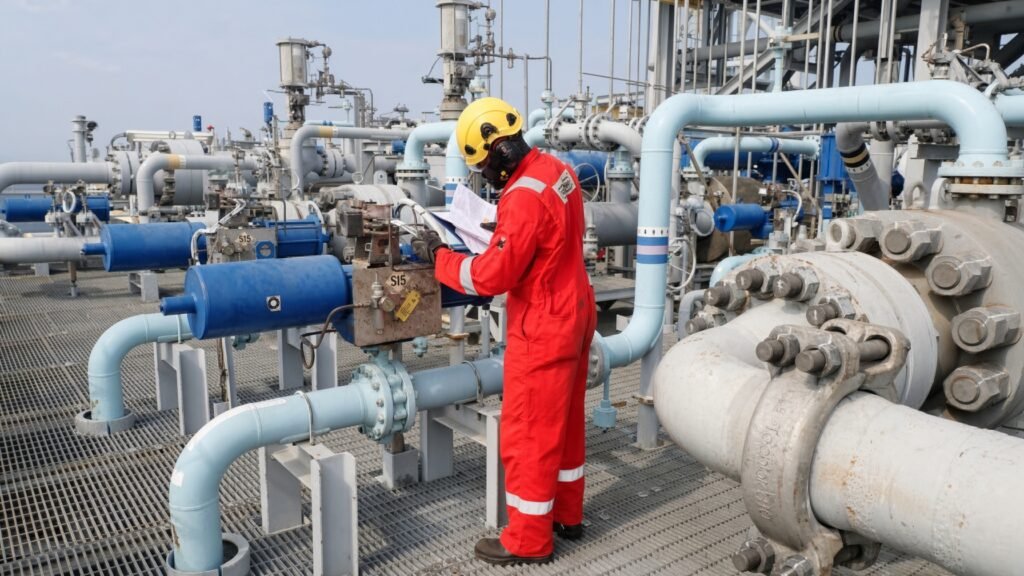
The country’s latest strategic move is the development of the Aseng Gas Project offshore Bioko Island. Chevron reached Final Investment Decision on the project in the first quarter of 2026 after an incentives agreement signed in 2025. The initial investment associated with the project was approximately $690 million. The project is designed to move additional gas through existing infrastructure and supply the Punta Europa complex and Equatorial Guinea LNG. The significance of the project is therefore larger than the headline investment figure. Equatorial Guinea already possesses a 3.7 million tonnes per annum LNG facility that has operated since 2007. ConocoPhillips became the main shareholder following its acquisition of Marathon Oil and now markets LNG from the facility into international markets. The commercial logic is straightforward: use existing processing and liquefaction infrastructure for a longer period rather than allow declining upstream production to strand billions of dollars of installed capital.
Sources: World Bank • Calculations & Modeling: Limitless Beliefs Consulting
From Oil State to Gas State Infrastructure Life Extension
Equatorial Guinea did not begin as an oil superpower. At independence in 1968, the economy was primarily agricultural, with cocoa playing an important role on Bioko Island. The first significant offshore hydrocarbon development came from the Alba field, while the discovery of the Zafiro field in 1995 created the foundation for the country’s rapid transformation into a major oil producer. The IMF recorded that oil production from Zafiro began in 1996 after Mobil and United Meridian Corporation developed the field. The field rapidly increased national production and became the center of the country’s offshore petroleum economy.
The subsequent boom dramatically increased state revenues and financed an extraordinary expansion of physical infrastructure. But the same concentration that made the boom powerful also made the economy vulnerable. Oil fields decline. Prices fluctuate. Capital intensive upstream developments require continuous reinvestment. Once production begins falling, fiscal revenues can decline faster than government spending obligations.
“The $690 million Aseng development is best understood as an infrastructure life extension strategy. Its value is not simply the gas it produces, but the potential to keep the Punta Europa processing and LNG system commercially relevant into the next decade.”
Sources: World Bank • Calculations & Modeling: Limitless Beliefs Consulting
Sources: IMF, Equatorial Guinea Staff Report 2026 • Calculations & Modeling: Limitless Beliefs Consulting
The Gas Strategy Is Really an Infrastructure Strategy
The most important change in Equatorial Guinea’s energy model is the move from individual field development toward gas aggregation. The Gas Mega Hub concept seeks to bring gas from multiple fields and potentially neighboring countries into existing processing and LNG infrastructure around Punta Europa. The strategy is economically rational because a large LNG plant requires substantial and predictable feed gas over many years. When the original upstream resource begins declining, the plant itself can become underutilized even if its technical condition remains sound.
Equatorial Guinea’s LNG facility has a nameplate capacity of 3.7 million tonnes per annum. GECF data indicate that the country exported approximately 3.1 million tonnes of LNG in 2024 equivalent to approximately 84% of nameplate capacity. This is why the Aseng project matters beyond LNG exports. Gas that enters the Punta Europa system can potentially support domestic power generation while also feeding export infrastructure. The same molecule can therefore have both domestic economic value and international commodity value.
Sources: GECF, ConocoPhillips • Calculations & Modeling: Limitless Beliefs Consulting
Sources: World Bank • Calculations & Modeling: Limitless Beliefs Consulting
Sources: Equatorial Guinea Ministry of Hydrocarbons, Chevron • Calculations & Modeling: Limitless Beliefs Consulting
Monetary Policy and Currency A Different Risk Profile
Equatorial Guinea’s monetary environment differs substantially from oil producers with floating national currencies. The country is part of the CEMAC monetary union and uses the Central African CFA franc. The currency is pegged to the euro at CFAF 655.957 per euro. Monetary policy is therefore conducted through the Bank of Central African States rather than through an independent national central bank. As of September 4, 2026, BEAC reported a tender rate of 4.50% and a marginal lending facility rate of 5.75%. Those rates are materially below the very high policy rates seen in some African economies with floating currencies.
The CFA franc arrangement reduces direct local currency depreciation risk against the euro. It does not eliminate external financial risk. Energy projects still face dollar exposure, euro exposure, commodity price risk, interest rate risk, and CEMAC foreign exchange liquidity constraints. For an international energy investor, the relevant question is therefore not simply whether the CFA franc will depreciate. It is whether hydrocarbon cash flows, fiscal policy, regional reserves and external liquidity will support the currency regime and allow project revenues to be converted and repatriated efficiently.
The China Question Trade, Not Military Presence
The underlying geopolitical issue is real, but the claim of a potential Chinese naval presence in Bata should not be presented as an established Chinese military base. U.S. officials raised concerns in 2021 that China could seek a military facility in Equatorial Guinea, particularly around the Chinese-built commercial port in Bata. Subsequent reporting indicated that Washington had not seen evidence of military construction and that Equatorial Guinea had assured U.S. officials that it would not permit such a base.
The economic relationship with China is nevertheless substantial. China’s Ministry of Foreign Affairs reports bilateral trade with Equatorial Guinea of approximately $1.152 billion in 2024, including $982 million of Chinese imports from Equatorial Guinea and $170 million of Chinese exports to the country. The strategic implication is therefore broader than the question of a naval base. China is already an economic infrastructure partner. The United States remains deeply relevant through energy companies including Chevron and ConocoPhillips. Russia has also expanded its security relationship with Malabo.
Sources: Ministry of Foreign Affairs of the People’s Republic of China • Calculations & Modeling: Limitless Beliefs Consulting
Sources: U.S. Energy Information Administration • Calculations & Modeling: Limitless Beliefs Consulting
Sources: LBNN Intelligence, World Bank, IMF • Calculations & Modeling: Limitless Beliefs Consulting
Capital Inflows Are Returning, but Not at Boom-Era Scale
Equatorial Guinea continues to attract foreign capital, but current flows are much smaller than during the country’s peak investment period. UNCTAD reported inward FDI of approximately $188 million in 2024, compared with $1.39 billion in 2022. The stock of inward FDI stood at approximately $19.4 billion in 2024. This distinction is important. A country can have a very large stock of accumulated foreign investment while experiencing relatively modest new annual inflows. Equatorial Guinea’s current energy strategy is therefore partly about maintaining the economic productivity of an existing capital base. The Aseng project is consequently significant because it demonstrates continued willingness by a major international energy company to commit capital to Equatorial Guinea despite the country’s declining hydrocarbon production profile.
Scenario Analysis What Happens Next?
- Base Case: Aseng and other gas projects gradually replace declining upstream supply. LNG infrastructure remains commercially active into the 2030s while the government attempts gradual economic diversification.
- Upside Case: The Gas Mega Hub successfully aggregates domestic and regional resources. Existing infrastructure reaches high utilization, additional LNG volumes are monetized and non-hydrocarbon industries begin developing around reliable energy supply.
- Downside Case: Oil and gas decline faster than new projects replace production. LNG feedstock becomes insufficient, fiscal revenues weaken and investment remains concentrated in hydrocarbons without producing meaningful diversification.
The difference between these scenarios is not simply the amount of gas underground. It is the ability to convert reserves into commercially bankable production while simultaneously improving institutions and non-hydrocarbon economic activity.
Why the Oil Decline Could Matter More Than the Gas Boom
The most important investor mistake would be to treat new gas investment as evidence that Equatorial Guinea has solved its hydrocarbon dependence. The IMF projects a continued decline in hydrocarbon production over the medium term. Its 2026 assessment estimated that the economy contracted 6.4% in 2025 and warned that hydrocarbon production would continue declining. The World Bank similarly identifies declining hydrocarbon production as a structural constraint.
Gas can extend the life of the energy system. It cannot by itself diversify the economy. The distinction is especially important because hydrocarbon projects tend to be capital intensive. A $690 million investment can create substantial output without creating hundreds of thousands of jobs. The economic multiplier therefore depends on what happens around the energy project: local suppliers, manufacturing, services, logistics, construction, electricity, human capital and private sector development. If the gas strategy produces only LNG exports, Equatorial Guinea remains a petro state with a different commodity. If it produces reliable domestic power, industrial feedstock, regional gas infrastructure and new private sector activity, it becomes a platform for broader economic transformation.
The Governance Discount Remains What Investors Should Watch
Energy investors do not price reserves alone. They price the probability that those reserves can be converted into cash flows under stable contracts, predictable fiscal terms and enforceable property rights. Equatorial Guinea’s reform program with the IMF includes measures involving fiscal governance, transparency, anti-money laundering controls and publication of extractive sector information. Those reforms matter because the country’s historical model concentrated enormous economic power around the state and the ruling elite. The U.S. Department of Justice’s asset recovery cases involving Teodorín demonstrate how governance risk can become an international financial issue.
What investors should watch: Aseng execution (construction progress, first gas timing); hydrocarbon production (whether the current decline stabilizes or accelerates); LNG feedstock (volumes available to Punta Europa); EG LNG utilization (whether additional feed gas keeps the 3.7 Mtpa facility commercially active); regional gas integration (progress on Cameroon and Nigeria linked gas opportunities); fiscal dependence (whether hydrocarbon revenues as a percentage of government income decline over time); FDI (whether annual investment rises beyond isolated upstream projects); electricity access (whether additional domestic gas translates into measurable improvements in power access and reliability); non-hydrocarbon GDP (whether services, agriculture and manufacturing can grow fast enough to offset hydrocarbon contraction); and political succession (whether leadership transition creates policy continuity or increases institutional risk).
Bottom Line: Equatorial Guinea is not abandoning its petro-state model. It is attempting to redesign it around gas. The $690 million Aseng project, the 3.7 Mtpa LNG facility and the broader Gas Mega Hub strategy give the country a credible mechanism for extending its energy economy. Hydrocarbons still represent 39% of GDP, 76% of exports, and 86% of government revenues while GDP contracted 5.4% in 2025. Chevron’s investment and ConocoPhillips’ LNG marketing demonstrate continued international commercial engagement. China’s $1.15 billion bilateral trade relationship is substantial, while the strategic question of a potential Chinese military presence in Bata remains unconfirmed. The investment case becomes materially stronger only if that energy infrastructure becomes a platform for diversification rather than another mechanism for prolonging hydrocarbon dependence. The next decade will determine whether Equatorial Guinea’s gas strategy transforms the petro-state or merely extends it.