LIVE MARKETS
USD/NGN1,377-0.22%
USD/KES130.40+0.18%
USD/ZAR16.77+0.31%
USD/GHS11.19-0.44%
USD/EGP48.00+0.05%
|
GOLD$4,628/oz+1.15%
BRENT$69.41/bbl-0.54%
COBALT$26,800/t-1.35%
|
BTC$94,280+2.34%
ETH$3,218+1.87%
USD/NGN1,377-0.22%
GOLD$4,628/oz+1.15%
BTC$94,280+2.34%
ROAD-1
Breaking AfCFTA Secretariat: 47 of 54 member states now operational under continental free trade framework — intra-Africa trade volumes up 12% year-on-year
Home Infrastructure Ethiopia Leads Africa’s Infrastructure Surge with $8.97B Road…
Infrastructure

Ethiopia Leads Africa’s Infrastructure Surge with $8.97B Road Expansion and 279 Active Projects

Author: Berhanu Shimeles Desk: Uncategorized Desk Published: April 20, 2026 Ethiopia has 279 active road and bridge projects underway simultaneously, backed by an $8.97 billion investment plan targeting a road network expansion from 49,000 km to over 136,000 km and has launched a $12.5 billion Bishoftu International Airport mega-project, making it the single most aggressive infrastructure build-out in Sub-Saharan Africa in 2026. The programme is designed to expand Ethiopia’s total road network by nearly three times its current size over a five-year period one of the largest infrastructure scale-ups on the continent measured by both absolute investment and proportional network growth. The transport and logistics sector already contributes an estimated 7–10% of GDP, and the planned expansion is engineered to transform that contribution by connecting agricultural zones to markets, integrating urban expressways, and building the feeder road network that makes landlocked Ethiopia’s trade logistics competitive with coastal economies. Financing operates as a hybrid model combining government budget allocations with partnerships including the World Bank and multilateral institutions a structure that preserves domestic ownership of the investment agenda while accessing concessional funding and technical standards that sovereign budgets alone cannot deliver at this scale. 279 Active Road & Bridge Projects (2026) $8.97B 5-Year Road Network Investment Plan 136K km Target Road Network (from 49,000 km) $12.5B Bishoftu International Airport Mega-Project Infrastructure Intelligence Ethiopia Road Network Expansion Current vs Target (km) Sources: AfDB, IMF, World Bank  •  Calculations & Modelling: Limitless Beliefs Consulting Strategic Intelligence 49,000 km to 136,000 kmNot an Upgrade, a Transformation A road network expansion from 49,000 km to 136,000 km is not infrastructure improvement it is economic geography redesign. At 136,000 km, Ethiopia’s road network would cover terrain that currently has no formal land transport linkage, connecting agricultural communities to market systems, integrating secondary cities into the national logistics network, and creating the physical preconditions for industrialisation in regions that capital has historically bypassed because it could not physically reach them. The 279 simultaneous active projects are the execution mechanism for that redesign. At this pace and scale, Ethiopia is not building roads sequentially it is deploying construction capacity across the country simultaneously, attempting to compress a decade of infrastructure development into five years. The risk of that approach is execution quality and coordination complexity; the reward is a compressed timeline for the economic returns that connectivity generates. “Ethiopia is not building roads to connect its cities. It is building roads to create the economic geography that makes its cities worth connecting to and Bishoftu Airport is the node that makes the entire network globally relevant.” Investment Intelligence Ethiopia Infrastructure Investment Scale Roads vs Aviation (USD Billions) Sources: AfDB, IMF Infrastructure Data  •  Calculations & Modelling: Limitless Beliefs Consulting Aviation Intelligence Bishoftu A $12.5 Billion Logistics Architecture Statement The January 2026 launch of the Bishoftu International Airport mega-project transforms Ethiopia’s infrastructure programme from a domestic road-building exercise into a continental logistics architecture statement. At $12.5 billion, Bishoftu is not merely a new airport it is a declaration that Ethiopia intends to become the primary air cargo and passenger hub for East Africa and a dominant node in the Africa-Asia, Africa-Europe, and Africa-Middle East air corridors that Ethiopian Airlines has spent two decades building its route network around. The integration of road network expansion with Bishoftu’s development is the strategic logic that makes both investments compound rather than simply add. A new international airport without the feeder road infrastructure to connect it to Ethiopia’s 120 million-person domestic market delivers a fraction of its economic potential. A 136,000 km road network without an international aviation hub to connect it to global supply chains remains a domestic connectivity tool. Combined, they create the integrated logistics infrastructure that makes Ethiopia a genuine manufacturing and trade hub rather than simply a large domestic economy. Economic Intelligence Transport Sector GDP Contribution Ethiopia (Activity Range) Sources: AfDB, World Bank  •  Calculations & Modelling: Limitless Beliefs Consulting Employment Intelligence Infrastructure Programme Employment Impact Direct vs Indirect Sources: AfDB, IFC Labour Data  •  Calculations & Modelling: Limitless Beliefs Consulting Employment generation at scale is a defining feature of the programme. With hundreds of projects active simultaneously, the sector supports an estimated 50,000+ direct construction jobs and over 120,000 indirect jobs across supply chains, logistics, and materials production. In Ethiopia, where formal employment opportunities have historically been concentrated in Addis Ababa, a geographically distributed construction programme creates labour market demand in exactly the regions where it is most needed the same regions where road connectivity is lowest and economic opportunity is most constrained. Cost Intelligence Infrastructure Cost Structure Ethiopia Road Programme Sources: IFC, Afreximbank  •  Calculations & Modelling: Limitless Beliefs Consulting The cost structure of infrastructure development in Ethiopia reflects broader African patterns, with materials accounting for approximately 35% of project costs a share that creates significant multiplier effects in the domestic construction materials sector when projects favour local sourcing. Africa faces an estimated $68–$108 billion annual infrastructure financing gap, and Ethiopia’s $21.47 billion combined road and aviation investment represents one of the most concentrated sovereign responses to that gap currently underway on the continent. By expanding its road network and integrating transport infrastructure with Bishoftu’s aviation capacity, Ethiopia is simultaneously targeting three economic objectives: reducing spatial inequality across a geographically vast nation, strengthening internal markets by connecting producers to consumers, and establishing the logistics infrastructure that will determine whether Ethiopia’s manufacturing sector already the fastest-growing on the continent can compete for global supply chain positioning over the next decade. Ethiopia’s infrastructure programme is the most comprehensive expression of sovereign economic ambition currently being executed in Sub-Saharan Africa. 279 active projects, $8.97 billion in road investment, $12.5 billion in aviation infrastructure, and a road network target of 136,000 km these are not development metrics. They are the physical architecture of a continental logistics hub being built from the inside out. Whether the execution matches the ambition will determine whether Ethiopia becomes East Africa’s industrial gateway or its most ambitious incomplete project. The blueprint is sound. The scale
By Berhanu Shimeles · April 20, 2026 · 10 min read
Ethiopia Leads Africa’s Infrastructure Surge with $8.97B Road Expansion and 279 Active Projects

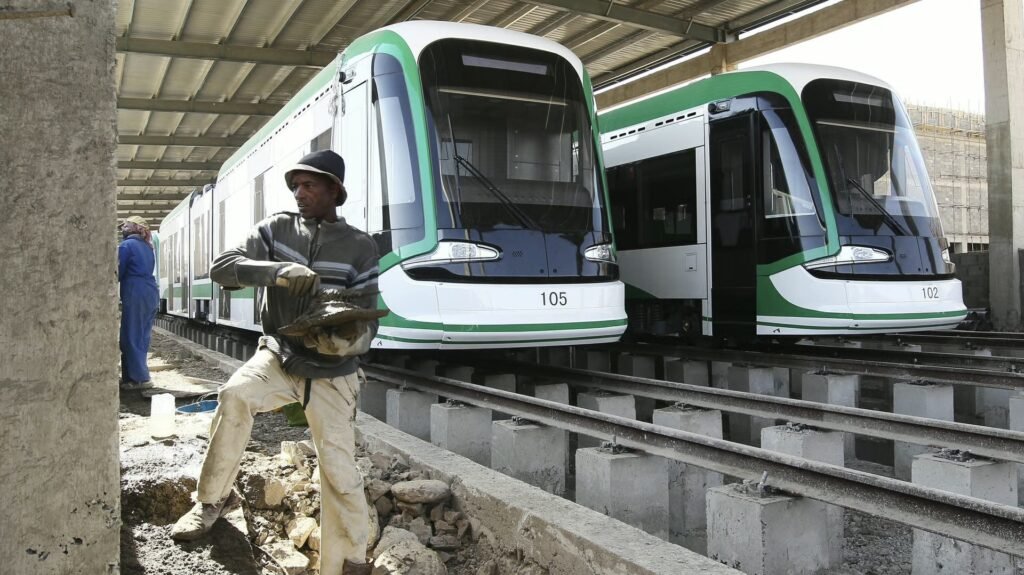
Ethiopia has 279 active road and bridge projects underway simultaneously, backed by an $8.97 billion investment plan targeting a road network expansion from 49,000 km to over 136,000 km and has launched a $12.5 billion Bishoftu International Airport mega-project, making it the single most aggressive infrastructure build-out in Sub-Saharan Africa in 2026.

The programme is designed to expand Ethiopia's total road network by nearly three times its current size over a five-year period one of the largest infrastructure scale-ups on the continent measured by both absolute investment and proportional network growth. The transport and logistics sector already contributes an estimated 7–10% of GDP, and the planned expansion is engineered to transform that contribution by connecting agricultural zones to markets, integrating urban expressways, and building the feeder road network that makes landlocked Ethiopia's trade logistics competitive with coastal economies.

Financing operates as a hybrid model combining government budget allocations with partnerships including the World Bank and multilateral institutions a structure that preserves domestic ownership of the investment agenda while accessing concessional funding and technical standards that sovereign budgets alone cannot deliver at this scale.

279
Active Road & Bridge Projects (2026)
$8.97B
5-Year Road Network Investment Plan
136K km
Target Road Network (from 49,000 km)
$12.5B
Bishoftu International Airport Mega-Project

Infrastructure Intelligence
Ethiopia Road Network Expansion Current vs Target (km)

Sources: AfDB, IMF, World Bank  •  Calculations & Modelling: Limitless Beliefs Consulting

49,000 km to 136,000 kmNot an Upgrade, a Transformation

A road network expansion from 49,000 km to 136,000 km is not infrastructure improvement it is economic geography redesign. At 136,000 km, Ethiopia's road network would cover terrain that currently has no formal land transport linkage, connecting agricultural communities to market systems, integrating secondary cities into the national logistics network, and creating the physical preconditions for industrialisation in regions that capital has historically bypassed because it could not physically reach them.

The 279 simultaneous active projects are the execution mechanism for that redesign. At this pace and scale, Ethiopia is not building roads sequentially it is deploying construction capacity across the country simultaneously, attempting to compress a decade of infrastructure development into five years. The risk of that approach is execution quality and coordination complexity; the reward is a compressed timeline for the economic returns that connectivity generates.

“Ethiopia is not building roads to connect its cities. It is building roads to create the economic geography that makes its cities worth connecting to and Bishoftu Airport is the node that makes the entire network globally relevant.”

Investment Intelligence
Ethiopia Infrastructure Investment Scale Roads vs Aviation (USD Billions)

Sources: AfDB, IMF Infrastructure Data  •  Calculations & Modelling: Limitless Beliefs Consulting

Bishoftu A $12.5 Billion Logistics Architecture Statement

The January 2026 launch of the Bishoftu International Airport mega-project transforms Ethiopia's infrastructure programme from a domestic road-building exercise into a continental logistics architecture statement. At $12.5 billion, Bishoftu is not merely a new airport it is a declaration that Ethiopia intends to become the primary air cargo and passenger hub for East Africa and a dominant node in the Africa-Asia, Africa-Europe, and Africa-Middle East air corridors that Ethiopian Airlines has spent two decades building its route network around.

The integration of road network expansion with Bishoftu's development is the strategic logic that makes both investments compound rather than simply add. A new international airport without the feeder road infrastructure to connect it to Ethiopia's 120 million-person domestic market delivers a fraction of its economic potential. A 136,000 km road network without an international aviation hub to connect it to global supply chains remains a domestic connectivity tool. Combined, they create the integrated logistics infrastructure that makes Ethiopia a genuine manufacturing and trade hub rather than simply a large domestic economy.


Economic Intelligence
Transport Sector GDP Contribution Ethiopia (Activity Range)

Sources: AfDB, World Bank  •  Calculations & Modelling: Limitless Beliefs Consulting

Employment Intelligence
Infrastructure Programme Employment Impact Direct vs Indirect

Sources: AfDB, IFC Labour Data  •  Calculations & Modelling: Limitless Beliefs Consulting

Employment generation at scale is a defining feature of the programme. With hundreds of projects active simultaneously, the sector supports an estimated 50,000+ direct construction jobs and over 120,000 indirect jobs across supply chains, logistics, and materials production. In Ethiopia, where formal employment opportunities have historically been concentrated in Addis Ababa, a geographically distributed construction programme creates labour market demand in exactly the regions where it is most needed the same regions where road connectivity is lowest and economic opportunity is most constrained.


Cost Intelligence
Infrastructure Cost Structure Ethiopia Road Programme

Sources: IFC, Afreximbank  •  Calculations & Modelling: Limitless Beliefs Consulting

The cost structure of infrastructure development in Ethiopia reflects broader African patterns, with materials accounting for approximately 35% of project costs a share that creates significant multiplier effects in the domestic construction materials sector when projects favour local sourcing. Africa faces an estimated $68–$108 billion annual infrastructure financing gap, and Ethiopia's $21.47 billion combined road and aviation investment represents one of the most concentrated sovereign responses to that gap currently underway on the continent.

By expanding its road network and integrating transport infrastructure with Bishoftu's aviation capacity, Ethiopia is simultaneously targeting three economic objectives: reducing spatial inequality across a geographically vast nation, strengthening internal markets by connecting producers to consumers, and establishing the logistics infrastructure that will determine whether Ethiopia's manufacturing sector already the fastest-growing on the continent can compete for global supply chain positioning over the next decade.

Ethiopia's infrastructure programme is the most comprehensive expression of sovereign economic ambition currently being executed in Sub-Saharan Africa. 279 active projects, $8.97 billion in road investment, $12.5 billion in aviation infrastructure, and a road network target of 136,000 km these are not development metrics. They are the physical architecture of a continental logistics hub being built from the inside out. Whether the execution matches the ambition will determine whether Ethiopia becomes East Africa's industrial gateway or its most ambitious incomplete project. The blueprint is sound. The scale is unprecedented. The execution is everything.


🌍
ROAD-1 Intelligence
Get port friction scores, PAPSS settlement data, FX volatility signals, and corridor analysis for the trade routes in this story.
Access ROAD-1 →