
LIVE MARKETS
USD/NGN1,377-0.22%
USD/KES130.40+0.18%
USD/ZAR16.77+0.31%
USD/GHS11.19-0.44%
USD/EGP48.00+0.05%
|
GOLD$4,628/oz+1.15%
BRENT$69.41/bbl-0.54%
COBALT$26,800/t-1.35%
|
BTC$94,280+2.34%
ETH$3,218+1.87%
USD/NGN1,377-0.22%
GOLD$4,628/oz+1.15%
BTC$94,280+2.34%
ROAD-1
Breaking AfCFTA Secretariat: 47 of 54 member states now operational under continental free trade framework — intra-Africa trade volumes up 12% year-on-year
Home Infrastructure  Africa’s Ports Are Competing for Trade Volume But…
Infrastructure

 Africa’s Ports Are Competing for Trade Volume But Congestion Costs Are Eroding Their Competitiveness

Author: Fatoumata Diallo Desk: Uncategorized Desk Published: March 31, 2026 Port infrastructure is the entry point of Africa’s participation in global trade. The efficiency, capacity, and reliability of African ports directly determine the competitiveness of imports and exports, the cost of supply chains, and the attractiveness of coastal economies as logistics hubs. Across the continent, significant new capacity is being developed but operational efficiency remains the defining constraint on port competitiveness. Congestion as a Structural Cost Extended container dwell times at major African ports averaging significantly above global benchmarks at Apapa (Lagos), Mombasa, and Dar es Salaam represent a structural cost embedded in the price of every import and export moving through these facilities. Dwell time costs include storage charges, demurrage, delayed working capital release, and the uncertainty premium that importers and exporters build into their logistics planning. The causes are systemic: documentation processing delays, inspection bottlenecks, inadequate inland connectivity, and governance challenges that cannot be resolved through terminal investment alone. New Capacity and the Governance Gap New terminal developments including Lekki Deep Sea Port in Nigeria and the ongoing expansion of Mombasa add physical capacity but do not automatically resolve operational efficiency deficits. Where customs procedures, port community systems, and inland logistics infrastructure have not been modernised in parallel, new terminal capacity underperforms relative to design throughput. Port Concessions and Private Sector Performance Private sector concessions have generally improved terminal productivity at specific berths — container handling rates, crane performance, and vessel turnaround times have improved at concession-operated terminals in several markets. However, concession boundaries often do not extend to the inland logistics or customs processes that drive overall dwell time limiting the efficiency gains achievable through private terminal management alone. The Regional Hub Competition Ports including Tangier Med (Morocco), Djibouti, and Lomé (Togo) have positioned themselves as regional transshipment hubs serving markets beyond their immediate hinterlands. This competition for transshipment volume creates an incentive for efficiency improvement ports that cannot compete on turnaround time and reliability lose transshipment business to more capable alternatives. Trade Economics and the Investment Case Port infrastructure investment delivers its highest economic return when paired with customs modernisation, inland logistics development, and governance reform. The investment case for African port development is structurally strong given trade volume growth projections but the return on capital deployed will be determined as much by operational reform as by physical construction.

By Fatoumata Diallo · March 31, 2026 · 2 min read
 Africa’s Ports Are Competing for Trade Volume But Congestion Costs Are Eroding Their Competitiveness

Port infrastructure is the entry point of Africa's participation in global trade. The efficiency, capacity, and reliability of African ports directly determine the competitiveness of imports and exports, the cost of supply chains, and the attractiveness of coastal economies as logistics hubs. Across the continent, significant new capacity is being developed but operational efficiency remains the defining constraint on port competitiveness.

Congestion as a Structural Cost

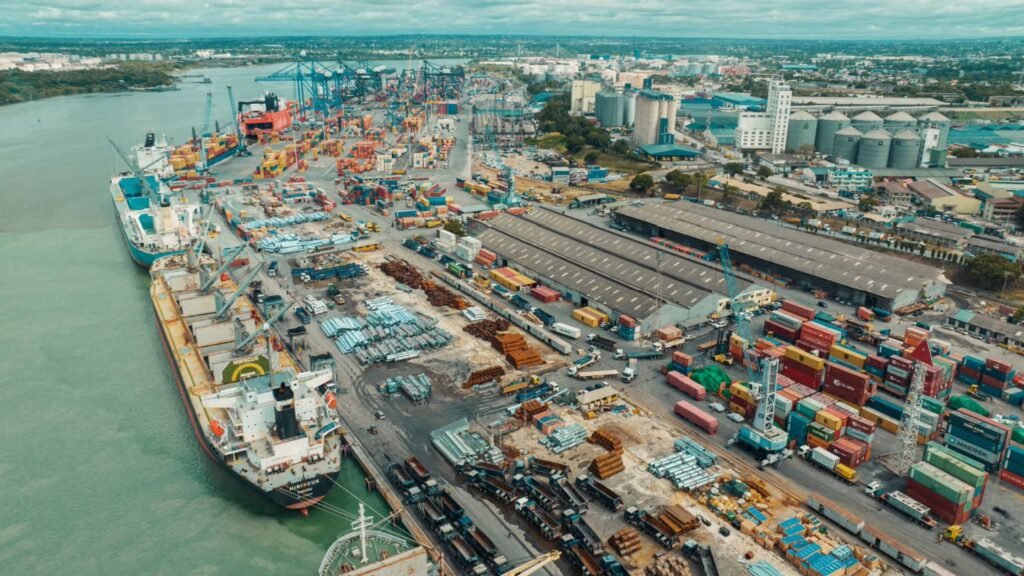
Extended container dwell times at major African ports averaging significantly above global benchmarks at Apapa (Lagos), Mombasa, and Dar es Salaam represent a structural cost embedded in the price of every import and export moving through these facilities. Dwell time costs include storage charges, demurrage, delayed working capital release, and the uncertainty premium that importers and exporters build into their logistics planning.

The causes are systemic: documentation processing delays, inspection bottlenecks, inadequate inland connectivity, and governance challenges that cannot be resolved through terminal investment alone.

New Capacity and the Governance Gap

New terminal developments including Lekki Deep Sea Port in Nigeria and the ongoing expansion of Mombasa add physical capacity but do not automatically resolve operational efficiency deficits. Where customs procedures, port community systems, and inland logistics infrastructure have not been modernised in parallel, new terminal capacity underperforms relative to design throughput.

Port Concessions and Private Sector Performance

Private sector concessions have generally improved terminal productivity at specific berths — container handling rates, crane performance, and vessel turnaround times have improved at concession-operated terminals in several markets. However, concession boundaries often do not extend to the inland logistics or customs processes that drive overall dwell time limiting the efficiency gains achievable through private terminal management alone.

The Regional Hub Competition

Ports including Tangier Med (Morocco), Djibouti, and Lomé (Togo) have positioned themselves as regional transshipment hubs serving markets beyond their immediate hinterlands. This competition for transshipment volume creates an incentive for efficiency improvement ports that cannot compete on turnaround time and reliability lose transshipment business to more capable alternatives.

Trade Economics and the Investment Case

Port infrastructure investment delivers its highest economic return when paired with customs modernisation, inland logistics development, and governance reform. The investment case for African port development is structurally strong given trade volume growth projections but the return on capital deployed will be determined as much by operational reform as by physical construction.


🌍
ROAD-1 Intelligence
Get port friction scores, PAPSS settlement data, FX volatility signals, and corridor analysis for the trade routes in this story.
Access ROAD-1 →