
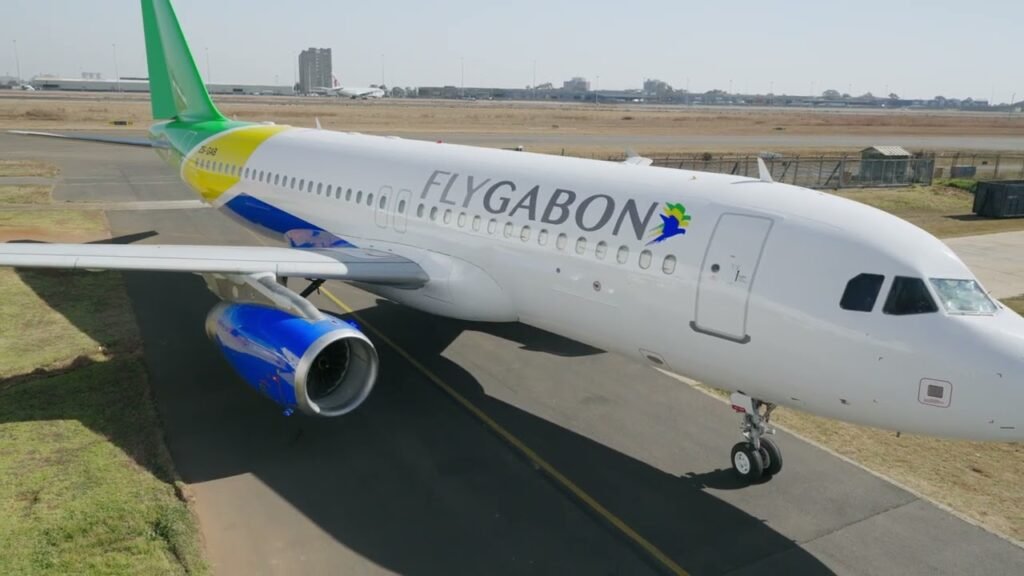
FlyGabon's 2026 Libreville–Lagos direct route is a node-level improvement not a structural breakthrough in an intra-African aviation system where a continent holding 20% of global population accounts for less than 3% of global air traffic, bilateral air service agreements constrain route freedom across 54 markets, and multiple taxation layers per route make every new African airline connection an exercise in absorbing costs that no other aviation market in the world imposes at the same intensity.
The Libreville–Lagos route makes commercial sense on its own terms: two energy-economy capitals with significant oil and gas executive traffic moving between Central and West Africa, currently routed through Paris, Doha, or Nairobi because a direct connection has not existed. FlyGabon's ATR 42-600 and Airbus A320 fleet combination regional efficiency aircraft for short-haul, international-capable aircraft for expansion reflects a pragmatic strategy that matches aircraft economics to route economics rather than acquiring capacity ahead of demand.
But the route's commercial logic should not be confused with structural progress. The conditions that make it difficult to profitably fly between any two African cities fuel cost premiums, airport monopoly pricing, BASA restrictions, regulatory taxation layers are as present on the Libreville–Lagos corridor as on every other intra-African route. FlyGabon has found a commercially viable specific route within a structurally broken system. That is materially different from the system becoming less broken.
Sources: AfDB, IMF, World Bank • Calculations & Modelling: Limitless Beliefs Consulting
20% of Population, Less Than 3% of Air Traffic This Is Not a Demand Problem
The gap between Africa's 20% share of global population and its sub-3% share of global air traffic is the most diagnostic number in African aviation and it is consistently misread. The instinct is to interpret it as a demand gap: Africans don't fly because they can't afford to. That interpretation is partially correct and analytically insufficient. The more important explanation is a structural cost gap: Africans don't fly because the structural conditions of African aviation make every ticket more expensive than it needs to be relative to what the demand would support if the cost structure were different.
Multiple taxation layers on each route airport fees, fuel surcharges, government levies, and regulatory compliance costs are imposed simultaneously on African airline operations in ways that are structurally without equivalent in European, North American, or Asian aviation markets. The result is a ticket price floor that eliminates the discretionary travel demand that would otherwise exist at lower price points, and that makes business travel between African cities cost more than equivalent-distance travel between any other cities on earth.
“Africa's aviation problem is not that Africans don’t want to fly. It is that every structural layer of African aviation taxation, BASAs, airport pricing is designed as if the goal is to make flying as expensive as possible.”
Sources: AfDB, IATA, IFC • Analysis: Limitless Beliefs Consulting
ATR 42-600 and Airbus A320 FlyGabon's Aircraft-Economics Discipline
FlyGabon's fleet strategy demonstrates the aircraft-economics discipline that distinguishes commercially viable African carriers from those that acquire aspirational capacity they cannot fill. The ATR 42-600 is the correct aircraft for Central and West African regional routes it seats 40–50 passengers, burns significantly less fuel per seat than jet equipment on short sectors, and can operate from airports with limited infrastructure. On a Libreville–Lagos route that is capturing specific oil and gas executive demand rather than mass market traffic, the ATR's economics are more sustainable than jet equipment would be at current load factors.
The Airbus A320 in the fleet signals international expansion ambition and the discipline to keep it separate from regional operations rather than forcing jet equipment onto routes where turboprop economics are superior. This fleet segmentation is what many African carriers get wrong: they acquire jets for prestige and then fly them at load factors that make every route unprofitable.
Sources: AfDB, IFC, IATA • Calculations & Modelling: Limitless Beliefs Consulting
Sources: AfDB, Industry Reports • Calculations & Modelling: Limitless Beliefs Consulting
Single African Air Transport Market The Policy That Would Change Everything
The Yamoussoukro Decision Africa's framework for liberalising intra-African aviation, agreed in 1999 has been selectively implemented for over two decades. The Single African Air Transport Market (SAATM), launched under the African Union in 2018, has signatories but not universal implementation. The policy architecture for African aviation liberalisation exists. The political will to implement it at the speed the aviation sector requires does not.
The economic consequence of this implementation gap is measurable: high logistics costs suppress intra-African trade competitiveness, limited connectivity constrains tourism growth, and the absence of affordable air freight options increases the cost of time-sensitive trade that surface transport cannot serve efficiently. Every percentage point of AfCFTA trade liberalisation that reduces tariff friction on goods is partially neutralised by the aviation connectivity friction that makes moving those goods between African countries unnecessarily expensive.
FlyGabon's Libreville–Lagos route cannot solve that. But it is the kind of node-level commercial signal that demonstrates demand exists when routes are served and that demonstration is what builds the political case for the structural reforms that would allow the demand to be served at scale.
FlyGabon's Libreville–Lagos route is worth covering precisely because it is not a breakthrough. It is a commercially rational response to a specific demand pocket within a structurally broken system and the gap between "commercially rational specific route" and "structurally functional intra-African aviation market" is the most important distance in African transport economics. Closing that gap requires SAATM implementation, BASA renegotiation, airport pricing reform, and taxation rationalisation across 54 markets simultaneously. FlyGabon is flying one route. Africa needs a system. Those are not the same thing, and conflating them is the analytical error that has allowed the structural failure to persist for twenty years.