
Desk: Uncategorized Desk
Published: May 6, 2026
By 2035, Africa will add over 450 million working age individuals to the global labor force. But the real battleground is not at the country level it is at the city level. Cities like Lagos, Nairobi, Kigali, and Cape Town are emerging as economic engines, competing to attract capital, talent, and infrastructure investment. The outcome of Africa’s skills race will depend on which cities can convert talent into jobs not just produce it. Skills without jobs = migration. Skills without capital = stagnation. Jobs without skills = inefficiency. The cities that solve all three simultaneously will dominate Africa’s economic future. Urban economies already drive over 60–70% of Africa’s GDP, yet urban skill gaps cost the continent an estimated $150–200 billion annually in lost productivity.
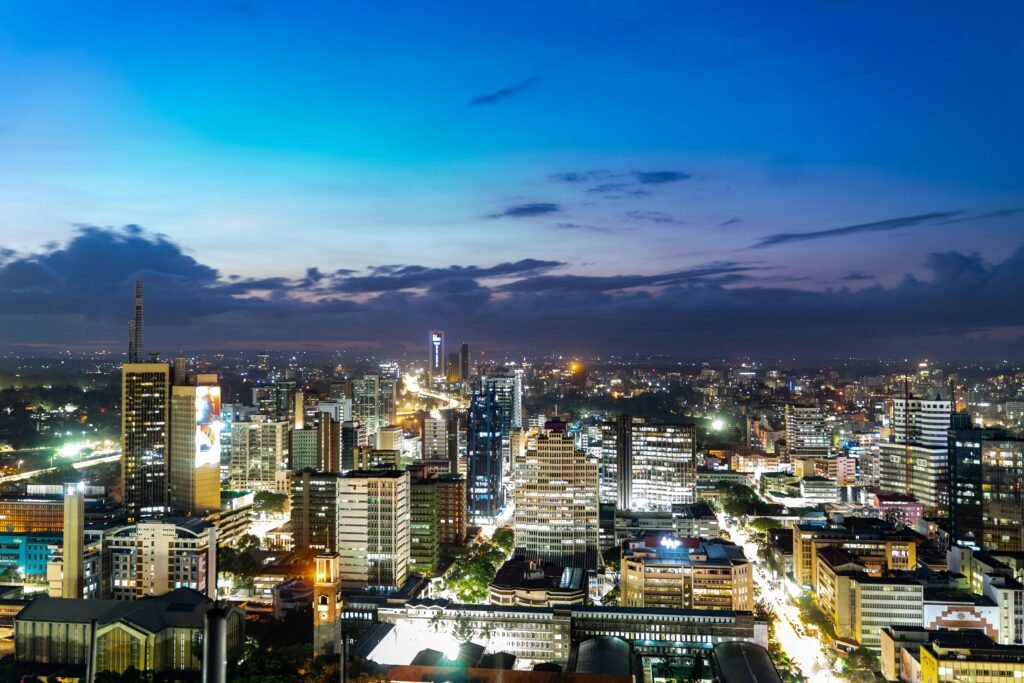
Africa’s urbanization is accelerating at unprecedented speed. By 2035, the continent will host 17 of the world’s 40 fastest-growing cities. But growth is not the same as development. Many African cities are expanding in population without expanding in economic structure creating fragile urban centers where informality dominates, infrastructure lags, and job creation fails to keep pace with labor force growth. The cities that break this pattern will define Africa’s economic trajectory for a generation.
Sources: AfDB, IMF, World Bank, ILO • Analysis: Limitless Beliefs Consulting
City-Level Competition Four Models, Four Trajectories
Africa’s leading cities represent four distinct models of urban economic development. Each has strengths. Each has binding constraints. The city that combines all four attributes—scale, innovation, policy efficiency, and talent quality will emerge as the continent’s undisputed economic capital.
| City | GDP Estimate | Population | Core Strength | Binding Constraint |
|---|---|---|---|---|
| Lagos | $250B+ | 20M+ | Scale & entrepreneurial density | Infrastructure & policy execution |
| Nairobi | $95–110B | 5–6M | Innovation ecosystem (Silicon Savannah) | Limited industrial base |
| Cape Town | $80–100B | 4–5M | High-skill talent & institutions | Inequality & slower growth |
| Kigali | $15–20B | 1.5M | Policy efficiency & regulatory clarity | Small market size |
The table above illustrates the trade-offs. Lagos has the scale Africa’s largest city economy but struggles with infrastructure and policy consistency. Nairobi has the startup ecosystem, but lacks industrial depth beyond services. Cape Town has the talent quality and institutions, but faces structural inequality and slower population growth. Kigali has the policy discipline, but its small market size limits economies of scale.
Sources: AfDB, World Bank, Oxford Economics • Analysis: Limitless Beliefs Consulting
“Skills without jobs = migration. Skills without capital = stagnation. Jobs without skills = inefficiency. The cities that solve all three will dominate Africa’s economic future.”
The Urban Employment Paradox Hiring vs Job Deficits
African cities face a brutal arithmetic mismatch. Approximately 8–10 million urban job seekers enter the market annually, driven by rural-to-urban migration and natural population growth. Formal urban economies create only 3–5 million jobs per year. The net deficit of 4–6 million jobs annually compounds each year, creating a pool of unemployed and underemployed urban youth that fuels informality, social instability, and emigration pressure.
The paradox is that even with high unemployment, urban employers report difficulty finding skilled workers. Up to 45% of urban employers across major African cities cannot fill skilled positions. This is not a labor shortage it is a skills mismatch. The urban education system produces graduates. The urban economy needs job ready talent. The gap between the two is the binding constraint on urban productivity growth.
Expanding vs Improving The Two-Speed Urban Reality
African cities are expanding in population, digital adoption, and startup ecosystem activity. They are improving in select governance and policy dimensions—most notably in Kigali and parts of Nairobi. But they are lagging in infrastructure delivery, policy execution at scale, and job creation relative to labor force growth. The result is fragile expansion: urban growth that outpaces the structural economic base, creating congestion, informality, and inequality rather than broad based prosperity.
The comparison below positions African cities against global benchmarks on key urban competitiveness metrics:
| Metric | Lagos | Nairobi | Cape Town | Kigali | Global Benchmark (Singapore) |
|---|---|---|---|---|---|
| Ease of Doing Business | Low | Medium | Medium-High | High | Very High |
| Digital Infrastructure | Medium | High | High | High | Very High |
| Talent Availability (volume) | Very High | High | Medium | Low | High |
| Talent Quality (skills alignment) | Low-Medium | Medium | High | Medium-High | Very High |
| Infrastructure Quality | Low | Medium | High | Medium | Very High |
Sources: AfDB, IMF, World Bank • Analysis: Limitless Beliefs Consulting
The Cost of Urban Skill Gaps on Business
For businesses operating in African cities, skill gaps translate directly into higher operating costs and reduced competitiveness. The primary channels of impact are: increased hiring and training costs (companies must invest in upskilling new hires); delayed project execution (infrastructure, tech, and manufacturing projects face talent constraints); lower ROI on capital investments (talent bottlenecks limit capital absorption capacity); and reliance on expatriate talent (costly and often unsustainable).
These inefficiencies reduce urban competitiveness and increase the cost of doing business. A company in Lagos may pay 30–50% more for expatriate technical staff than for local hires not because local talent doesn’t exist, but because the specific skills required are not available locally. This is not an absolute talent shortage. It is a market failure in skill production and matching.
Sources: World Bank, Brookings, city economic development reports • Analysis: Limitless Beliefs Consulting
Sources: ILO, AfDB, World Bank • Analysis: Limitless Beliefs Consulting
The Real Winners — Talent + Jobs + Capital + Policy
The cities that will win Africa’s urban skills race are not those with the most talent but those that create jobs at scale, attract private capital, build infrastructure to support growth, and enable business-friendly policies. This transforms the competition from talent production alone to an integrated equation: Talent + Jobs + Capital + Policy = Dominant City Economies.
Lagos brings scale. Nairobi brings innovation. Kigali brings policy discipline. Cape Town brings high-skill infrastructure. The city that combines all four or the region that integrates complementary cities into a functional economic corridor will define Africa’s economic leadership by 2035.
Upward mobility in African cities remains unevenly distributed. Digital sectors enable access to global income streams for a fortunate minority. The informal sector traps millions in low-productivity jobs. Education access remains unequal, with urban rural divides compounded by intra-urban divides between wealthy and poor neighborhoods. Without deliberate intervention, African cities risk becoming centers of inequality rather than opportunity where growth coexists with exclusion, and talent is produced but not employed.
Bottom Line: Africa’s economic future will be decided not by national strategies alone but by the execution capacity of its leading cities. The urban skills gap costs the continent $150–200 billion annually. Yet four distinct models Lagos’s scale, Nairobi’s innovation, Kigali’s policy efficiency, Cape Town’s talent quality offer competing blueprints for solving it. No single city has yet combined all four attributes. The city or corridor that does will define Africa’s economic trajectory for a generation. The question is not whether urbanization will continue it will. The question is whether African cities will transform population growth into productivity growth, or whether they will continue expanding without improving. Infrastructure can be built. Capital can be raised. But talent that cannot find a job is not an asset—it is a liability. The cities that win will be those that convert skills into employment, not just produce credentials.