
Desk: Uncategorized Desk
Published: September 17, 2026
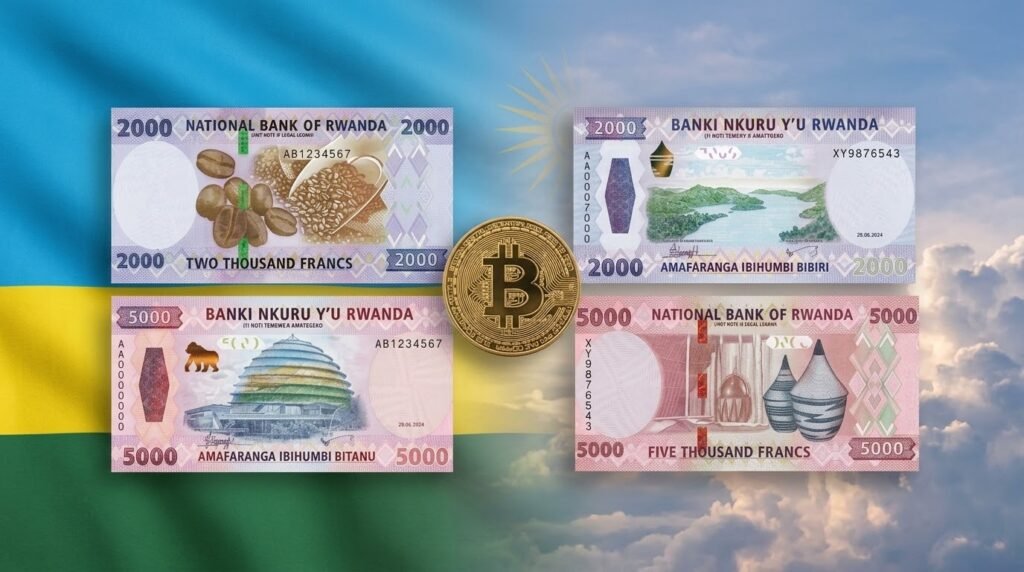
Rwanda is moving in two directions at once: tightening the legal boundary around private cryptocurrency transactions while building a formal virtual asset regime and testing a central bank digital version of the Rwandan franc. The immediate trigger came in April 2026, when Bybit announced support for the Rwandan franc on its peer to peer platform. The National Bank of Rwanda responded by stating that crypto assets were not authorized for payments, conversion between the franc and crypto, or peer to peer trading involving the franc under the existing framework. The central bank also reiterated that the Rwandan franc remains Rwanda’s only legal tender and that licensed financial institutions cannot convert the franc into crypto assets or crypto assets into francs. The timing matters. Rwanda is no longer relying solely on restrictions. The Capital Markets Authority now lists a dedicated Law Regulating Virtual Asset Business, dated May 28, 2026, while the CMA said in May that Parliament had approved the framework.
At the same time, the National Bank of Rwanda is investigating an e Franc Rwandais through a central bank digital currency proof of concept. That distinction is central to the country’s strategy: Rwanda appears willing to digitize money, but wants the monetary authority rather than private crypto networks to determine how the domestic currency is represented digitally. The strategic question is no longer whether Rwanda will have digital money. It is who controls the monetary infrastructure through which that digital money circulates.
Crypto regulation cannot be separated from monetary conditions. The National Bank of Rwanda operates an inflation targeting framework with a headline inflation band of 2% to 8% and a medium term objective around 5%. In February 2026, the central bank raised its Central Bank Rate by 50 basis points to 7.25% after inflation reached 8.9% in January. By May, the monetary response had intensified. The policy rate was increased by another 100 basis points to 8.25% as inflation accelerated to 13% in April. The tightening matters for digital asset demand because higher domestic interest rates increase the opportunity cost of holding non interest bearing assets and simultaneously raise the cost of credit for households and businesses.
Sources: National Bank of Rwanda, Rwanda Ministry of Finance and Economic Planning • Analysis: Limitless Beliefs Consulting
A Small Crypto Economy Meets a Large Regulatory Question
Rwanda is not one of Africa’s largest cryptocurrency markets. Chainalysis ranked Rwanda 118th globally in its 2024 Global Crypto Adoption Index, compared with 2nd for Nigeria and 30th for South Africa. That low adoption level changes the economics of regulation. Rwanda is not responding to a crypto market that is already deeply embedded in domestic financial intermediation. Instead, authorities are attempting to establish the rules before private digital assets become sufficiently large to create material systemic exposure.
The regional context is moving in the opposite direction. Sub Saharan Africa received more than $205 billion in on chain crypto value between July 2024 and June 2025, representing approximately 52% year over year growth. Chainalysis also found that more than 8% of the value transferred in the region came through transfers below $10,000, compared with about 6% elsewhere. This indicates that crypto activity in Africa is not purely institutional. Retail and smaller professional transactions are an important component of the regional market.
Sources: Chainalysis 2024 Global Crypto Adoption Index • Analysis: Limitless Beliefs Consulting
Rwanda’s Regulatory Pivot From Restriction Toward Controlled Participation
The important change in Rwanda is therefore not that the government has suddenly embraced cryptocurrency. It has not. The change is that authorities are constructing a formal perimeter around the industry. The Capital Markets Authority’s current regulatory framework lists the Law Regulating Virtual Asset Business, dated May 28, 2026. The CMA also stated in May that Parliament had approved the virtual asset framework and that implementation would require technical capacity, regulatory coordination and investor protection. The CMA’s earlier regulatory work identified money laundering and terrorism financing, consumer and investor protection, market integrity, transparency, financial stability and systemic risk as key objectives of the framework.
This is significant because the regulatory question has moved from whether crypto exists to which activities can operate legally, under which licenses, with what supervision and what relationship to the banking system.
Sources: National Bank of Rwanda, Capital Markets Authority Rwanda • Analysis: Limitless Beliefs Consulting
The e Franc Changes the Strategic Calculation
Rwanda’s CBDC project is one of the most important pieces of the country’s digital money strategy. The National Bank of Rwanda has been investigating a central bank digital currency and moved from feasibility work into a proof of concept. The project is intended to test practical use cases for a potential e Franc Rwandais before any decision on a broader pilot or production deployment. That creates an important distinction between digitization and decentralization. A CBDC digitizes the sovereign currency while preserving central bank control over issuance, settlement and monetary policy. A private crypto asset creates a parallel digital asset whose monetary characteristics are not necessarily controlled by the domestic central bank. For Rwanda, the CBDC route offers a way to capture some of the efficiency associated with digital assets without surrendering the institutional architecture surrounding the franc.
“The strategic question is no longer whether Rwanda will have digital money. It is who controls the monetary infrastructure through which that digital money circulates.”
Sub-Saharan Africa’s Crypto Market Is Growing Faster Than Rwanda’s Domestic Adoption Base
The contrast between Rwanda’s low domestic adoption and the regional market’s rapid growth is central to understanding the policy challenge. While Rwanda ranks 118th globally in adoption, Sub Saharan Africa as a region has become the third fastest growing crypto market globally. This creates a policy tension: strict domestic rules may not prevent Rwandan residents from accessing regional or offshore crypto platforms, but they do give the central bank a formal regulatory perimeter to work with.
Sources: Chainalysis 2025 Geography of Cryptocurrency Report • Analysis: Limitless Beliefs Consulting
Symmetrical Economic Impact Who Benefits, Who Absorbs Risk
The policy produces clear benefits for monetary stability, but it also creates costs for consumers and businesses that might otherwise use crypto infrastructure to bypass limitations in traditional payment channels.
Sources: LBNN Intelligence, National Bank of Rwanda, CMA Rwanda • Analysis: Limitless Beliefs Consulting
Capital Allocation and Investor Implications
For institutional investors, Rwanda’s crypto policy is less immediately about buying digital assets and more about identifying the infrastructure that will sit around regulated digital finance. The most important potential investment areas are therefore likely to be custody, compliance technology, identity infrastructure, blockchain analytics, regulated payment infrastructure, cybersecurity and tokenization platforms rather than unrestricted retail crypto trading. The CMA’s March 2026 work on tokenization is relevant. The regulator has said it wants to position Kigali as a tokenization hub in Africa and has emphasized licensing, investor protection, regulatory sandboxes and coordination with other institutions. This creates a potentially investable distinction. Rwanda is not necessarily positioning itself as a cryptocurrency market. It is positioning itself as a regulated digital financial infrastructure market.
The Monetary Sovereignty Test
The deeper economic issue is monetary sovereignty. A country’s monetary system depends not only on the currency it issues but also on the infrastructure through which residents save, transact, convert currencies and settle cross border obligations. If private stablecoins or crypto assets become sufficiently widespread, they can create an alternative digital settlement layer. That does not automatically undermine a central bank. But it can complicate monetary transmission, foreign exchange management, capital flow monitoring and financial stability. Rwanda’s policy therefore reflects a broader question confronting emerging markets: how can governments capture the efficiency of digital money without allowing private digital assets to become substitutes for sovereign currency? The e Franc is one answer. The virtual asset law is another. The restrictions around FRW crypto conversion are the defensive layer.
What Investors Should Watch Next
- VASP Licensing: Determines which crypto businesses can legally operate inside Rwanda. Monitor the number and type of licenses issued.
- e Franc Pilot: Tests whether Rwanda can create a scalable sovereign digital payment layer. Watch for pilot launch, transaction architecture and interoperability.
- Inflation: Persistent inflation can increase demand for alternative stores of value. Monitor return toward the 2% to 8% target band.
- Central Bank Rate: Higher rates increase the opportunity cost of speculative assets and raise domestic borrowing costs. Watch future tightening or easing cycles.
- FRW FX Stability: Currency depreciation can increase incentives for foreign currency and crypto exposure. Monitor USD/FRW movements and foreign exchange liquidity.
- Tokenization Rules: Could determine whether Rwanda develops a regulated market for tokenized securities and real world assets. Watch implementing regulations and sandbox graduates.
- Regional Harmonization: Cross border digital asset businesses need consistent rules across East African markets. Monitor EAC and regional regulatory cooperation.
Rwanda Is Not Rejecting Digital Finance. It Is Trying to Own the Architecture.
The Bybit episode is important because it exposes the boundary Rwanda is attempting to establish. Private platforms can innovate around digital assets, but the Rwandan franc remains within the monetary authority’s domain. The country’s low level of crypto adoption gives policymakers an unusual advantage. Unlike markets where crypto activity has already become deeply integrated into household savings, remittances and business payments, Rwanda is attempting to establish the regulatory perimeter before the market becomes systemically important. That strategy has both advantages and risks. The advantage is control. Rwanda can establish licensing, AML controls, consumer protection and market integrity standards while simultaneously developing its own digital currency infrastructure. The risk is displacement. If regulation becomes too restrictive while demand for digital assets continues to grow across the region, activity can move offshore rather than disappear.
The more important question for investors is therefore not whether Rwanda will become a major cryptocurrency market. Current adoption data suggest it is far from that position. The more consequential question is whether Rwanda can become a major regulated digital financial infrastructure market. If the e Franc, virtual asset licensing regime, tokenization framework and fintech sandbox ecosystem develop together, Kigali could build a model in which digital finance expands without replacing the sovereign monetary system. That would represent a distinctly African approach to the crypto question: not unrestricted adoption, not outright technological rejection, but an attempt to place digital finance inside a state controlled architecture.
Bottom Line: Rwanda’s crypto policy is not a rejection of digital finance it is an assertion of monetary sovereignty. The National Bank of Rwanda has restricted FRW crypto conversion and P2P trading while simultaneously building a formal virtual asset licensing framework through the CMA and testing a central bank digital currency (e Franc). The country ranks 118th globally in crypto adoption, giving policymakers an unusual advantage: they can establish the regulatory perimeter before the market becomes systemically important. But Sub Saharan Africa’s crypto market is growing at 52% year-on-year and has already crossed $205 billion in on-chain value. Rwanda’s strategic bet is that sovereign digital money (CBDC) and regulated virtual asset businesses can coexist without allowing private crypto to become a substitute for the franc. The question for investors is not whether Rwanda becomes a major crypto market it won’t, at least not soon. The question is whether Kigali becomes a regulated digital financial infrastructure hub where the efficiency of digital money is captured without surrendering monetary control.