Banque Misr and Egypt's wealth management ecosystem are positioning themselves at the centre of Africa's energy transition financing targeting a share of an estimated $550 billion in required continental investment and establishing North Africa as the institutional gateway between global capital and the continent's energy infrastructure build-out.
The investment figure aligns with projections from the African Development Bank (AfDB), which has consistently emphasised the scale of capital needed to support renewable energy deployment, grid infrastructure, and industrial decarbonisation across 54 economies with vastly different starting positions. Egypt's financial sector is increasingly acting as the intermediary layer providing the capital market depth and institutional structuring capacity that sub-Saharan markets alone cannot yet generate.
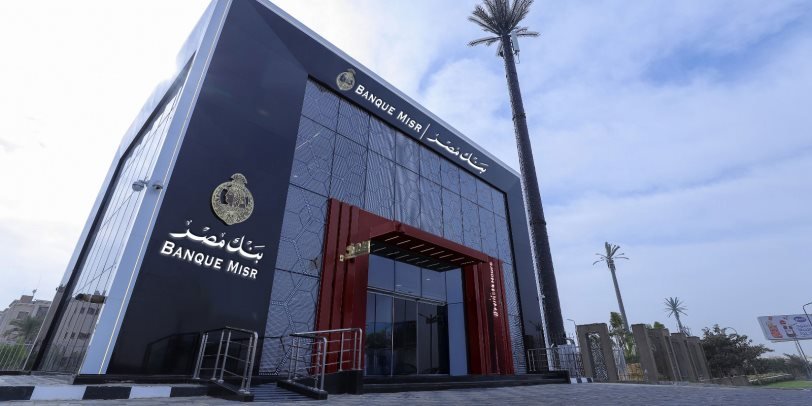
As one of North Africa's largest banking systems, Egypt brings both balance sheet scale and cross-regional credibility to energy project financing. Banque Misr, in particular, has played an active role in financing infrastructure and energy-related transactions positioning itself within the broader investment flows that are beginning to redirect global climate capital toward African assets.
Sources: African Development Bank Energy Outlook Estimates • Calculations & Modelling: Limitless Beliefs Consulting
600 Million Without Power — The Scale of the Opportunity
The energy transition across Africa is driven by a convergence of factors that are structural rather than cyclical: rising electricity demand, climate commitments, and the urgent need to diversify energy sources in economies that remain dangerously exposed to fossil fuel price volatility. According to the AfDB, over 600 million people in Africa still lack access to electricity a figure that represents simultaneously the continent's most acute development failure and its most significant long-term investment opportunity.
The allocation of capital across energy segments reflects the complexity of the transition. While renewable generation attracts the majority of institutional attention, investments in grid infrastructure and transmission systems are equally critical and chronically underfunded. Generated power that cannot reach end users does not power economies. The $550 billion investment requirement is therefore not dominated by generation alone; it requires parallel deployment across storage, distribution, and the backbone transmission networks that make generation commercially viable.
“Egypt's strategic location linking Africa to Europe and the Middle East makes it not merely a participant in Africa's energy transition, but a potential clearing house for the capital flows that will fund it.”
Sources: African Development Bank, World Bank Energy Projections • Calculations & Modelling: Limitless Beliefs Consulting
Egypt as Financing Hub — Not Just Energy Producer
North Africa's role within the energy transition is structurally distinct from sub-Saharan Africa's. Countries such as Egypt and Morocco have relatively more developed energy infrastructure and capital markets, enabling them to serve as hubs for both generation and project financing. Egypt's geographic position linking Africa to Europe and the Middle East further enhances its intermediary role in cross-regional energy trade, investment structuring, and capital recycling.
Banque Misr's involvement in energy financing aligns with broader trends in African capital markets where financial institutions are structuring deals that combine public and private capital, often leveraging multilateral support from the AfDB and the World Bank. These blended finance models are designed to reduce the risk premium that currently prevents institutional capital from flowing into African energy infrastructure at the scale the transition requires.
Ghana's Energy Transition and Investment Plan (ETIP), supported by AfDB frameworks, provides a reference model for how African countries are systematically approaching the transition combining policy frameworks, investment pipelines, and financing mechanisms to create conditions for large-scale capital deployment. While Ghana's context differs from North Africa, the underlying architecture illustrates the institutional scaffolding that Banque Misr and Egyptian wealth managers are now helping to build across the broader continental energy landscape.
Currency, Regulation, and the Blended Finance Response
The energy transition introduces both structural opportunity and measurable risk. Renewable energy projects require significant upfront capital but offer long-term stable returns through power purchase agreements that can span two decades. However, currency volatility and regulatory uncertainty can materially affect project viability particularly in frontier markets where the gap between policy commitment and implementation capacity remains wide.
The IMF has consistently highlighted the importance of macroeconomic stability in attracting infrastructure investment. Exchange rate stability, fiscal discipline, and regulatory clarity are the three variables that most directly influence whether institutional capital views an African energy asset as investable or speculative. Egyptian financial institutions are leveraging their project finance experience to navigate these dynamics structuring transactions that incorporate risk mitigation mechanisms including guarantees, currency hedging, and first-loss tranches provided by multilateral partners.
The role of sovereign and multilateral financing remains indispensable in this architecture. The AfDB and World Bank continue to provide concessional funding and technical support that enables projects to reach financial close the critical milestone that transforms a pipeline entry into a deployed asset. Private sector participation, facilitated by institutions like Banque Misr, provides the additional capital layer and execution capability that multilateral balance sheets alone cannot supply at continental scale.
The $550 billion energy transition investment target is not a distant projection it is an active mobilisation mandate that Africa's financial institutions are beginning to execute against. Banque Misr's positioning within this landscape reflects a broader and consequential shift: African capital is no longer waiting for external financing to lead. The institutions that structure the transition will determine who captures the returns from it and Egypt intends to be at the table.