
Desk: Uncategorized Desk
Published: May 26, 2026
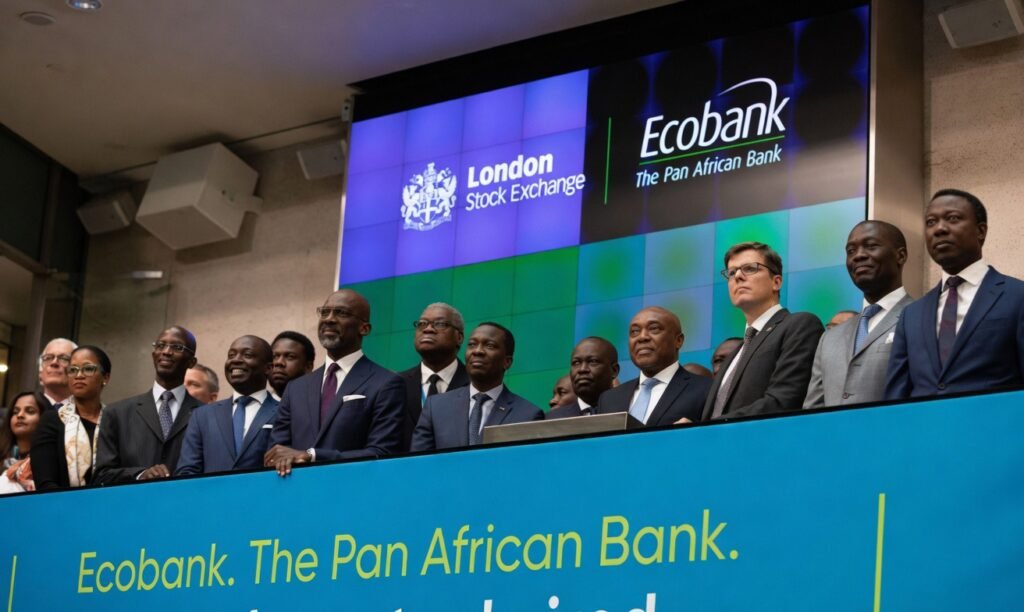
Ecobank Transnational Incorporated’s landmark issuance of a $450 million Tier-2 Nature Bond may become one of the most important sustainable finance events in modern African banking history. Structured with the Africa Finance Corporation (AFC) serving as financial adviser, the transaction represents the world’s first ICMA aligned Nature Bond issued by a commercial bank. Beyond the symbolic milestone, the issuance reflects a broader transformation occurring inside African finance markets. Institutional investors, pension funds, sovereign wealth entities, family offices, and commercial banks are increasingly seeking exposure to climate resilient infrastructure, biodiversity preservation, sustainable agriculture, and green industrialization projects across Africa.
Africa is no longer just attracting development capital it is beginning to engineer sophisticated investment products capable of competing globally. African wealth management is entering a new phase where environmental finance is no longer treated as philanthropy, but as a strategic asset allocation class. Ecobank’s Nature Bond creates a framework allowing mainstream debt markets to fund environmental resilience while generating long-term institutional returns.
Sources: AfDB, IMF, IFC, UNEP, World Bank • Analysis: Limitless Beliefs Consulting
Economic Impact Across African Economies $1 Trillion Climate Investment Opportunity
The broader African sustainable finance market is projected to surpass $1 trillion in climate related investment demand by 2035 according to estimates from multilateral institutions and climate investment groups. Financial instruments like Nature Bonds could significantly improve capital mobilization for sectors that traditional banking systems have historically underfunded. The economic implications extend beyond banking. Nature linked investment flows can stimulate job creation in renewable energy (4 million+ jobs), conservation technology, climate smart agriculture (10 million+ rural jobs), carbon markets, water management systems, ecotourism, and sustainable logistics.
The table below outlines the sectoral impact of sustainable finance expansion:
| Sector | Potential Economic Impact | Estimated Employment Impact |
|---|---|---|
| Renewable Energy | $150B+ Continental Opportunity by 2035 | 4M+ jobs (construction, operations, maintenance) |
| Climate-Smart Agriculture | Improved food security & export revenues | 10M+ rural jobs (smallholder integration) |
| Biodiversity & Conservation Finance | Expansion of carbon & nature markets | |
| Green Infrastructure |
“Africa’s combination of rapid urbanization, young demographics, untapped natural assets, expanding energy demand, carbon credit potential, and agricultural modernization creates conditions for a major capital allocation cycle over the next two decades.”
How Ecobank’s Bond Could Affect Everyday Banking Customers From Savings to Climate Portfolios
For ordinary banking clients, the shift toward sustainable finance may eventually influence savings products, pension allocations, insurance offerings, and fixed-income investment portfolios. African banks are increasingly positioning themselves as ecosystem managers rather than merely deposit taking institutions. If successful, products like Nature Bonds may allow banks to offer environmentally linked savings products, expand green SME lending, improve access to climate insurance, reduce long-term environmental credit risks, attract cheaper international funding, and expand pension and retirement investment diversification. However, critics argue that ESG and sustainability linked finance still face credibility challenges. Some investors remain skeptical regarding whether African environmental projects possess sufficient transparency, monitoring frameworks, or governance protections to justify large-scale institutional exposure.
Can African Sustainable Finance Compete Globally?The Innovation Gap Closes
African banks historically lagged global institutions in structured finance innovation. Ecobank’s Nature Bond changes part of that narrative by demonstrating that African financial institutions can originate globally recognized investment instruments instead of merely consuming foreign capital products. This matters because competition for climate-aligned capital is intensifying globally. Gulf sovereign wealth funds, Asian institutional investors, European climate funds, and African pension managers are all searching for long-duration growth opportunities tied to infrastructure and sustainability. Africa’s combination of rapid urbanization, young demographics, untapped natural assets, expanding energy demand, carbon credit potential, and agricultural modernization creates conditions for a major capital allocation cycle over the next two decades.
Sources: IMF, IFC, OECD, AfDB • Analysis: Limitless Beliefs Consulting
Post-Stabilization Investment Outlook Which Regions and Sectors Rebound First
If African governments successfully improve macroeconomic stability and security coordination over the next decade, several regions could become highly investable for institutional environmental finance. East Africa’s renewable energy corridor (geothermal in Kenya, wind in Ethiopia, solar across the region), Southern Africa’s green mining infrastructure (hydrogen, battery metals), and West Africa’s agricultural modernization zones (climate smart cocoa, cashew, and rice) could emerge as major beneficiaries of climate linked capital. Regions surrounding logistics corridors, ports, and energy infrastructure are likely to rebound first as risk premiums decline. Countries capable of combining financial reform with security stabilization may experience substantial increases in pension flows, sovereign wealth allocations, and private equity participation.
Private capital will likely move first into: renewable energy infrastructure (solar, wind, hydro, geothermal), water security projects (dams, irrigation, desalination), climate agriculture (drought resistant crops, precision farming), green logistics corridors (electric rail, low emission ports), carbon credit markets (reforestation, soil carbon), and smart industrial parks (eco-industrial zones).
Sources: AfDB, IMF, World Bank, Climate Policy Initiative • Analysis: Limitless Beliefs Consulting
The Bigger Strategic Shift Financial Engineering Sovereignty
Ecobank’s Nature Bond represents more than a financing instrument. It signals the emergence of African financial engineering capacity at a time when global investors are searching for long-term growth markets. The deeper strategic question is no longer whether Africa can attract capital. The question increasingly becomes: can African financial institutions evolve quickly enough to control the architecture of capital allocation inside their own economies? The institutions that answer that question successfully may dominate Africa’s next generation of banking, infrastructure finance, and sustainable investment. Countries with stronger financial governance, deeper capital markets, and more stable macroeconomic frameworks Nigeria, Kenya, South Africa, Morocco, Rwanda, Egypt, and Ghana are likely to attract disproportionate sustainable finance inflows. The success of these instruments could eventually affect sovereign credit ratings, pension market depth, and local currency financing conditions.
Bottom Line: Ecobank’s $450 million ICMA aligned Nature Bond, structured with AFC as adviser, represents a turning point for African sustainable finance. The continent faces over $1 trillion in climate related investment demand by 2035, with renewable energy ($150B+ opportunity) and climate smart agriculture (10M+ rural jobs) leading the pipeline. Ecobank’s issuance demonstrates that African institutions can originate globally competitive green instruments rather than merely consume foreign capital. But structural obstacles remain: currency volatility, shallow bond markets, weak regulatory coordination, and climate data gaps could undermine credibility. The winners of Africa’s green capital race will not be those with the largest natural assets alone they will be countries and institutions capable of building transparent, verifiable frameworks that translate environmental resilience into investor confidence. Ecobank has placed an important marker. Whether others follow will determine if this is a milestone or an outlier.