
Desk: Uncategorized Desk
Published: September 14, 2026
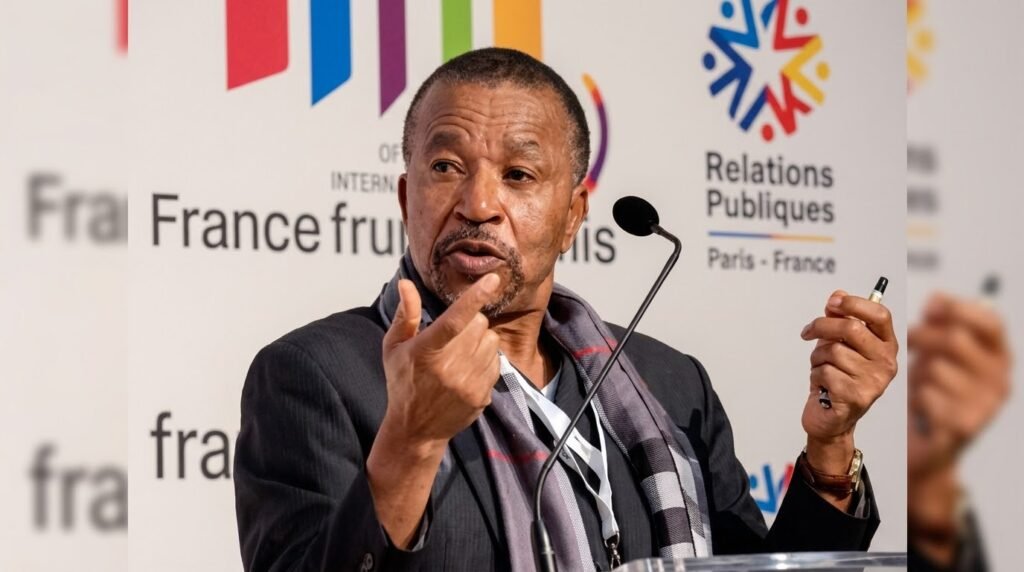
A Geneva proceeding concerning Cameroonian banker Paul Kammogne Fokam places a personal wealth question against the balance sheet of Central Africa’s largest African-owned banking group. The framing matters: this is a wealth governance story, not a tax scandal. Geneva explicitly taxes personal wealth, and its framework requires relevant residents to account for taxable wealth after eligible deductions. Afriland First Bank reported CFA2.032 trillion in total assets at the end of 2024. Cameroon government data place its deposit share at 18.6%, while sector credit data put its loan share at about 22.8%. Against that scale, the group’s former Congolese operation reported negative equity of $116.9 million after the Central Bank of Congo assessed a $90 million recapitalisation need in 2022. The ICSID arbitration over that bank remains a separate, pending investment dispute.
Geneva’s cantonal tax administration has opened a proceeding concerning Fokam over allegedly undeclared wealth during roughly ten years of Swiss tax residence, according to the Swiss investigative publication Gotham City. The reported demand runs into millions of Swiss francs. Neither the amount nor any final liability has been established by a court in the sources reviewed for this article.
The distinction matters because two separate balance sheets are being conflated in much of the coverage. Afriland First Bank’s balance sheet is a corporate institution funded by deposits, wholesale funding and equity. Fokam’s personal wealth is a different question entirely one shaped by ownership interests, liabilities, property, investments and the applicable valuation rules. Geneva’s tax framework, which applies to both income and net wealth, sits directly on that second question.
Legal status: This is an administrative tax proceeding, not a judicial finding of wrongdoing. Geneva taxes both income and personal wealth, and its framework requires relevant residents to account for taxable wealth after eligible deductions. The reported demand should not be presented as a final tax debt or a criminal penalty. The ICSID matter is a separate pending investment dispute and is not evidence of the tax proceeding’s outcome.
Sources: Government of Cameroon (MINEPAT), Investir au Cameroun, Afriland First Bank sector data • Analysis: Limitless Beliefs Consulting
Corporate Assets Are Not Personal Wealth Why the Distinction Drives the Case
Afriland First Bank’s CFA2.032 trillion balance sheet does not mean Fokam personally owns CFA2.032 trillion. A bank’s assets include loans, securities, cash and other financial assets funded largely by customer deposits, wholesale funding and equity. The founder’s personal net worth depends instead on his ownership interests, other businesses, liabilities, investments and the valuation of those interests.
That distinction becomes decisive when a tax authority examines wealth. Geneva’s framework requires taxable individuals to account for relevant wealth, including financial and property assets, subject to the applicable rules and deductions. Geneva’s official guidance states that taxable wealth is assessed using the person’s net wealth after eligible debts are deducted. In other words, the relevant question is not the size of the institution — it is the size of the individual’s declared net position under Swiss rules.
Afriland has built a genuinely large franchise in Cameroonian banking. Total assets reached CFA2.032 trillion at end 2024, up 9.3% year on year. Cameroon government economic data place Afriland at approximately 18.6% of deposits, making it the country’s largest bank by deposits. Its credit position is even more significant, with outstanding loans of around CFA1.382 trillion, equivalent to about 22.8% of banking credit. Those two figures anchor the scale of the corporate story.
“A bank’s balance sheet is not its founder’s net worth. That distinction is the difference between a corporate story and a personal wealth story and it is the distinction Geneva’s wealth tax is designed to test.”
Geneva Taxes Wealth Not Only Income
Geneva is one of the relatively few jurisdictions that explicitly taxes personal wealth. Its framework requires relevant residents to account for taxable wealth after eligible deductions, and its law also covers economic connections including ownership of businesses or real estate in the canton. That is why the proceeding is best understood as a wealth governance question rather than a narrow income tax dispute.
The holding structure matters here. Afriland First Group was created in Geneva in March 2008 and subsequently expanded its banking network across Africa. The group’s own historical record lists operations or network presence across Cameroon, Côte d’Ivoire, Guinea, Liberia, South Sudan, Equatorial Guinea and the Democratic Republic of Congo. A Geneva holding company, a founder tax-resident in the canton, and operating banks across multiple African jurisdictions together create the kind of cross-border wealth structure that modern wealth governance frameworks are designed to address.
The existence of a Geneva proceeding does not establish deliberate evasion. The final amount, if any, would depend on the tax authority’s assessment, the taxpayer’s response, applicable deductions, the valuation of assets and any appeal process. What is clear is that the case sits at the intersection of personal residency, holding company structure and African operating assets the three variables that increasingly define private wealth management for founders of large African institutions.
CEMAC Monetary Conditions Shape the Value of the Core Franchise
Afriland’s largest economic exposure remains connected to African banking markets, particularly Central Africa. Cameroon is part of the CEMAC monetary union, whose central bank, BEAC, determines monetary conditions for the regional currency area. BEAC’s current tender call rate is 4.50%, while its marginal lending facility stands at 5.75%. The CFA franc is fixed against the euro at CFA655.957 per euro.
For banks, these rates affect the cost of liquidity and the pricing of loans. For borrowers, higher funding costs can suppress demand for investment credit. For shareholders, the critical variable is the spread between the yield earned on loans and securities and the cost of deposits and wholesale funding. A bank with roughly a fifth of national credit carries meaningful pricing power but also concentration risk if credit growth is tilted toward sectors exposed to commodity prices, public finances or currency linked costs.
Sources: Bank of Central African States (BEAC) • Analysis: Limitless Beliefs Consulting
The DRC Operation A Separate Balance Sheet and a Separate Dispute
The Geneva proceeding arrives while Afriland remains involved in an international investment dispute concerning its former banking operation in the Democratic Republic of Congo. Afriland First Group and other claimants initiated ICSID arbitration against the DRC in August 2023. The arbitration record identifies Afriland First Group, Afriland First Bank, Joseph Toubi and Paul Kammogne Fokam as claimants.
The dispute followed regulatory intervention at Afriland First Bank RDC. The Central Bank of Congo estimated a recapitalisation requirement of approximately $90 million in March 2022. Afriland disputed both the figure and the process, and conditioned participation in recapitalisation on an independent audit. By the end of 2025, reporting based on central-bank data put the Congolese bank’s negative equity at approximately $116.9 million, with a 2025 loss of about $50.4 million.
Those figures concern the DRC bank not Afriland First Bank Cameroon and not Fokam’s personal wealth. This is a materially different risk from the Geneva matter. Geneva concerns a personal wealth-tax assessment. The DRC dispute concerns an operating banking asset and the legal and financial consequences of regulatory intervention. The ICSID case remains pending.
Sources: Central Bank of Congo reporting, Afriland v. DRC ICSID record • Analysis: Limitless Beliefs Consulting
Sources: LBNN Intelligence, Geneva cantonal tax guidance, ICSID, Afriland First Group • Analysis: Limitless Beliefs Consulting
Sources: LBNN Intelligence, ICSID, BEAC, Afriland First Group reporting • Analysis: Limitless Beliefs Consulting
The Real Test Is Institutionalisation Not the Founder’s Fortune
Fokam’s career illustrates one of the defining features of African private wealth: entrepreneurial fortunes can be deeply connected to operating businesses rather than passive financial portfolios. His economic footprint extends beyond Afriland. The group and affiliated businesses have included insurance, property, publishing, financial services and education, and Afriland’s own historical materials describe Fokam as the creator of the MC² model, a community based financial approach aimed at mobilising savings among lower income populations.
That model creates a direct link between wealth creation and financial inclusion. It also creates concentration risk, because the founder’s reputation, governance structure and personal financial affairs can become closely associated with the institutions he created. For family offices and wealth managers, the central lesson is structural: the objective is not merely to grow gross assets, but to separate operating company risk, personal wealth, succession planning, tax residency and investment portfolios so that a dispute in one jurisdiction does not destabilise the wider capital base.
The strongest counterpoint to the Geneva proceeding and the DRC dispute is that Afriland has continued allocating capital. Africa Diamond Invest, a securities and investment management firm, was launched in Togo in June 2026 with stated capital of CFA1 billion. Afriland also opened a bank branch in the Central African Republic with capital of approximately CFA2.15 billion. Those investments indicate the group continues to pursue geographic and product diversification despite disputes surrounding other parts of its network.
The strategic direction is broader than commercial banking. Securities, investment management, Islamic finance, trade finance and SME lending increasingly sit alongside traditional deposit taking. That expansion can increase the group’s addressable market, but it also increases regulatory complexity because securities businesses, banks and investment managers operate under different licensing, capital and conduct regimes. For investors, the central question is therefore not simply whether Afriland grows its asset base, but whether it can convert asset growth into sustainable returns while maintaining capital buffers, controlling non-performing loans and managing jurisdictional risk.
Bottom Line: Paul Fokam’s case is a wealth governance story, not a tax scandal. Geneva explicitly taxes personal wealth and requires relevant residents to account for taxable wealth after eligible deductions and the proceeding against Fokam concerns that personal-wealth question, not a court finding of wrongdoing. The corporate scale is real: Afriland First Bank reported CFA2.032 trillion in assets at end-2024, an 18.6% share of Cameroon deposits and roughly 22.8% of banking credit. The counterweight is equally real: the group’s former DRC operation reported $116.9 million in negative equity after the Central Bank of Congo assessed a $90 million recapitalisation need in 2022, and the ICSID arbitration over that bank remains a separate pending dispute. BEAC’s 4.50% tender call rate and 5.75% marginal lending facility shape the economics of the core franchise. The variables that matter now are institutional, not personal: whether Afriland can sustain capital adequacy across subsidiaries, control credit concentration, resolve the DRC dispute and institutionalise governance beyond its founder. The key metric is not the founder’s estimated fortune it is the resilience of the institutions built around it.
Data Qualification: This article separates personal wealth from corporate assets. Afriland First Bank’s reported CFA2.032 trillion in assets is not treated as Paul Fokam’s personal wealth. The Geneva matter is presented as an administrative tax proceeding based on reporting by Gotham City and Geneva’s official tax framework; no final court finding of wrongdoing is asserted. The DRC banking figures relate specifically to Afriland First Bank RDC and should not be interpreted as losses incurred by Afriland First Bank Cameroon or by Fokam personally. The $90 million recapitalisation figure and subsequent negative equity figures are reported in connection with the Congolese bank. The ICSID matter is a separate pending investment dispute. Where corporate capitalisation figures are used, they refer to stated capital rather than total investment or enterprise value. Deposit and credit shares are drawn from Cameroon government economic reporting and sector credit data respectively.