
Desk: Uncategorized Desk
Published: June 9, 2026
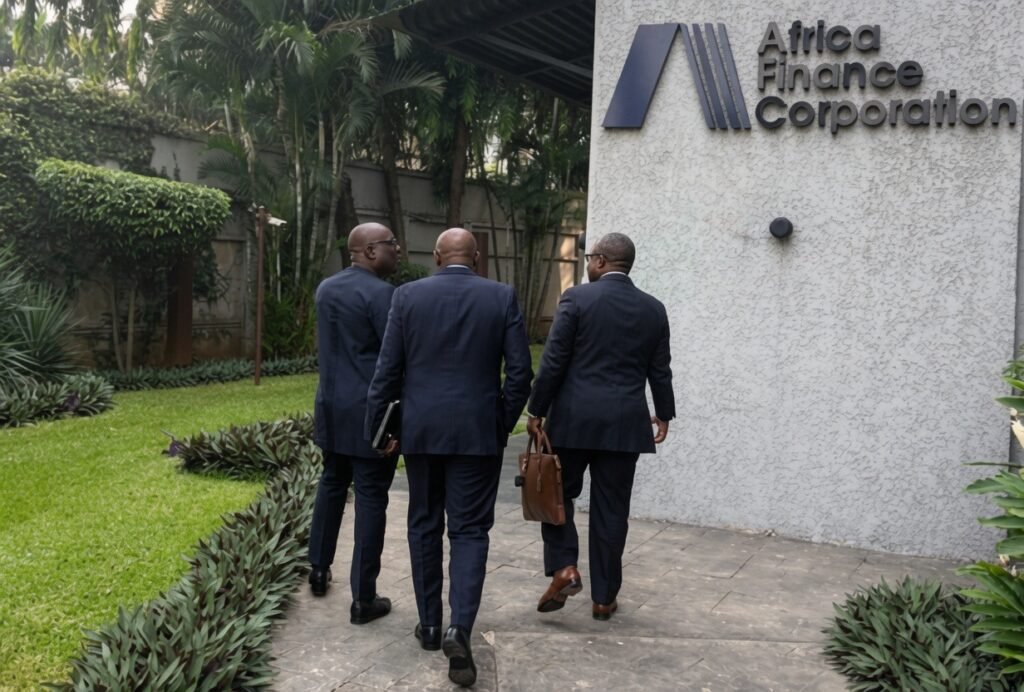
Africa has reached a historic financial milestone. According to the Africa Finance Corporation (AFC), domestic capital pools across the continent have expanded to between $2 trillion and $4 trillion, surpassing cumulative external funding and signaling a major shift toward locally financed industrialization. The development challenges long held assumptions that Africa suffers primarily from a lack of capital. Instead, the AFC argues that the continent faces a deployment problem rather than a capital shortage. Pension funds, insurance assets, sovereign reserves, and institutional savings now collectively represent one of the largest untapped investment pools in the developing world. Africa’s challenge is no longer raising capital. The challenge is transforming domestic savings into productive investments capable of financing energy infrastructure, logistics corridors, industrial parks, manufacturing ecosystems, digital infrastructure, and regional supply chains.
Across major African economies, financial institutions have benefited from higher interest income, expanding digital banking adoption, increased pension fund growth, growing domestic capital formation, rising stock market participation, improved sovereign debt management, and stronger intra-African investment activity. Several African financial markets recorded strong performance during the past year, particularly in Nigeria, Morocco, Kenya, Egypt, Botswana, Namibia, and South Africa.
Sources: AfDB, AFC, IMF, World Bank • Calculations & Modeling: Limitless Beliefs Consulting
African Currency Stabilization & GDP Growth Mixed but Improving
African currencies remain mixed, but overall conditions have improved relative to the severe volatility experienced during previous global inflation shocks. The Nigerian naira has stabilised following FX reforms; the South African rand remains moderately stable with commodity linked resilience; the Moroccan dirham is stable with a strong reserve position; the Botswana pula is stable due to strong fiscal management; and the Egyptian pound is improving through reform‑driven stabilisation. While currency pressures remain in some markets, improving reserve positions and stronger capital inflows have helped reduce volatility across many of Africa’s largest economies. The continent’s economic expansion has increasingly benefited financial services and fintech companies, with growing consumer demand, rising smartphone penetration, expanding financial inclusion, and stronger digital payment infrastructure supporting sector growth.
“Africa’s challenge is no longer raising capital. The challenge is transforming domestic savings into productive investments the ‘Missing Middle’ problem where capital remains trapped in low‑risk government securities instead of industrial projects.”
Sources: IFC, World Bank, GSMA, Afreximbank • Calculations & Modeling: Limitless Beliefs Consulting
Sources: SWFI, Pension fund annual reports, AfDB • Calculations & Modeling: Limitless Beliefs Consulting
Sources: SWFI, AfDB, IMF • Calculations & Modeling: Limitless Beliefs Consulting
Sources: Afreximbank, AfDB, UNCTAD • Calculations & Modeling: Limitless Beliefs Consulting
Sources: IMF, World Bank, AFC • Calculations & Modeling: Limitless Beliefs Consulting
Estimated Employment Impact 600,000–1.1 Million New Jobs by 2030
As domestic capital markets deepen, significant employment opportunities are emerging across banking, insurance, pension management, asset management, fintech, compliance, and investment advisory services. Collectively, Africa’s expanding financial ecosystem could support between 600,000 and 1.1 million new jobs over the coming decade. The largest growth is expected in fintech (250,000–500,000 jobs), followed by banking (150,000–250,000), insurance (75,000–150,000), asset management (50,000–100,000), capital markets (40,000–80,000), and pension administration (30,000–60,000).
Capital Deployment Scenarios: GDP & Export Impact
If African institutions redirect a portion of domestic capital pools from low‑yield government securities into productive infrastructure and industrial projects, the economic payoff is substantial. The chart below models three scenarios redirecting 10%, 20%, or 30% of the $2 trillion lower bound estimate toward industrial and infrastructure investments and estimates the resulting GDP impact and potential reduction in the $230 billion annual processed‑goods import bill.
Sources: LBNN Intelligence, AFC, AfDB • Calculations & Modeling: Limitless Beliefs Consulting
From Capital Pool to Industrial Engine
The continent currently imports over 70% of refined fuel consumption, large portions of processed food, steel products, fertilizer, and industrial inputs – collectively exceeding approximately $230 billion annually. This import dependence represents both a vulnerability and an opportunity. The rise of domestic capital markets improves access to private equity financing, venture capital funding, growth capital, infrastructure partnerships, export financing, and institutional investors. As capital pools deepen, entrepreneurs gain alternatives to expensive bank financing and become more capable of scaling businesses regionally. Africa’s financial transformation may be entering a new phase. The emergence of $2–$4 trillion in domestic capital pools suggests the continent increasingly possesses the financial resources necessary to fund industrialisation from within. The next challenge is institutional rather than financial: connecting capital, infrastructure, energy, transportation, manufacturing, and digital systems into integrated economic ecosystems. If successful, Africa could shift from being primarily an exporter of raw materials to becoming a globally competitive industrial and manufacturing region over the next two decades.
Sources: AfDB, World Bank, AFC • Calculations & Modeling: Limitless Beliefs Consulting
Sources: AfDB, IMF, AFC, Afreximbank • Calculations & Modeling: Limitless Beliefs Consulting
Bottom Line: Africa’s domestic capital pools estimated at $2–4 trillion have surpassed external funding, fundamentally reshaping the continent’s financing architecture. Pension funds, insurance assets, sovereign wealth funds, and institutional savings now represent one of the world’s largest untapped investment pools. Yet the “Missing Middle” persists: capital remains concentrated in low‑yield government securities rather than industrial projects. Redirecting just 10% of the $2 trillion pool could generate an estimated $30–50 billion in additional GDP and create hundreds of thousands of jobs. Redirecting 30% could approach $150 billion in economic impact enough to reduce the $230 billion annual processed‑goods import bill by a third. The countries that build the institutional frameworks (project pipelines, risk‑mitigation instruments, regulatory consistency) to attract domestic institutional capital will dominate Africa’s next industrial cycle. The capital is there. The question is whether the projects will be.