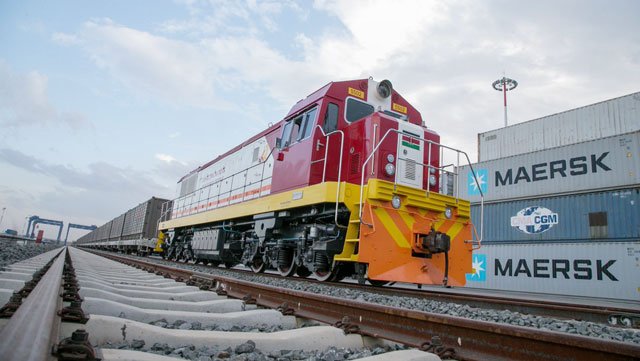
Kenya's Standard Gauge Railway built by China Communications Construction Company and financed by China's Exim Bank at a cost exceeding $3 billion for the Mombasa-Nairobi segment was the single largest infrastructure investment in Kenya's post-independence history. The government's projections positioned it as a transformational logistics corridor: faster, cheaper, and more reliable than the road network for moving containerised cargo from the coast to the capital and eventually to Uganda and beyond. The operational record to date has not matched those projections.
Freight Volumes and the Gap
Kenya Railways has reported freight volumes on the SGR that consistently fall below the revenue projections embedded in the project's financial model. The gap between projected and actual freight volumes reflects several factors: competition from road transport, which remains faster for many cargo types; pricing structures on the SGR that have not always been competitive with trucking alternatives; and the absence of the inland dry ports and last-mile logistics infrastructure that would make rail the natural choice for large cargo movements.
The government has at various points made rail use compulsory for certain cargo categories moving from Mombasa Port a measure reflecting the gap between commercial demand and the volumes needed to service the project's debt obligations.
The Debt Servicing Architecture
The China Exim Bank financing for the SGR is a sovereign obligation of the Kenyan government. Annual debt service payments represent a meaningful fiscal commitment that must be met regardless of whether the railway generates sufficient revenue to cover them commercially. In Kenya's constrained fiscal environment with significant overall debt obligations and limited revenue growth the SGR's debt service is a recurring pressure point.
The extension of the SGR from Nairobi to Naivasha and the suspended plan to continue to Malaba on the Uganda border used the same financing model. The Naivasha segment has even lower freight demand than the Mombasa-Nairobi section, raising questions about the sequencing of investment decisions relative to demand evidence.
The Uganda Extension and Its Economics
The SGR's business case was predicated in significant part on becoming a regional corridor connecting Uganda and potentially Rwanda and South Sudan to Mombasa Port. Without the regional extension, the railway terminates at Naivasha with a limited hinterland. Uganda's decision not to proceed with its own SGR section on Chinese financing terms fundamentally altered the corridor's economic logic.
Lessons for African Infrastructure Finance
Kenya's SGR experience is not evidence that railway infrastructure should not be built in Africa. It is evidence that infrastructure finance decisions made on the basis of optimistic traffic projections, without realistic assessment of competing transport alternatives and regional connectivity dependencies, produce assets with structural revenue shortfalls that transfer risk to sovereign balance sheets. These are lessons that the next generation of African infrastructure financing decisions must incorporate.