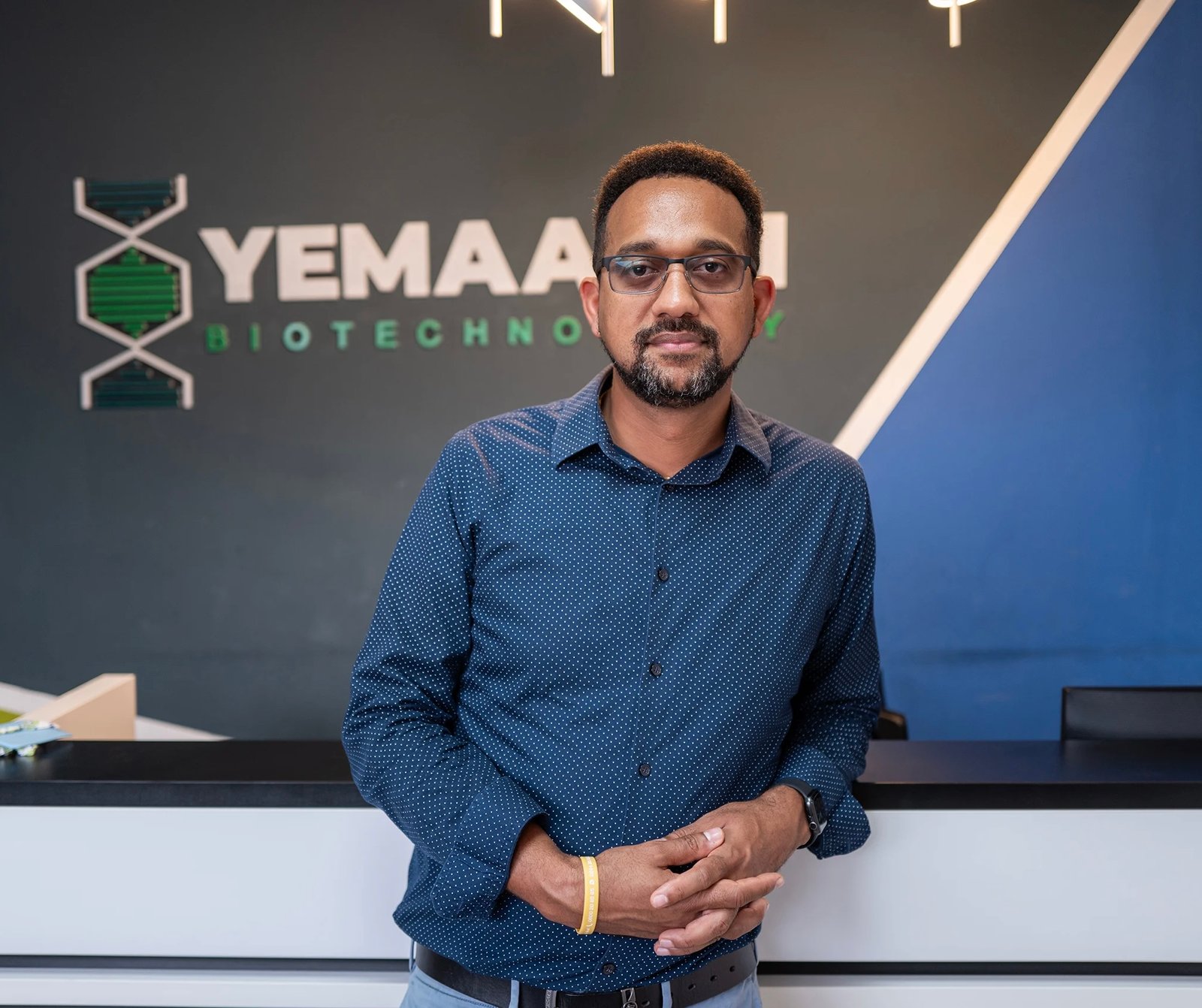
Africa’s biotechnology sector is entering a formative phase, characterized more by targeted innovation than large-scale industrial expansion. Within this emerging landscape, companies such as Yemaachi Biotech are attempting to address one of the most persistent structural gaps in global healthcare: the underrepresentation of African populations in genomic data.
According to the National Institutes of Health (NIH), more than 80% of genomic data used in global research is derived from populations of European descent. This imbalance has significant implications for precision medicine, where treatments and diagnostics are increasingly tailored to genetic profiles. In practical terms, it means that large segments of the global population including Africans are underserved by current biomedical models.
Yemaachi Biotech, headquartered in Ghana, is positioning itself at the intersection of genomics, artificial intelligence, and clinical research to address this disparity.
Rebuilding Precision Oncology from African Data
Precision oncology relies on the ability to analyze genetic mutations within tumors and match them with targeted therapies. However, the effectiveness of this approach depends heavily on the diversity and depth of underlying datasets.
Yemaachi’s core strategy is to build one of the world’s most diverse cancer genomic databases by focusing specifically on African populations. This involves collecting, sequencing, and analyzing tumor samples across multiple countries, integrating clinical data with genomic insights.
The implications are both scientific and economic:
• Improved diagnostic accuracy for African patients
• Development of therapies tailored to local genetic profiles
• Reduced dependency on external research frameworks
The World Health Organization (WHO) has emphasized that cancer incidence in Africa is expected to rise significantly over the coming decades, driven by population growth and epidemiological shifts. Without localized research capacity, health systems risk becoming increasingly reliant on imported solutions that may not be fully effective.
AI and the Data Layer
Beyond data collection, Yemaachi integrates artificial intelligence into its analytical framework. AI-driven models are used to identify patterns in genomic sequences, detect mutations, and support clinical decision-making.
This approach reflects a broader trend in biotechnology, where computational capabilities are becoming as important as laboratory infrastructure. McKinsey & Company has noted that AI could accelerate drug discovery timelines and reduce associated costs, particularly in data-rich environments.
For Yemaachi, the combination of genomics and AI serves a dual purpose:
• Enhancing research efficiency
• Creating proprietary datasets with long-term commercial value
In this sense, data itself becomes an asset class, with strategic importance extending beyond immediate clinical applications.
Constraint Layer: Scale, Capital, and Infrastructure
Despite its potential, the biotechnology sector in Africa faces significant structural constraints. The African Development Bank has consistently identified limited research funding, inadequate laboratory infrastructure, and fragmented regulatory environments as key barriers to growth.
For companies like Yemaachi, these constraints manifest in several ways:
• High costs associated with genomic sequencing and storage
• Limited access to advanced research infrastructure
• Dependence on international partnerships for scaling
Additionally, clinical trial networks across the continent remain underdeveloped, making it difficult to translate research findings into widely deployable treatments.
This creates a paradox: while Africa offers unique data advantages due to its genetic diversity, the infrastructure required to fully capitalize on this advantage is still evolving.
Power Dynamics: Who Owns the Data?
The rise of genomics in Africa introduces a critical question around data ownership and control. Historically, biological samples and research data from the continent have often been exported and analyzed in foreign institutions, limiting local value capture.
Yemaachi’s model attempts to reverse this dynamic by building and retaining datasets within Africa. This aligns with a growing emphasis on data sovereignty, where countries seek to ensure that sensitive information whether financial, digital, or biological remains under local control.
However, the reality is more complex. Global pharmaceutical companies and research institutions possess the capital and infrastructure necessary to scale genomic research at a global level. Partnerships between African firms and these entities are therefore both necessary and strategically sensitive.
The balance between collaboration and control will likely define the sector’s trajectory.
Biotech in Africa: Emerging Momentum, Not Full-Scale Expansion
While companies like Yemaachi represent significant progress, Africa’s biotech sector remains modest in scale compared to global leaders. According to the World Bank, healthcare spending per capita in Sub-Saharan Africa is significantly lower than in developed markets, limiting the immediate commercial scale of advanced therapies.
At the same time, the sector is gaining momentum in specific niches, including:
• Genomics and precision medicine
• Agricultural biotechnology
• Local pharmaceutical manufacturing
This suggests a phased development model, where targeted innovation precedes large-scale industrialization.
Structural Outlook
Yemaachi Biotech’s strategy reflects a broader shift in how Africa participates in the global knowledge economy. Rather than remaining a passive source of raw data, the continent is beginning to build institutions capable of generating, analyzing, and commercializing that data.
The long-term implications extend beyond healthcare. Genomic data, like digital data, has become a strategic resource one that can influence research priorities, pharmaceutical development, and economic value chains.
The trajectory of companies such as Yemaachi will therefore depend not only on scientific breakthroughs, but on their ability to navigate capital constraints, build scalable infrastructure, and maintain control over the data they generate.
Africa’s biotech sector is not yet a dominant force, but it is no longer absent. It is emerging as a specialized, data-driven layer of the continent’s economic transformation one where the value lies not just in innovation, but in ownership.