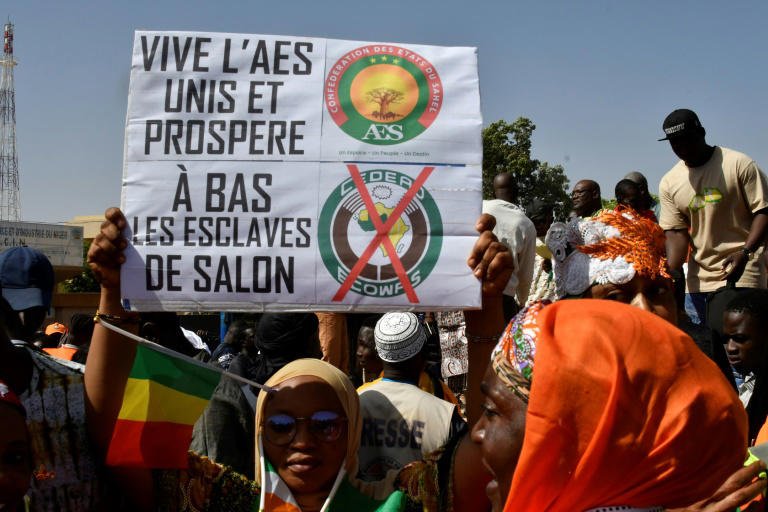
In December 2025, the Alliance of Sahel States (AES) comprising Mali, Burkina Faso, and Niger quietly operationalized a 6,000 strong Unified Force headquartered in Niamey. Unlike previous regional security arrangements, this force is funded internally through a 0.5% import levy, signaling a deliberate shift away from external financial dependence.
While the announcement received limited international attention, its implications are substantial. The AES is not merely coordinating security it is constructing an alternative regional framework that challenges existing power structures in West Africa.
Even more significant are emerging signals of expansion. Togo, a coastal state with strategic geographic positioning, is reportedly exploring alignment with the bloc, raising the prospect of a broader coalition that could reshape regional dynamics.
A New Model of Security Coordination
The AES Unified Force represents a departure from traditional security partnerships in Africa, which have often relied on external funding, training, and logistical support.
By financing the force through a regional levy, AES members are demonstrating an ability to mobilize resources collectively and sustain operations without direct reliance on Western institutions or multilateral frameworks.
This approach introduces a different operational logic:
• Decision-making remains internal
• Strategic priorities are locally defined
• Resource mobilization is regionally controlled
Leaders in Mali, Burkina Faso, and Niger have framed this model as an assertion of sovereignty, positioning the AES as an entity capable of addressing security challenges on its own terms.
Togo’s Strategic Incentive
For Togo, potential alignment with the AES offers both geographic and strategic advantages. As a coastal nation bordering the Sahel, Togo occupies a critical position between inland security challenges and maritime trade routes.
Participation in the AES framework could enhance its ability to manage cross-border threats, improve coordination with neighboring states, and strengthen its overall security posture.
At the same time, integration into a unified force structure would provide access to shared intelligence, operational capacity, and logistical networks.
The strategic benefit lies not only in defense, but in positioning. By aligning with an emerging regional bloc, Togo could increase its relevance within West African security architecture and expand its influence beyond national borders.
Blurring Governance Models
One of the more notable aspects of the AES expansion dynamic is the potential convergence between different governance systems.
The current AES members are led by military governments, while Togo operates within a different political framework. The possibility of collaboration between these systems suggests that regional alignment is being driven less by governance structure and more by shared strategic interests.
This introduces a broader implication: multiple pathways to state organization can coexist within a single regional framework, provided that coordination mechanisms are aligned.
Rather than enforcing a single model, the AES appears to be prioritizing functional cooperation focused on outcomes rather than institutional form.
This approach could redefine how regional partnerships are constructed across the continent.
Challenging Established Regional Architecture
The rise of the AES presents a direct challenge to established regional organizations, particularly ECOWAS, which has traditionally played a central role in West African security and political coordination.
By creating an alternative framework, AES members are effectively signaling that existing structures may no longer fully address their strategic priorities.
This divergence is not purely institutional it reflects differing perspectives on sovereignty, external engagement, and regional governance.
The emergence of parallel systems raises critical questions:
• Can multiple regional frameworks coexist effectively?
• Will competition between blocs enhance or undermine stability?
• How will external partners adapt to a fragmented regional landscape?
The answers will shape the trajectory of West African integration in the coming years.
Security as a Foundation for Broader Alignment
While the AES initiative is framed in security terms, its implications extend beyond military coordination. Shared security frameworks often serve as a foundation for deeper alignment across other domains, including infrastructure, logistics, and cross-border movement.
The creation of a unified force establishes a baseline of trust and cooperation, which can facilitate broader coordination over time.
In this sense, the AES model may represent an early stage in the development of a more integrated regional system one that is built incrementally through practical collaboration.
Quiet Expansion, Strategic Impact
The potential inclusion of Togo highlights the incremental nature of the AES expansion strategy. Rather than rapid enlargement, the bloc appears to be pursuing selective alignment with states that offer strategic value.
This measured approach reduces the risk of overextension while allowing the framework to evolve organically.
At the same time, each new alignment increases the bloc’s geographic reach, operational capacity, and influence within the region.
The cumulative effect could be the emergence of a parallel regional system with its own principles and priorities.
Structural Outlook: A Region in Transition
The formation and potential expansion of the AES Unified Force signal a broader transition in West African security architecture.
Rather than relying on a single, centralized framework, the region may be moving toward a more distributed model, characterized by multiple centers of coordination.
This shift introduces both opportunities and risks. Greater autonomy can enhance responsiveness and adaptability, but fragmentation can complicate coordination and increase uncertainty.
The central question is not whether the AES will expand it is how its growth will interact with existing structures and whether a new equilibrium can be established.
The emergence of a self-funded, regionally driven security bloc suggests that the rules of engagement in West Africa are evolving.
And as those rules change, so too will the balance of power.