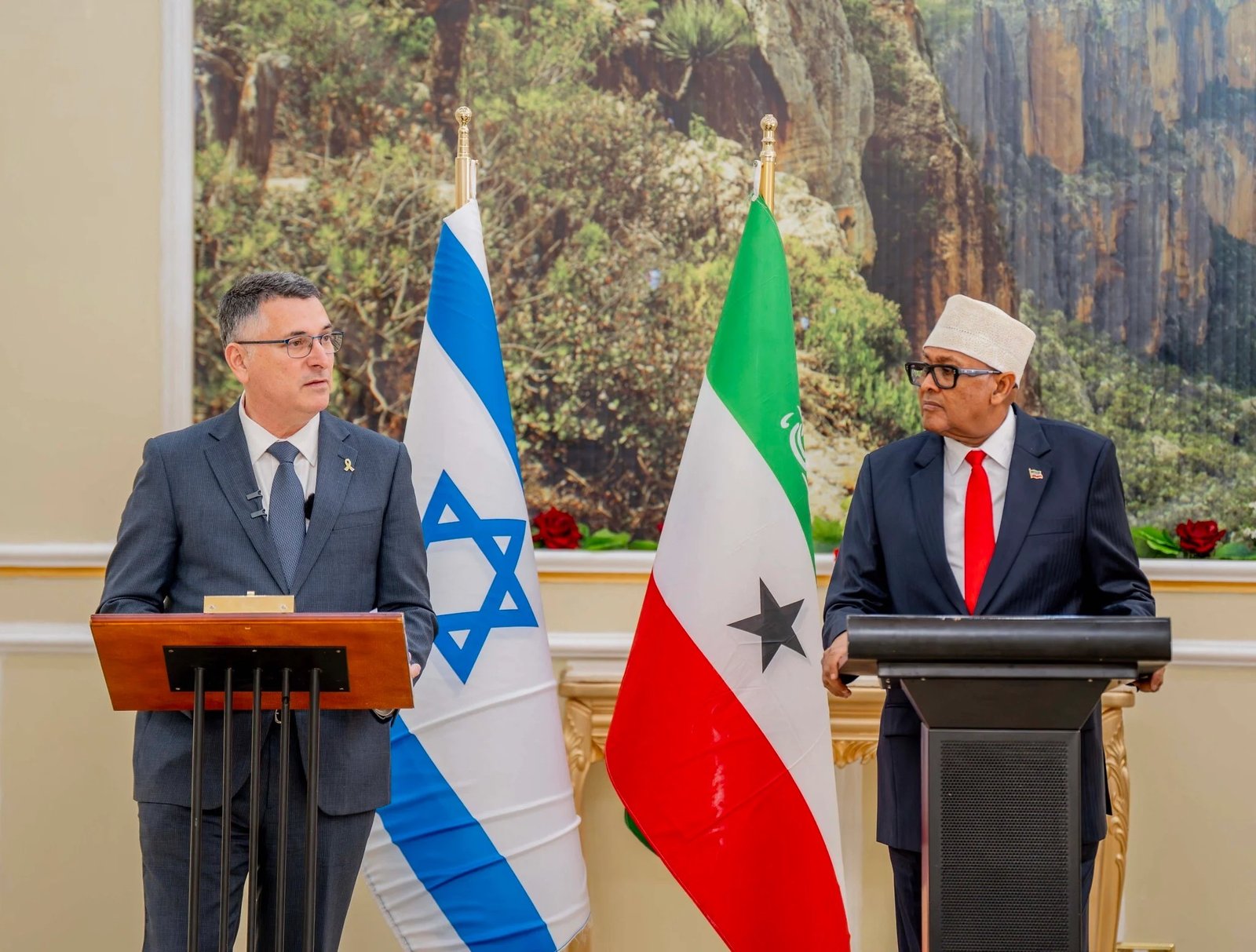
In December 2025, Israel’s formal recognition of Somaliland marked a turning point in Horn of Africa geopolitics one that is quietly reshaping alliances, trade access, and sovereignty dynamics across the Red Sea corridor.
While the move did not trigger immediate military confrontation, its strategic implications have been significant. Within weeks, Somalia expelled the United Arab Emirates (UAE) from key operational arrangements in Mogadishu, while Ethiopia accelerated discussions around maritime access through Somaliland.
What appears to be a diplomatic development is, in reality, a reconfiguration of power across one of the world’s most strategically important trade corridors.
Historical Context: Somalia and Somaliland
To understand the current tensions, it is necessary to revisit the historical relationship between Somalia and Somaliland.
Somaliland, located in the northwest of present-day Somalia, was formerly a British protectorate before gaining independence in 1960. Shortly thereafter, it voluntarily united with the former Italian Somaliland to form the Somali Republic.
However, the union proved unstable. Following decades of political marginalization and conflict, Somaliland declared independence in 1991 after the collapse of Somalia’s central government.
Since then, Somaliland has operated as a de facto independent state, maintaining its own government, currency, and security apparatus. Despite this, it has not received widespread international recognition, and Somalia continues to assert sovereignty over the territory.
This unresolved status has created a persistent fault line in regional politics.
The Recognition Shock and Immediate Fallout
Israel’s recognition of Somaliland represents one of the most significant external endorsements of its statehood to date. While largely symbolic in isolation, the move has triggered a cascade of geopolitical reactions.
Somalia’s response expelling the UAE from its operational footprint signals a broader shift in alliances. The decision reflects Mogadishu’s perception that Gulf actors are increasingly engaging with Somaliland in ways that undermine Somalia’s territorial claims.
At the same time, Ethiopia has intensified its engagement with Somaliland, particularly in relation to port access and potential naval basing arrangements. As a landlocked country, Ethiopia has long sought alternative maritime routes to reduce dependence on Djibouti, through which approximately 90% of its trade currently flows, according to World Bank data.
The convergence of these developments has effectively split the region into competing geopolitical blocs.
Emerging Blocs: Gulf Influence in the Horn
The Horn of Africa is increasingly becoming an extension of Gulf strategic competition, particularly along the Red Sea corridor.
On one side, a Saudi-aligned bloc comprising Turkey, Egypt, Qatar, Djibouti, and Pakistan has strengthened ties with Somalia. These relationships are underpinned by shared security interests, infrastructure investments, and alignment on territorial integrity.
On the other side, a UAE and Israel-aligned grouping featuring Ethiopia and, to a lesser extent, Kenya has focused on securing port access, logistics corridors, and maritime influence.
This division reflects competing visions for control over Red Sea trade routes, which handle a significant portion of global shipping traffic and energy flows.
The strategic importance of ports such as Berbera in Somaliland and Assab in Eritrea has increased accordingly, as external actors seek footholds along key maritime chokepoints.
Red Sea Economics: Ports, Trade, and Leverage
The Red Sea is not only a geopolitical flashpoint but also an economic lifeline. It serves as a critical link between Europe, Asia, and Africa, with shipping lanes that carry a substantial share of global trade.
Control over ports and access points along this corridor translates into economic leverage. Countries and external partners that secure these assets can influence trade flows, logistics costs, and regional integration patterns.
For Ethiopia, access to Somaliland’s ports represents an opportunity to reduce transport costs, diversify trade routes, and strengthen economic resilience. For Gulf actors, investments in port infrastructure provide both commercial returns and strategic positioning.
However, these developments also raise questions about sovereignty and control. When external powers finance, operate, or influence critical infrastructure, the balance of economic power can shift away from host nations.
Proxy Alignment Without Open Conflict
One of the defining features of the current situation is the absence of direct military confrontation. Instead, competition is being conducted through diplomatic recognition, economic agreements, and infrastructure investments.
This form of “silent alignment” allows actors to advance strategic objectives while avoiding the immediate costs of conflict. However, it also increases complexity, as multiple layers of influence intersect across political, economic, and security domains.
The result is a form of proxy competition in which African states are both participants and arenas of broader geopolitical rivalry.
The Cost of Fragmentation
The fragmentation of alliances in the Horn of Africa carries significant economic risks. Regional instability can disrupt trade routes, increase insurance and logistics costs, and deter investment.
For Somalia, the expulsion of the UAE may limit access to capital and infrastructure development. For Ethiopia, deeper involvement in contested territories could introduce political and security risks that affect economic planning.
More broadly, the division of the region into competing blocs may undermine efforts at regional integration, including trade initiatives and cross-border infrastructure projects.
The World Bank has consistently highlighted that political stability and regional cooperation are key drivers of economic growth in developing regions. Fragmentation, by contrast, introduces inefficiencies and uncertainty.
Structural Outlook: Sovereignty in a Multipolar Red Sea
The recognition of Somaliland by Israel has exposed a broader shift in how external powers engage with African states. Rather than operating through multilateral frameworks, actors are increasingly pursuing bilateral arrangements that align with their strategic interests.
This approach creates opportunities for African governments to leverage competition among external partners. However, it also introduces risks of dependency and reduced policy autonomy.
The Horn of Africa is becoming a testing ground for this new geopolitical model one in which sovereignty is negotiated through infrastructure, alliances, and recognition rather than formal conflict.
The central question is whether African states can navigate this environment in a way that preserves economic and political control, or whether they will become increasingly embedded in external strategic frameworks.
Israel’s recognition of Somaliland may have been a single diplomatic act. But its consequences are reshaping the region quietly, but decisively.