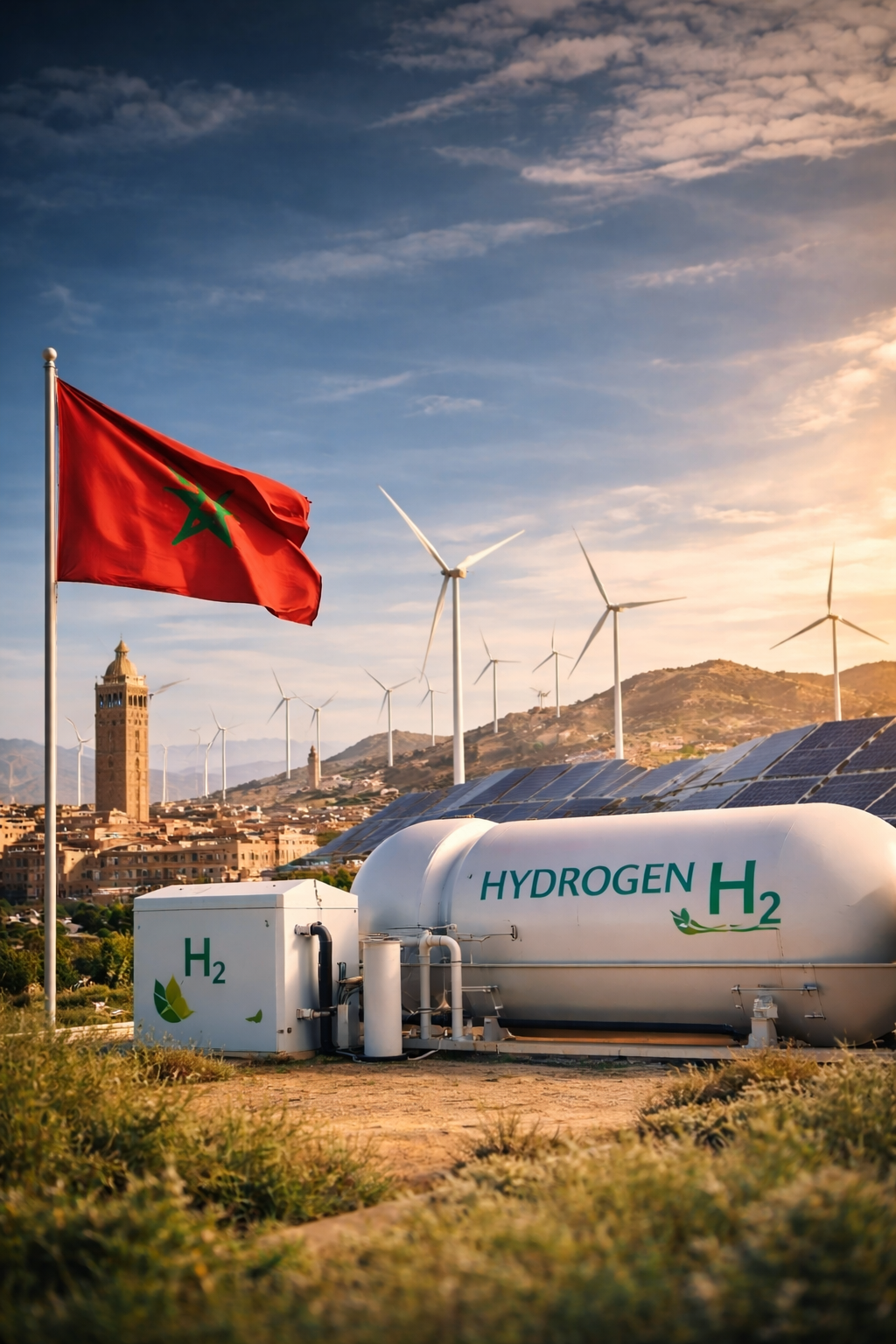
Morocco has positioned itself as one of the most credible prospective green hydrogen exporters in the developing world, combining exceptional solar and wind resources, proximity to European markets, an established renewable energy infrastructure track record, and deliberate government investment in the hydrogen value chain. The strategic logic is compelling. The economics of large-scale green hydrogen production and export remain at an earlier stage of validation than the political momentum suggests.
The Resource Endowment Case
Morocco's solar irradiance particularly in the southern regions and the Saharan zone is among the highest globally. Wind resources along the Atlantic coast and in the south provide complementary renewable generation potential. The combination of solar and wind availability creates the conditions for high-capacity factor electrolyzer operation the key determinant of green hydrogen production cost competitiveness.
The NOOR solar complex at Ouarzazate demonstrated Morocco's capacity to develop and operate large-scale renewable infrastructure to international standards a track record that differentiates it from competitors with stronger resource endowments but weaker execution environments.
Xlinks and the Direct Connection Model
The Xlinks Morocco-UK Power Project proposing a 3,800-kilometre subsea cable to transmit solar and wind power directly from Morocco to the UK represents the most ambitious iteration of the North Africa-Europe clean energy corridor concept. The project's economics depend on achieving capital cost assumptions for the cable infrastructure and renewable generation that have not yet been validated at the proposed scale.
Whether Xlinks reaches financial close is a significant test case for the broader market thesis that North African renewable resources can be exported to European markets at costs competitive with local European generation alternatives.
The Electrolysis Cost Curve
Green hydrogen's competitiveness relative to natural gas-derived hydrogen depends on electrolyser costs continuing to decline along a projected learning curve. At current electrolyser costs, green hydrogen production remains more expensive than fossil-derived alternatives in most markets. Morocco's competitive advantage would materialize fully when the cost curve brings green hydrogen to price parity a transition that analysts project within this decade but that has not yet arrived.
Domestic Industrialisation vs Export Orientation
A strategic tension in Morocco's hydrogen policy is between export orientation selling hydrogen or electrons to European markets and using cheap renewable energy to power domestic industrial development in energy-intensive sectors including fertilizer production, green steel, and ammonia manufacturing. The domestic industrialisation path offers more durable economic development outcomes but requires a different financing and market development logic than export infrastructure investment.