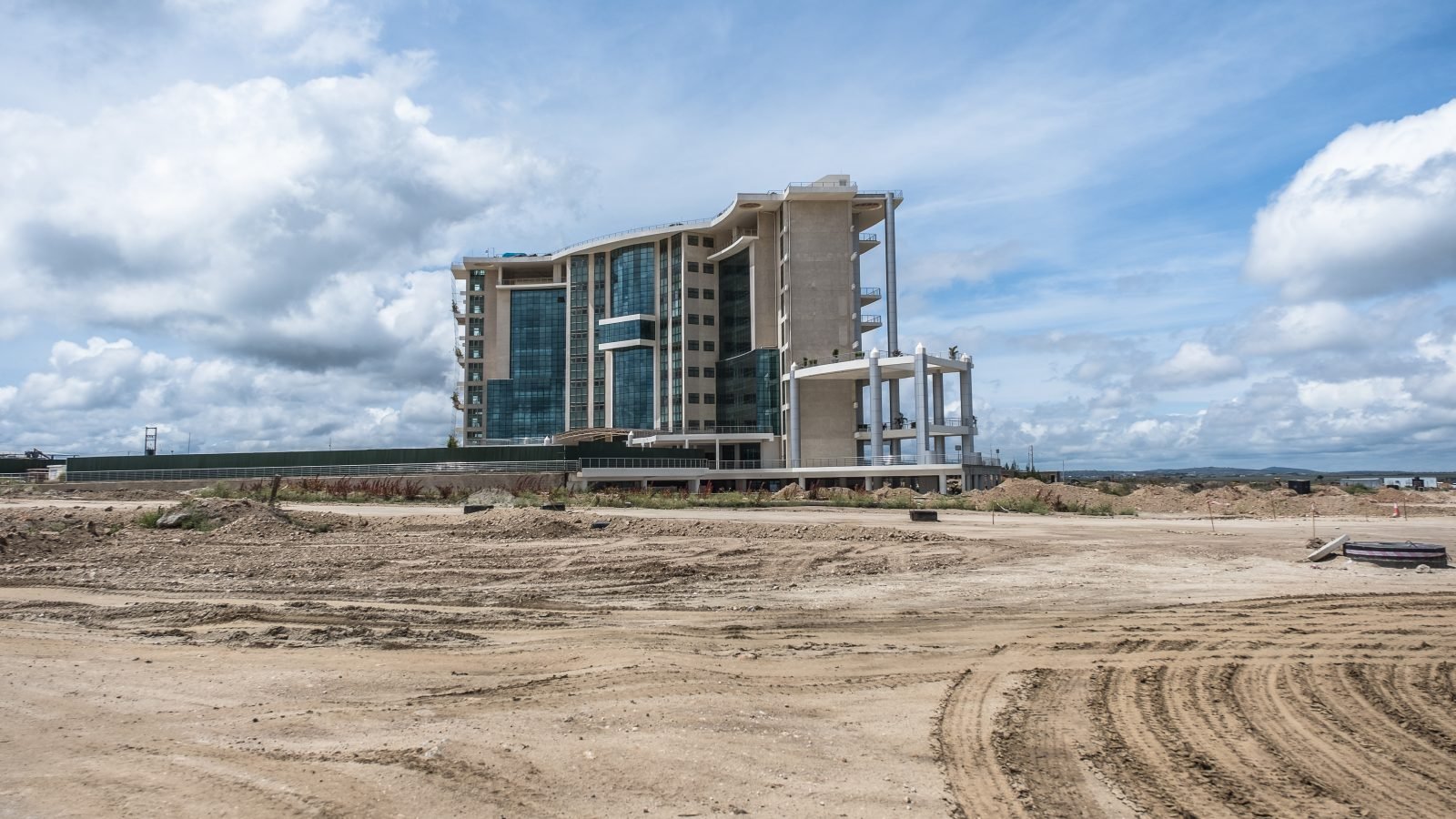
Kenya’s Konza Technopolis, a flagship $1 billion smart city project located 60 kilometers southeast of Nairobi, was designed to position the country as East Africa’s leading technology and innovation hub. Backed by significant government investment and supported by development finance institutions, the project reflects a broader continental push toward knowledge based urban development. However, more than a decade after its launch, private sector participation remains slower than anticipated.
According to the Kenyan government and infrastructure disclosures, public investment in Konza has already exceeded $1 billion, covering bulk infrastructure such as roads, water systems, power supply, and data connectivity. Yet large scale private tenancy, which is critical for the project’s financial sustainability, has lagged behind initial projections.
Public Capital vs Private Sector Hesitation
Konza Technopolis follows a model seen across emerging markets: the state finances core infrastructure in anticipation of private capital inflows. Institutions such as the African Development Bank have emphasized the importance of such public-private sequencing in urban development. However, execution risk remains significant.
In Konza’s case, investors continue to weigh several constraints:
• Demand uncertainty for commercial space
• Long payback periods for real estate investment
• Macroeconomic volatility, including currency depreciation
Kenya’s shilling has experienced sustained depreciation pressures in recent years, increasing the cost of imported construction materials and raising the risk profile for foreign investors. According to World Bank macroeconomic updates, currency instability remains a key factor influencing infrastructure investment decisions across East Africa.
Mismatch Between Vision and Market Absorption
Konza was envisioned as a high-density ecosystem for technology firms, research institutions, and multinational corporations. However, the pace of tenant acquisition suggests a mismatch between supply and immediate market demand.
While Kenya has a growing digital economy, anchored by companies such as Safaricom and a vibrant startup ecosystem, the scale required to fill a purpose-built smart city remains substantial. The International Finance Corporation has noted in its urbanization reports that large-scale planned cities often face absorption challenges unless anchored by pre-committed tenants.
This dynamic creates a structural tension: infrastructure is built ahead of demand, but demand materializes more slowly than financial models anticipate.
Financing Structure and Fiscal Implications
From a sovereign finance perspective, Konza represents a long-duration investment with deferred returns. Kenya’s broader public debt position, which the IMF estimates at over 60% of GDP in recent assessments, adds another layer of scrutiny to large-scale capital projects.
While Konza is not singularly responsible for fiscal pressures, projects of this scale require sustained funding commitments. This includes not only initial capital expenditure but also ongoing maintenance, security, and administrative costs.
The reliance on public funding in early phases means that delays in private sector uptake can extend the period before cost recovery begins, increasing fiscal exposure.
Regional Competition for Technology Investment
Konza does not operate in isolation. Competing hubs across Africa including Kigali Innovation City in Rwanda and Egypt’s New Administrative Capital are also positioning themselves as technology and business centers.
These projects compete for a limited pool of multinational tenants, venture capital flows, and institutional partnerships. According to Afreximbank’s trade and investment reports, capital allocation across African infrastructure projects is becoming increasingly selective, with investors prioritizing locations that offer immediate scalability and regulatory clarity.
This competitive landscape places additional pressure on Konza to differentiate itself beyond infrastructure, including through policy incentives, talent development, and integration with existing economic clusters.
Structural Constraints in African Smart City Models
The challenges facing Konza are not unique. Across the continent, smart city projects often encounter similar structural constraints:
• Limited domestic tenant base at scale
• High upfront capital requirements
• Dependence on foreign direct investment
• Currency and macroeconomic volatility
The African Development Bank has highlighted that successful urban development projects typically align more closely with existing economic activity rather than attempting to create entirely new ecosystems from scratch.
Repositioning and Long-Term Outlook
Despite current challenges, Konza Technopolis retains strategic relevance. Kenya’s position as East Africa’s largest economy and a regional technology hub provides a foundation for long-term growth.
Recent efforts to attract universities, research institutions, and government agencies to the site reflect a shift toward anchoring the ecosystem with semi-public tenants before scaling private sector participation.
This phased approach may prove more viable, particularly in a market where private capital remains cautious.
Ultimately, Konza’s trajectory will depend less on initial capital deployment and more on its ability to integrate into Kenya’s broader economic system. The project highlights a central reality in African infrastructure development: building physical assets is only the first step; generating sustained economic activity around them is the harder, and more decisive, challenge.