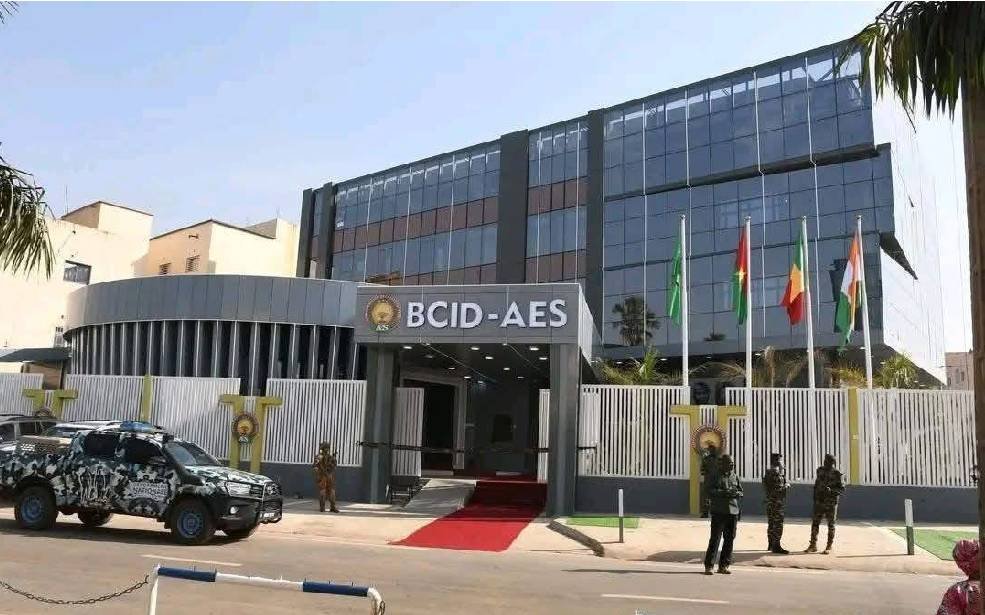
The Alliance of Sahel States (AES) comprising Mali, Burkina Faso, and Niger has taken a decisive step toward financial autonomy with the creation of a jointly backed development and investment bank. While official disclosures remain limited, regional statements indicate that the institution has secured initial capital commitments approaching or exceeding $1 billion, raised without direct foreign equity participation.
The move signals a structural shift: from externally financed development models toward sovereign-controlled capital formation within one of Africa’s most geopolitically sensitive regions.
Capital Formation Without External Equity
The most notable feature of the AES bank is not its size, but its funding model. Unlike many African financial institutions that rely on multilateral lenders or foreign investors, the AES initiative is being financed through internal mechanisms.
These include:
• State budget allocations from member countries
• Resource-backed revenues, particularly from gold and uranium sectors
• Regional levies, including the recently introduced 0.5% import levy across AES states
Individually, these economies face fiscal constraints. However, pooled together, they create a collective funding base that allows for capital mobilization at scale.
According to African Development Bank (AfDB) and IMF data, Mali and Burkina Faso are among Africa’s leading gold producers, while Niger remains a significant global supplier of uranium. These commodities provide the revenue backbone for domestic capital generation.
The result is a model of “aggregated sovereignty,” where financial capacity is built through regional consolidation rather than external dependency.
A Bank Designed for Strategic Investment
The AES development bank is expected to focus on sectors that directly influence economic resilience and state capacity. While detailed project pipelines have not been fully disclosed, policy signals suggest priority areas will include:
• Energy infrastructure, including off-grid and thermal power systems
• Transport and logistics corridors linking Sahelian economies
• Agricultural processing and food security initiatives
• Mining value chains, particularly local processing of gold and uranium
This investment focus reflects a departure from consumption-driven financing toward productive asset development.
In contrast to traditional development finance, which often prioritizes social spending and externally defined projects, the AES model appears oriented toward strategic sectors that enhance sovereignty and reduce external vulnerability.
Why This Model Matters
The establishment of the AES bank highlights a broader tension within African development finance: the balance between access to capital and control over its deployment.
Multilateral institutions such as the World Bank and IMF provide significant funding but often attach policy conditions that influence domestic economic decisions. While these frameworks aim to ensure stability, they can also limit policy flexibility.
The AES approach seeks to alter this dynamic by prioritizing internally generated capital, even if it comes at a higher cost or slower pace of accumulation.
This introduces a different set of trade-offs:
• Greater control over investment priorities
• Reduced exposure to external conditionalities
• Increased reliance on domestic fiscal capacity
The model is not without risk, but it represents a deliberate shift in strategic orientation.
Constraints and Structural Risks
Despite its ambitions, the AES development bank faces significant structural challenges. The combined GDP of the three member states remains relatively modest, limiting the scale of capital that can be mobilized internally.
Additionally, fiscal pressures, security expenditures, and commodity price volatility introduce uncertainty into revenue streams.
According to IMF assessments, Sahelian economies continue to face constraints related to debt sustainability, inflation, and external shocks.
These factors raise questions about the long-term sustainability of a purely domestically financed model.
Furthermore, the absence of foreign equity may limit access to technical expertise, global financial networks, and risk-sharing mechanisms.
Geopolitical Signaling
Beyond its financial role, the AES bank carries geopolitical significance. It signals an intention by member states to redefine their relationship with external partners, particularly in the context of shifting alliances and evolving regional dynamics.
By establishing an internally funded financial institution, the AES bloc is asserting a form of economic sovereignty that aligns with its broader political positioning.
This move may also influence how other African regions approach development finance, particularly in contexts where concerns about external dependency are prominent.
Execution Will Define Outcome
The success of the AES development bank will depend less on its initial capitalization and more on its ability to deploy funds effectively.
Key factors include:
• Project selection and governance structures
• Transparency and accountability mechanisms
• Coordination across member states
The World Bank has consistently emphasized that institutional capacity is a critical determinant of development outcomes.
Without strong governance frameworks, even well-capitalized institutions can struggle to achieve their objectives.
Structural Outlook: A Different Model of Development Finance
The AES development bank represents an alternative approach to financing economic development one that prioritizes control over scale and sovereignty over speed.
It does not eliminate the need for external capital, but it seeks to rebalance the relationship by strengthening internal capacity.
Whether this model can be sustained—and whether it can deliver measurable economic outcomes remains an open question.
However, its emergence signals a broader shift in how some African states are approaching development finance.
In a landscape traditionally dominated by external funding, the AES initiative suggests that new models are being tested ones that place greater emphasis on self-determination, even in the face of structural constraints.