Africa’s recent growth trajectory has been supported by rising household consumption, improved macroeconomic stability in select markets, and favorable external conditions. However, beneath this expansion lies a structural imbalance that continues to constrain long term transformation: the continent’s growth model remains heavily consumption driven rather than production led.
This imbalance raises a fundamental economic question. Can sustained growth occur without a corresponding expansion in productive capacity? Current data suggests that without a shift toward industrialization, manufacturing, and value-added production, Africa’s growth may remain cyclical rather than structural.
Consumption-Led Growth: A Structural Limitation
In many African economies, growth is driven primarily by domestic consumption, supported by remittances, urbanization, and a growing middle class. While this has contributed to short-term economic expansion, it does not inherently build productive capacity.
The International Monetary Fund (IMF) has noted that consumption-driven growth models often result in higher import dependency, as domestic industries lack the capacity to meet rising demand. This creates a leakage effect, where increased consumption translates into higher imports rather than domestic production.
The consequences are measurable:
• Persistent trade deficits
• Currency pressure due to import demand
• Limited job creation in high-productivity sectors
In this context, consumption becomes a driver of external dependency rather than internal economic strengthening.
The Debt Trap: Growth Without Fiscal Space
The limitations of the current growth model are further compounded by rising public debt. According to the African Development Bank (AfDB), Africa’s total public debt increased by approximately 170% between 2010 and 2024, reflecting infrastructure financing needs, pandemic related spending, and exposure to external shocks.
While debt-financed spending has supported growth, it has also reduced fiscal space the ability of governments to invest in long-term development priorities.
This creates a structural constraint:
• Governments must allocate more resources to debt servicing
• Less capital is available for industrial policy and infrastructure
• Economic policy becomes reactive rather than strategic
The IMF has emphasized that growth without fiscal space is inherently fragile. Without sufficient buffers, economies remain vulnerable to external shocks, including currency volatility, commodity price fluctuations, and tightening global financial conditions.
In effect, Africa’s growth is being financed but not fully secured.
Production Gap: Industrial Capacity as the Missing Layer
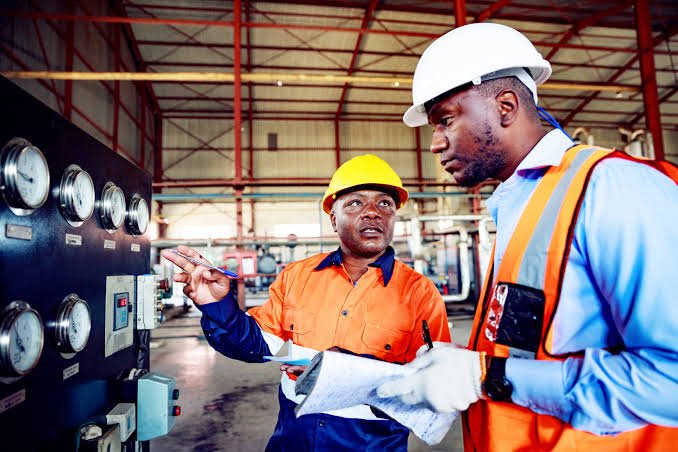
The transition from consumption to production requires the development of industrial capacity across key sectors, including manufacturing, agro-processing, and energy.
However, Africa’s industrial base remains limited. Manufacturing contributes a relatively small share of GDP in most countries, and value-added production is often constrained by infrastructure deficits, energy reliability issues, and limited access to capital.
The World Bank has highlighted that countries with strong industrial sectors tend to achieve more stable and inclusive growth, as production generates employment, exports, and technological advancement.
Without this layer, growth remains shallow:
• Consumption increases demand
• Imports satisfy that demand
• Domestic production remains underdeveloped
This cycle reinforces external dependency and limits the potential for structural transformation.
AfCFTA vs Reality: Why Intra-African Trade Still Lags
The African Continental Free Trade Area (AfCFTA) was designed to address some of these structural challenges by promoting intra-African trade and regional integration.
In theory, AfCFTA should enable economies to scale production, develop regional value chains, and reduce reliance on external markets.
In practice, progress has been uneven. According to the AfDB, intra-African trade remains significantly lower than in other regions, accounting for roughly 15–18% of total trade compared to over 50% in Asia and Europe.
Several factors explain this gap:
• Infrastructure deficits, particularly in transport and logistics
• Non-tariff barriers and regulatory inconsistencies
• Limited diversification of export products
These constraints mean that even with reduced tariffs, many countries lack the production capacity to take full advantage of regional markets.
AfCFTA, therefore, is not just a trade agreement it is a test of whether Africa can build the productive base required to support integration.
Power Dynamics: External vs Internal Growth Drivers
Africa’s current growth model remains significantly influenced by external factors, including commodity prices, foreign investment flows, and global financial conditions.
This creates a power imbalance in which economic outcomes are partially determined outside the continent.
A production-led model would shift this dynamic by:
• Increasing domestic value creation
• Reducing vulnerability to external shocks
• Strengthening bargaining power in global trade
However, achieving this transition requires coordinated policy action, sustained investment, and institutional capacity.
Structural Outlook: Bridging the Gap
The gap between consumption and production represents one of the most significant structural challenges facing African economies.
Closing this gap will require a multi-layered approach:
• Investment in industrial infrastructure
• Strengthening of regional supply chains
• Improved fiscal management to restore policy space
At the same time, AfCFTA must move beyond policy frameworks to practical implementation, enabling businesses to operate across borders and scale production.
The central issue is not whether Africa can grow it already is. The question is whether that growth can evolve into a model that generates sustainable, internally driven economic transformation.
Until production becomes a core driver of expansion, Africa’s growth story will remain incomplete defined as much by its constraints as by its potential.