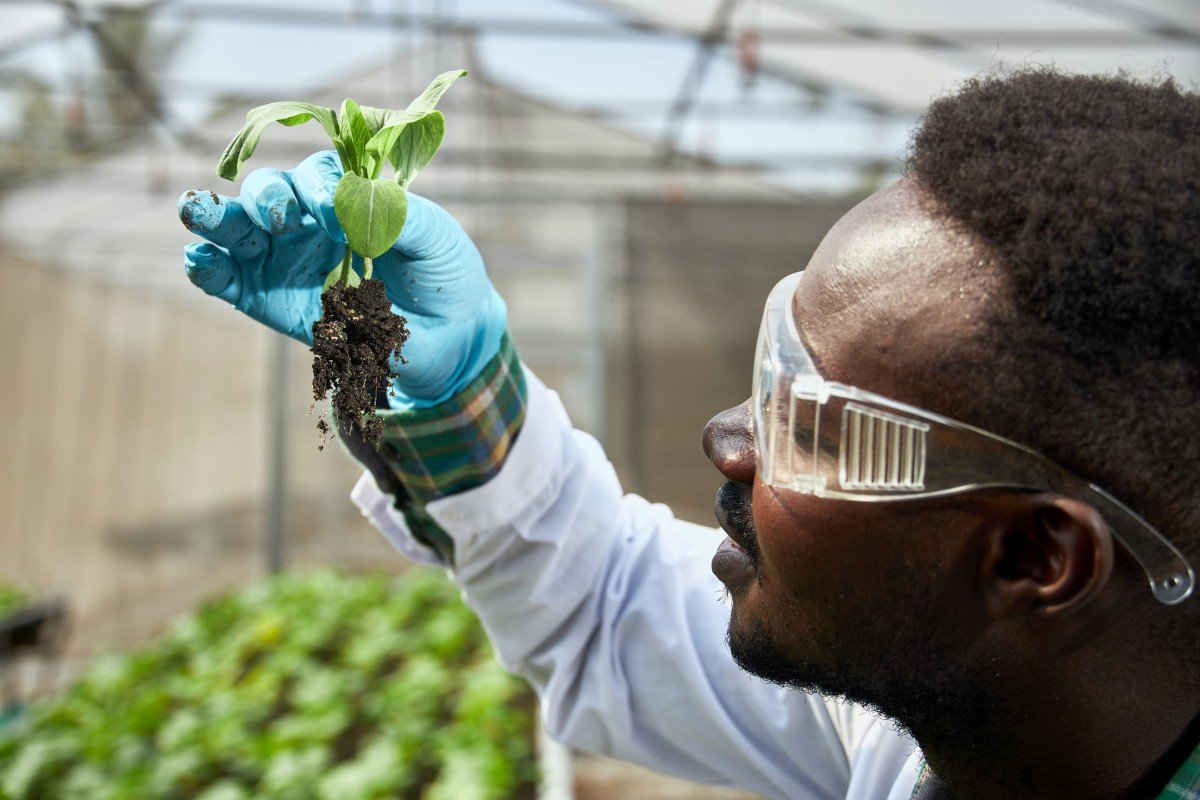
Biotechnology activity across Africa is showing measurable acceleration, particularly in healthcare innovation, agricultural productivity, and localized pharmaceutical manufacturing. However, despite increasing visibility and policy support, the sector remains structurally modest in scale better described as emerging momentum rather than a full-scale industry expansion.
According to the World Health Organization (WHO), Africa imports approximately 70–80% of its pharmaceutical products, reflecting a persistent gap in domestic production capacity. The African Development Bank has similarly emphasized that limited industrial biotechnology infrastructure continues to constrain value-added manufacturing across the continent.
Against this backdrop, a small but growing cohort of biotech firms is attempting to reposition Africa within global life sciences value chains.
Sector Growth Without Scale
Unlike fintech where companies such as Flutterwave and M-Pesa have achieved multi-billion dollar valuations or energy, which benefits from established commodity markets, biotechnology in Africa remains capital-intensive, research-driven, and slower to commercialize.
This creates a structural imbalance:
• High scientific potential
• Limited funding pipelines
• Weak commercialization ecosystems
The World Bank has noted that research and development (R&D) expenditure across Sub-Saharan Africa remains below 1% of GDP on average, significantly lower than OECD economies where biotech ecosystems typically flourish.
As a result, current growth is concentrated in targeted initiatives rather than broad-based sector expansion.
Afrigen: Vaccine Sovereignty as Industrial Strategy
One of the most closely watched biotech initiatives is Afrigen Biologics & Vaccines, based in Cape Town. The company gained international recognition for its role in the WHO-backed mRNA technology transfer hub, designed to enable African countries to develop and produce their own vaccines.
Afrigen’s mission extends beyond COVID-19 replication. It is focused on building endogenous vaccine development capabilities, reducing reliance on external pharmaceutical supply chains.
The long-term implications are structural:
• Reduced exposure to global supply shocks
• Lower vaccine procurement costs over time
• Development of high-skill scientific labor markets
However, scaling production remains dependent on regulatory harmonization, sustained funding, and downstream manufacturing capacity areas where Africa continues to face constraints.
54gene: Genomics and the Data Gap
Nigeria-founded biotech firm 54gene represents another strategic frontier: genomic research. The company’s core mission is to address the underrepresentation of African genetic data in global research databases.
This gap has direct implications for drug development, as treatments derived from non-representative datasets may be less effective for African populations.
54gene’s approach centers on:
• Building Africa-focused biobanks
• Enabling precision medicine research
• Partnering with global pharmaceutical firms
If successful, the long-term benefits could include improved treatment efficacy, reduced healthcare disparities, and the integration of African populations into global clinical research frameworks.
However, the company has also faced operational and funding challenges, highlighting a broader issue within the sector: scientific ambition often outpaces capital availability.
BioNTech Africa: Manufacturing as Geopolitical Strategy
German pharmaceutical company BioNTech has expanded into Africa through planned mRNA vaccine production facilities in Rwanda and Senegal, marking one of the most significant foreign investments in the continent’s biotech infrastructure.
While not African-founded, these facilities are central to Africa’s biotechnology trajectory, as they introduce advanced manufacturing capabilities into local ecosystems.
The strategic rationale is twofold:
• Decentralization of global vaccine production
• Strengthening regional health security systems
For African economies, the long-term benefits extend beyond healthcare. These facilities can catalyze ancillary industries, including cold chain logistics, clinical research, and specialized workforce development.
However, questions remain regarding technology transfer depth and the extent to which local firms will integrate into these value chains.
Agricultural Biotech: Productivity vs Adoption Barriers
Beyond healthcare, agricultural biotechnology is gaining traction as countries seek to address food security challenges. Organizations such as Kenya’s International Institute of Tropical Agriculture (IITA) and various gene-editing initiatives are working on drought-resistant crops and pest-resistant varieties.
The African Development Bank has consistently identified agricultural productivity as a key constraint on economic growth, noting that yields in Sub-Saharan Africa remain significantly below global averages.
Biotech solutions offer potential improvements through:
• Climate-resilient crop development
• Reduced dependency on chemical inputs
• Increased yield stability
Yet adoption remains uneven, constrained by regulatory uncertainty, public perception challenges, and limited distribution infrastructure.
Constraint Layer: Capital, Regulation, and Scale
The primary limitation facing Africa’s biotech sector is not innovation capacity, but system-level constraints.
These include:
• Limited venture capital for deep-tech sectors
• Fragmented regulatory frameworks across countries
• Insufficient integration between research institutions and industry
Compared to fintech where lower capital requirements and faster revenue cycles attract investors biotech requires longer timelines and higher upfront investment, making it less attractive in current market conditions.
Structural Outlook
Africa’s biotech sector is not yet in a phase of exponential growth. Instead, it is laying foundational capacity across key segments: vaccines, genomics, and agricultural innovation.
The distinction matters. Momentum exists, but scale has not yet followed.
For the sector to transition from emerging to established, it will require:
• Sustained public and private investment
• Regional regulatory alignment
• Integration into global research and manufacturing networks
If these conditions materialize, biotechnology could evolve into a strategic pillar of Africa’s industrial and healthcare systems. Until then, it remains a high-potential sector defined more by trajectory than by current scale.