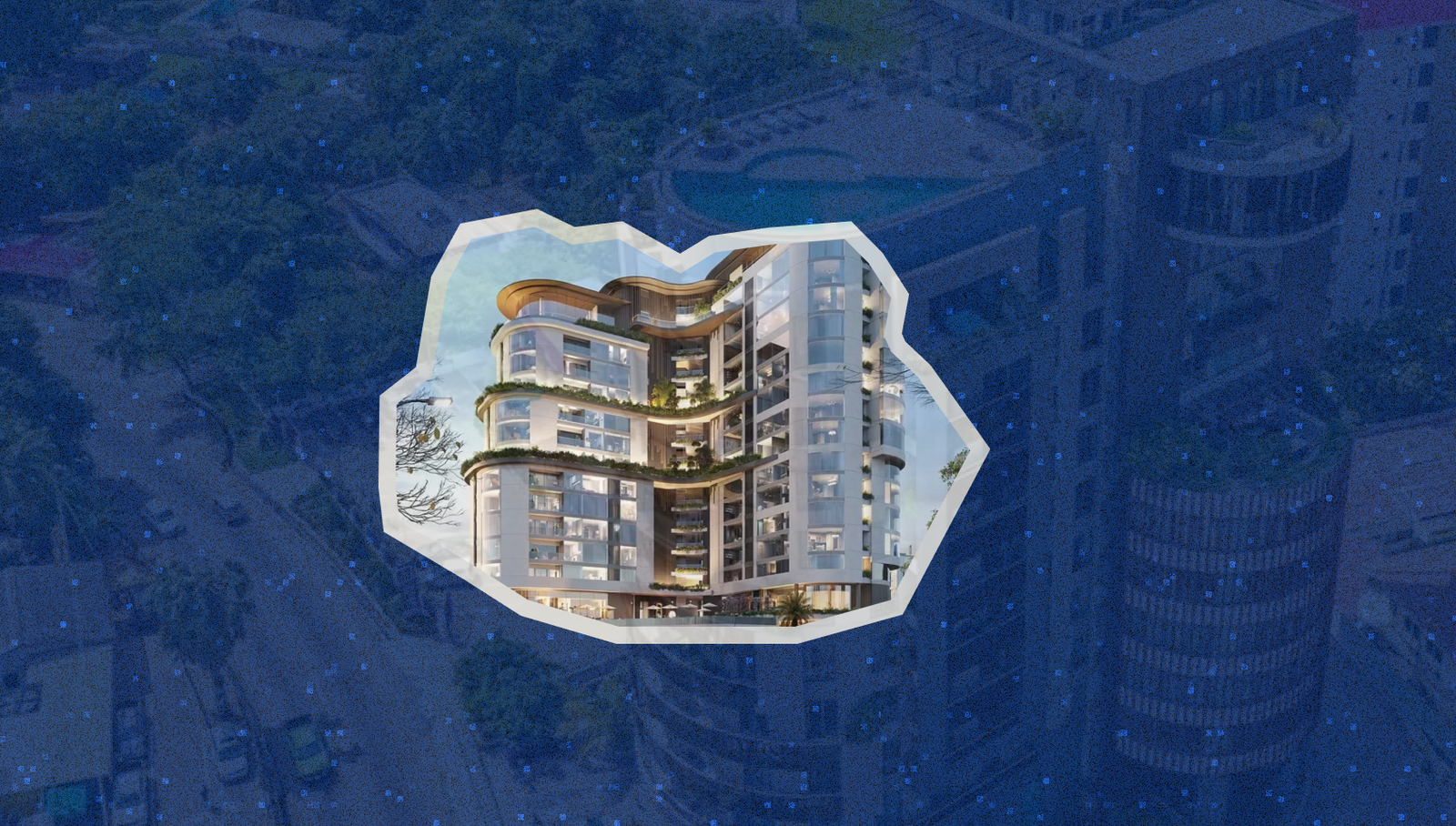
Accra’s high-end real estate market has expanded into a billion-dollar segment, driven by diaspora capital, foreign investor demand, and sustained urbanization. Prime residential developments in areas such as Airport Residential, Cantonments, and East Legon now command dollar-denominated pricing, with transaction volumes across the upper tier of the market estimated to exceed $1 billion annually. Yet beneath this growth lies a structural constraint that continues to limit the sector’s long-term stability: weak domestic liquidity and an underdeveloped housing finance system.
According to the World Bank, mortgage penetration in Ghana remains below 3% of GDP, compared to over 30% in emerging markets and above 60% in advanced economies. This gap is not just a financial statistic it defines the limits of how far the real estate sector can scale beyond its current demand base.
Diaspora Capital as the Primary Demand Engine
Remittance inflows into Ghana reached approximately $4.6 billion in 2023, according to World Bank data. A significant portion of this capital is directed into real estate, particularly high-end residential developments that offer perceived security against currency depreciation and inflation.
This has created a market dynamic where demand is increasingly externalized. Buyers are often dollar earners based in the United States, United Kingdom, or Europe, while local income levels remain largely disconnected from prevailing property prices.
The result is a two-speed market: one segment fueled by foreign currency inflows, and another constrained by domestic purchasing power.
Mortgage Market Limitations and Financing Gaps
Despite strong demand, Ghana’s financial system is not structured to support broad-based property ownership. Commercial lending rates frequently exceed 25%, making long-term mortgage products inaccessible to most households.
The African Development Bank has consistently identified housing finance as one of the largest structural bottlenecks across African economies. In Ghana, the housing deficit is estimated at over 1.8 million units, reflecting both supply constraints and limited financing mechanisms.
In the absence of scalable mortgage systems, developers have adapted by relying on alternative financing structures, including:
• Off-plan sales targeted at diaspora buyers
• Developer-led installment payment schemes
• Private equity and joint venture financing
While these models enable project completion, they do not create a sustainable domestic demand base.
Currency Volatility and Cost Pressures
The Ghanaian cedi has experienced periods of significant volatility, with depreciation cycles increasing the cost of imported construction materials such as cement inputs, steel, and finishing components. According to IMF assessments, inflation remained elevated through 2023 and 2024, contributing to rising construction costs.
Developers have responded by pricing units in US dollars, effectively transferring currency risk to buyers. While this stabilizes revenue streams, it further distances property pricing from local affordability levels.
This creates a structural contradiction: the market expands in nominal value terms, but its accessibility continues to narrow.
Supply Expansion Without Financial Depth
Accra has witnessed a steady pipeline of new developments, including gated communities, mixed-use projects, and high-rise residential complexes. However, supply growth is increasingly concentrated in the upper end of the market, where dollar liquidity exists.
The World Bank and International Finance Corporation have both emphasized that Africa’s urban housing challenge is not simply about supply it is about aligning supply with financing mechanisms that enable broad participation.
In Ghana’s case, the absence of long-term capital markets and mortgage-backed securities limits the ability of banks to extend housing credit at scale.
Power Dynamics in Capital Allocation
The structure of Accra’s real estate market reflects a broader capital allocation dynamic. Developers prioritize projects that can attract foreign currency, while financial institutions remain cautious about long-term lending in a high-inflation environment.
This results in a market where capital flows toward segments with the least structural risk namely, high-end developments backed by diaspora demand while affordable housing remains underdeveloped.
The imbalance is not accidental; it is a rational response to macroeconomic constraints.
Structural Implications
Accra’s real estate expansion highlights a recurring pattern across African urban markets: capital inflows can drive rapid asset growth, but without corresponding financial system development, that growth remains uneven and fragile.
Until Ghana develops deeper mortgage markets, stabilizes inflation, and expands access to long-term financing, the sector will remain segmented. Liquidity will persist at the top end, while the broader market continues to operate under structural constraint.
This is not a demand problem. It is a financial architecture problem.