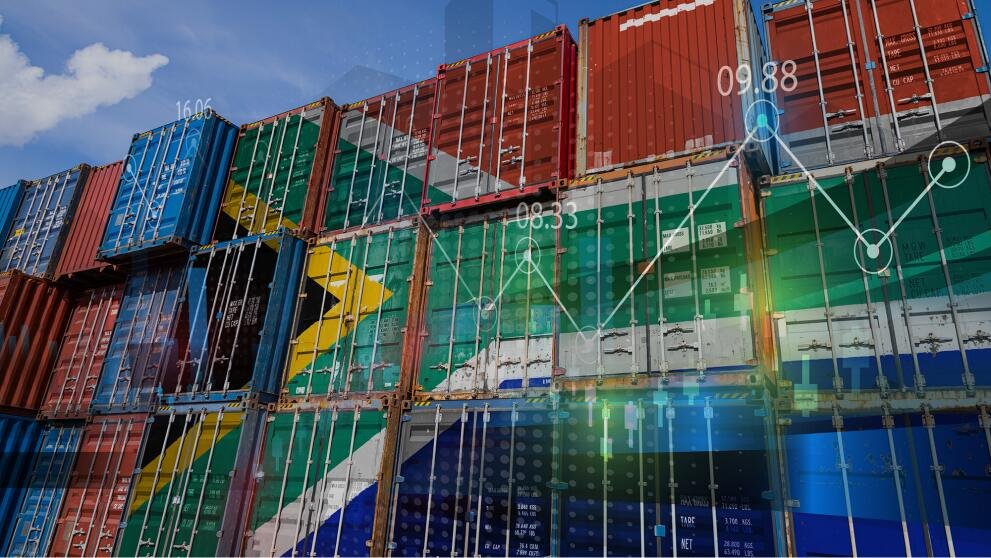
Africa’s trade structure reveals a persistent and deeply embedded imbalance: the continent imports a significant share of the goods it consumes while exporting largely unprocessed raw materials. This pattern has defined African economies for decades, shaping fiscal outcomes, industrial capacity, and long-term growth prospects.
According to the World Bank and the African Development Bank (AfDB), primary commodities including oil, minerals, and agricultural raw materials account for the majority of Africa’s exports, while manufactured goods dominate imports. This asymmetry is not merely a trade issue; it is a structural constraint on economic transformation.
From a fiscal and economic perspective, the implications are far-reaching.
Exporting Value, Importing Cost
The core issue lies in value addition. Raw materials exported from Africa undergo processing and manufacturing in external markets, where they are transformed into higher-value finished goods. These goods are then re-imported into African economies at significantly higher prices.
This dynamic creates a structural value gap:
• Low export earnings relative to potential value
• High import bills driven by manufactured goods demand
• Persistent current account pressures
The International Monetary Fund (IMF) has consistently highlighted that countries reliant on commodity exports face higher volatility in export revenues, as prices are determined in global markets. In contrast, economies with diversified manufacturing bases tend to capture more stable and higher-margin value streams.
In Africa’s case, the absence of large-scale processing and manufacturing capacity means that the continent remains positioned at the lower end of the global value chain.
Industrial Policy or Debt Spiral?
Addressing this imbalance requires significant investment in industrial capacity, including manufacturing, energy infrastructure, and logistics. However, this raises a critical policy dilemma: can African countries finance industrialization without exacerbating already elevated debt levels?
The AfDB estimates that Africa’s public debt increased by approximately 170% between 2010 and 2024, reflecting both development financing needs and external shocks. While debt-financed infrastructure can support industrialization, it also introduces fiscal risks.
This creates a dual-path scenario:
• Effective industrial policy → Increased production, exports, and fiscal stability
• Inefficient capital allocation → Rising debt without corresponding economic returns
The distinction between these outcomes depends on governance, project selection, and execution capacity. Without disciplined industrial policy, borrowing risks becoming a mechanism for sustaining consumption rather than building production.
The IMF has warned that growth financed through debt without productivity gains can lead to a debt spiral, where increasing borrowing is required to maintain economic stability.
AfCFTA Without Factories: A Structural Limitation
The African Continental Free Trade Area (AfCFTA) has been positioned as a transformative initiative aimed at boosting intra-African trade and reducing reliance on external markets. In theory, it provides a framework for developing regional value chains and scaling industrial production.
However, the effectiveness of AfCFTA is constrained by a fundamental issue: limited production capacity across many African economies.
According to AfDB data, intra-African trade accounts for approximately 15–18% of total trade, significantly lower than in regions with more developed industrial bases.
The underlying challenge is straightforward:
• Trade agreements facilitate exchange
• But they do not create goods to be traded
Without sufficient manufacturing output, reduced tariffs and improved market access have limited impact. Countries may find themselves trading similar low-value commodities rather than higher-value manufactured goods.
This raises a critical question: can trade integration succeed without parallel industrialization?
Fiscal Implications: Pressure on Currency and Reserves
The import-export imbalance has direct fiscal and monetary consequences. High import dependency increases demand for foreign currency, placing pressure on exchange rates and foreign reserves.
At the same time, limited export diversification constrains foreign exchange earnings, reducing the ability of central banks to stabilize currencies.
This dynamic contributes to:
• Currency depreciation cycles
• Inflation driven by imported goods
• Reduced monetary policy flexibility
The World Bank has noted that countries with narrow export bases are more vulnerable to external shocks, particularly fluctuations in commodity prices and global demand.
In this context, the trade structure becomes a macroeconomic constraint, not just a sectoral issue.
Power Dynamics: Position in the Global Value Chain
Africa’s current trade model reflects its position within the global economic system. By exporting raw materials and importing finished goods, the continent effectively transfers value to countries with advanced manufacturing capabilities.
This dynamic mirrors historical patterns of economic dependency, where control over processing and manufacturing determines value capture.
Shifting this position requires more than incremental reforms. It demands a reconfiguration of economic priorities toward production, value addition, and industrial competitiveness.
Countries that successfully move up the value chain gain:
• Greater control over pricing
• Increased export revenues
• Enhanced economic resilience
Those that do not remain exposed to external market dynamics and limited in their capacity to influence them.
Structural Outlook: Breaking the Cycle
The persistence of Africa’s import-export imbalance highlights the need for a coordinated approach to industrialization. This includes investment in manufacturing, energy, and infrastructure, as well as policy frameworks that support local production.
At the same time, fiscal discipline will be essential to ensure that borrowing supports productive capacity rather than consumption.
The intersection of industrial policy, debt sustainability, and trade integration will define the next phase of African economic development.
The central challenge is clear: can Africa transition from a model that exports raw value and imports finished goods to one that produces, processes, and captures value domestically?
Until this shift occurs, the continent’s growth will remain constrained by structural imbalances expanding in scale, but limited in depth.