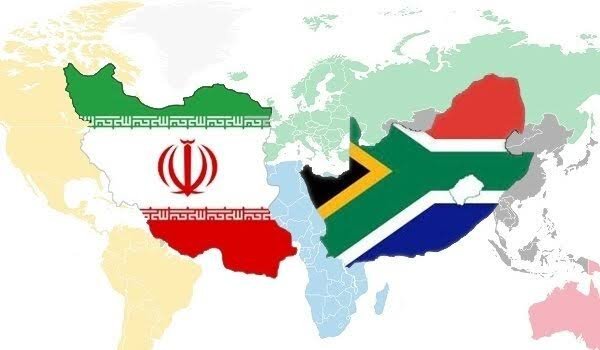
Iran’s decision to grant South African vessels access through the Strait of Hormuz while restricting or denying passage to Western-aligned shipping marks a significant shift in how control over global trade routes is being exercised. The move is not simply a wartime contingency; it reflects an emerging pattern in which access to critical infrastructure is increasingly shaped by geopolitical alignment rather than neutral international norms.
The Strait of Hormuz, through which roughly 20% of global oil supply typically transits, has long been considered a neutral chokepoint governed by international maritime conventions. However, recent developments suggest that neutrality is being replaced by selective access.
Iran’s signaling is clear: strategic waterways can be leveraged not only as military tools, but as instruments of economic and geopolitical alignment.
Selective Access as Strategic Policy
Iranian officials have explicitly indicated that “friendly countries,” including South Africa and other BRICS-aligned states, will be granted safe passage through the Strait of Hormuz even as vessels linked to the United States and its allies face restrictions.
This represents a departure from traditional maritime governance. Instead of enforcing a blanket closure or maintaining open access, Iran is implementing a differentiated system of passage based on political alignment.
The implications are structural:
• Trade routes are becoming conditional rather than universal
• Maritime access is being tied to diplomatic positioning
• Energy flows are increasingly subject to geopolitical filtering
This model effectively transforms a global commons into a controlled economic gateway.
BRICS and the Reconfiguration of Trade Routes
The inclusion of South Africa in this selective access framework is not incidental. As a member of BRICS which now includes Iran, Russia, China, and other emerging economies the country represents a broader coalition seeking to reduce reliance on Western-dominated financial and security systems.
Recent BRICS naval exercises involving Iran, Russia, and China have already signaled an intent to develop a coordinated maritime presence capable of securing trade routes outside traditional Western frameworks.
By granting preferential access to BRICS partners, Iran is effectively reinforcing this emerging alignment.
The strategic logic is twofold:
• Reward alignment with guaranteed access to critical infrastructure
• Impose costs on non-aligned states through restricted trade flows
This dynamic introduces a new layer of economic diplomacy one in which access to energy corridors becomes a negotiable asset.
Energy Markets and Supply Chain Fragmentation
The immediate impact of restricted access to the Strait of Hormuz has been a sharp decline in shipping volumes and increased volatility in global energy markets. Maritime traffic has dropped significantly amid security risks and insurance constraints, contributing to rising oil prices and supply chain disruptions.
For countries granted access, however, the situation creates a relative advantage.
South Africa’s ability to maintain energy imports through Hormuz while other routes face disruption positions it within a preferential supply network that is increasingly defined by political alignment rather than market neutrality.
This divergence could lead to:
• Differential energy pricing across regions
• Fragmented global supply chains
• Increased importance of political alliances in trade logistics
In effect, the global energy market risks splitting into parallel systems.
Power Dynamics: Control of Chokepoints
The Strait of Hormuz has always been strategically important, but recent developments highlight a shift in how that importance is exercised.
Historically, control over such chokepoints was framed in terms of security guarantees often underwritten by Western naval presence. Today, that model is being challenged by alternative power centers capable of asserting localized control.
This introduces a critical power dynamic:
• Control of physical infrastructure is becoming as important as financial dominance
• States that can restrict access gain leverage over global markets
• Maritime routes are evolving into tools of geopolitical negotiation
Iran’s actions demonstrate that control does not require global dominance only the ability to influence key nodes within the system.
Constraint Layer: Sustainability of Selective Access
Despite its strategic advantages, Iran’s approach is not without constraints. Sustaining a selective access model requires continuous enforcement, diplomatic coordination, and the ability to manage potential retaliation from affected states.
The presence of ongoing conflict in the region, combined with international legal challenges and economic sanctions, complicates the long-term viability of such a system.
For BRICS partners, the arrangement also introduces dependencies:
• Reliance on politically mediated access rather than neutral systems
• Exposure to regional instability
• Potential secondary sanctions or diplomatic pressure
This creates a trade-off between short-term access advantages and long-term systemic risk.
Structural Implications
Iran’s decision to allow South African vessels through the Strait of Hormuz is not an isolated diplomatic gesture it is part of a broader reconfiguration of how global trade infrastructure is governed.
By linking access to alignment, Iran is contributing to the emergence of a more fragmented international system in which economic flows are increasingly shaped by geopolitical blocs.
For BRICS, this development reinforces the possibility of constructing parallel systems of trade, security, and finance that operate outside traditional Western frameworks.
For the global economy, however, the implications are more complex. The shift from neutral access to conditional access introduces new forms of volatility, as trade routes become subject to political negotiation rather than predictable rules.
In this environment, the Strait of Hormuz is no longer just a passageway it is becoming a lever.