Ghana loses an estimated 20–30% of its agricultural output post-harvest due to inadequate storage and logistics infrastructure, according to data from the Food and Agriculture Organization (FAO). This inefficiency has long constrained the country’s ability to scale high-value exports such as fruits, pharmaceuticals, and temperature-sensitive goods.
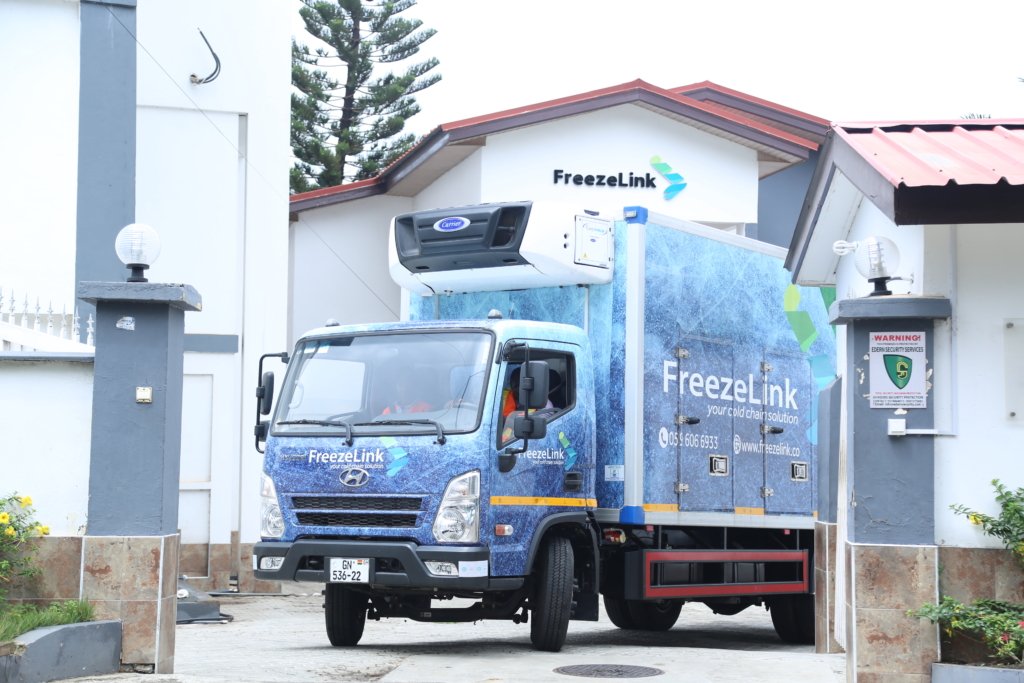
Freezelink, a Ghana-based cold chain logistics company, is positioning itself at the center of this structural bottleneck. Its expansion reflects a broader shift: logistics infrastructure, not production capacity, is becoming the limiting factor in West Africa’s trade competitiveness.
The Cold Chain Deficit as an Economic Constraint
Cold chain infrastructure remains severely underdeveloped across sub-Saharan Africa. The African Development Bank has consistently identified logistics gaps including storage, transportation, and port handling as a primary constraint on agricultural industrialization.
In Ghana specifically, the issue is not supply. The country produces significant volumes of perishable goods, including pineapples, mangoes, and fish. The constraint lies in preserving quality from farm to export terminal.
This gap creates a structural inefficiency:
• Producers lose revenue due to spoilage
• Exporters fail to meet international quality standards
• Banks hesitate to finance agribusiness due to risk volatility
Freezelink’s model integrating cold storage, refrigerated transport, and distribution directly addresses this bottleneck.
Logistics as the Hidden Layer of Trade Competitiveness
Trade competitiveness is often framed around tariffs or trade agreements, but logistics performance is increasingly decisive. The World Bank’s Logistics Performance Index consistently shows that infrastructure quality directly correlates with export growth.
Ghana’s participation in the African Continental Free Trade Area (AfCFTA) further raises the stakes. While tariffs may fall, non-tariff barriers particularly logistics inefficiencies remain binding constraints.
Cold chain infrastructure plays a critical role in unlocking:
• Intra-African food trade
• Pharmaceutical distribution networks
• High-margin export markets in Europe and the Middle East
Without reliable temperature-controlled logistics, these sectors cannot scale.
Capital Intensity and Financing Constraints
Despite its importance, cold chain infrastructure is capital-intensive. Facilities require significant upfront investment in energy systems, storage technology, and fleet management.
This creates a financing paradox:
• High upfront cost deters private investors
• Perceived operational risk limits bank lending
• Public sector lacks fiscal space for large-scale deployment
The International Finance Corporation (IFC) has noted that logistics infrastructure in emerging markets often falls into a “missing middle” of financing too risky for traditional lenders, yet not large enough for major institutional investors.
Freezelink’s growth suggests that targeted private sector players can begin to close this gap, particularly when aligned with export-driven sectors.
Energy Dependence and Operational Risk
Cold storage operations are heavily dependent on reliable electricity. In Ghana, while power supply is more stable than in many neighboring countries, energy costs remain high.
This introduces a second-order constraint:
• High operating costs reduce margins
• Energy volatility introduces pricing instability
• Backup systems increase capital expenditure
The African Development Bank has emphasized that energy reliability is a prerequisite for industrial and logistics development. Without it, infrastructure investments fail to achieve full efficiency.
For companies like Freezelink, integrating energy solutions—such as solar or hybrid systems may become a competitive differentiator.
Regional Expansion and AfCFTA Alignment
Freezelink’s model is not limited to Ghana. The broader West African region faces similar constraints, particularly in countries like Côte d’Ivoire and Nigeria, where agricultural output is high but logistics infrastructure remains fragmented.
AfCFTA creates a framework for regional trade expansion, but execution depends on physical infrastructure.
Cold chain networks could become a foundational layer for:
• Cross-border food supply chains
• Regional pharmaceutical distribution
• Export corridor optimization
The success of such networks will depend on regulatory alignment, customs efficiency, and investment coordination across borders.
Structural Implications
Freezelink’s expansion highlights a broader shift in African economic development: the constraint is moving from production to preservation and distribution.
This transition has several implications:
• Value chains are increasingly logistics-driven
• Infrastructure gaps determine competitiveness more than tariffs
• Private logistics firms are becoming strategic economic actors
In this context, cold chain infrastructure is not a niche sector it is a foundational component of industrialization.
Until logistics systems scale to match production capacity, a significant portion of Africa’s economic output will continue to be lost between farm, factory, and market.