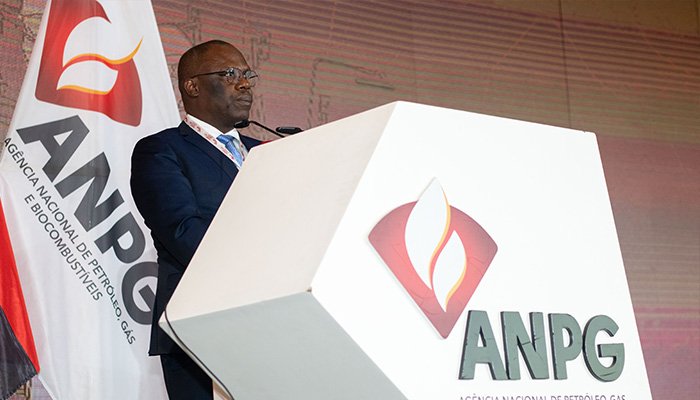
Angola’s oil sector is undergoing a structural reset, with the Agência Nacional de Petróleo, Gás e Biocombustíveis (ANPG) at the center of efforts to stabilize production at approximately 1.1 million barrels per day while repositioning the country as a competitive upstream investment destination.
Since its creation in 2019, ANPG has replaced Sonangol as concessionaire, separating regulatory oversight from commercial operations a shift widely viewed as one of the most significant governance reforms in Angola’s oil industry in decades.
From Operator-State Hybrid to Regulatory Clarity
For years, Sonangol functioned as both operator and regulator, creating structural inefficiencies and limiting transparency in licensing and contract enforcement. The establishment of ANPG introduced a clearer institutional framework, aligning Angola more closely with international best practices seen in markets such as Norway and Brazil.
Under the leadership of Paulino Jerónimo, ANPG has prioritized regulatory consistency, licensing transparency, and improved investor engagement, particularly as Angola competes for capital against emerging hydrocarbon provinces.
Production Stabilization in a Mature Basin
Angola’s crude oil production has declined from a peak of roughly 1.8 million barrels per day in 2008 to near 1.1 million barrels per day in recent years, according to OPEC secondary sources. This decline reflects natural depletion across mature offshore fields, combined with years of underinvestment during periods of low oil prices.
ANPG’s central challenge is not expansion, but stabilization ensuring that production decline curves are managed through infill drilling, marginal field development, and enhanced recovery strategies.
The agency has launched successive licensing rounds targeting both offshore and marginal fields, seeking to extend the productive life of Angola’s upstream assets.
Licensing Strategy and Capital Attraction
Angola’s licensing rounds since 2019 have focused on increasing participation from both international oil companies and independent operators. The government has introduced improved fiscal terms, including reduced tax burdens on marginal fields and incentives for exploration in frontier basins.
These reforms aim to address a key constraint: global capital discipline among oil majors. As companies prioritize lower-cost, lower-risk projects, Angola must compete with regions such as Guyana, Brazil’s pre-salt fields, and the U.S. shale sector.
ANPG’s approach has been to position Angola as a stable, predictable jurisdiction with existing infrastructure reducing development timelines compared to greenfield markets.
Gas Monetization and Energy Transition Pressures
Beyond crude oil, ANPG is also playing a central role in Angola’s natural gas strategy. The country has historically flared significant volumes of associated gas, but recent policy shifts are focused on monetization through LNG and domestic power generation.
The Angola LNG project, which processes associated gas from offshore fields, represents a key pillar of this strategy. Expanding gas utilization is increasingly critical as global energy markets shift toward lower carbon fuels.
At the same time, Angola faces mounting pressure from international lenders and investors to align with energy transition frameworks, including emissions reduction and ESG compliance standards.
Institutional Reform vs Structural Constraints
While ANPG’s creation has improved governance, structural challenges remain. Angola’s upstream sector is capital-intensive, heavily offshore, and exposed to global price volatility. Financing constraints, currency risks, and infrastructure limitations continue to shape project viability.
In addition, competition for upstream investment is intensifying across Africa, with countries such as Namibia and Mozambique attracting renewed attention following major hydrocarbon discoveries.
A Governance Model Under Market Pressure
ANPG’s regulatory reset represents a necessary evolution in Angola’s oil sector, but its long-term effectiveness will depend on the agency’s ability to translate institutional reform into sustained capital inflows and production stability.
With global upstream investment becoming increasingly selective, Angola’s success will hinge on execution not just policy design.
The next phase of Angola’s oil industry will be defined less by geology and more by governance.