

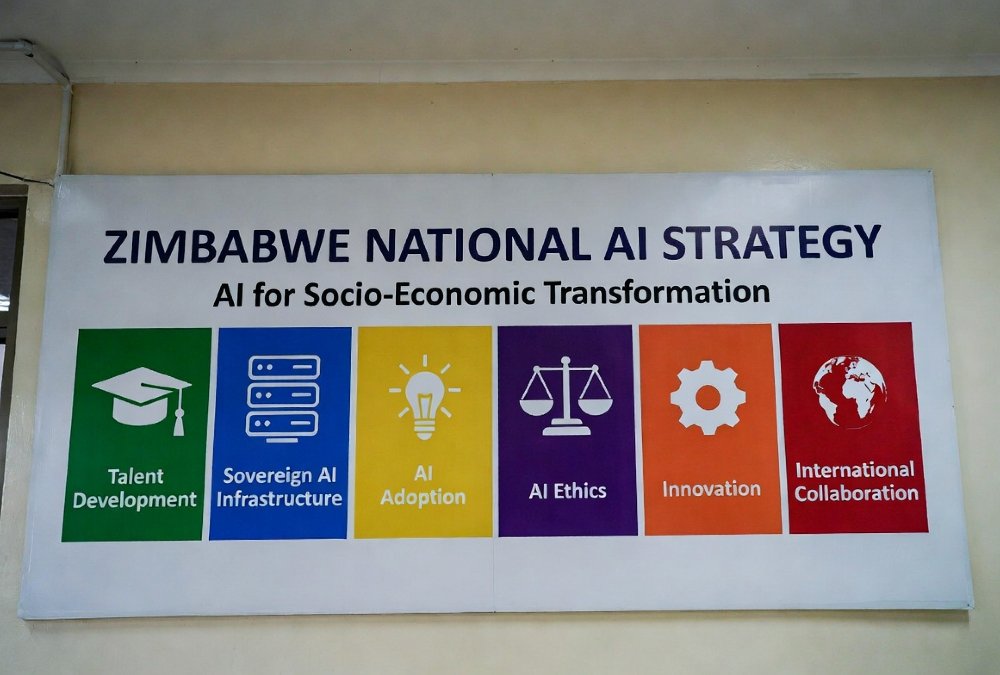
Zimbabwe has launched a five-year national artificial-intelligence strategy aimed at transforming its commodity-dependent economy into a knowledge-driven hub for Southern Africa. Unveiled by President Emmerson Mnangagwa in Harare, the 2026–2030 plan targets AI adoption across agriculture, mining, health, finance and education.
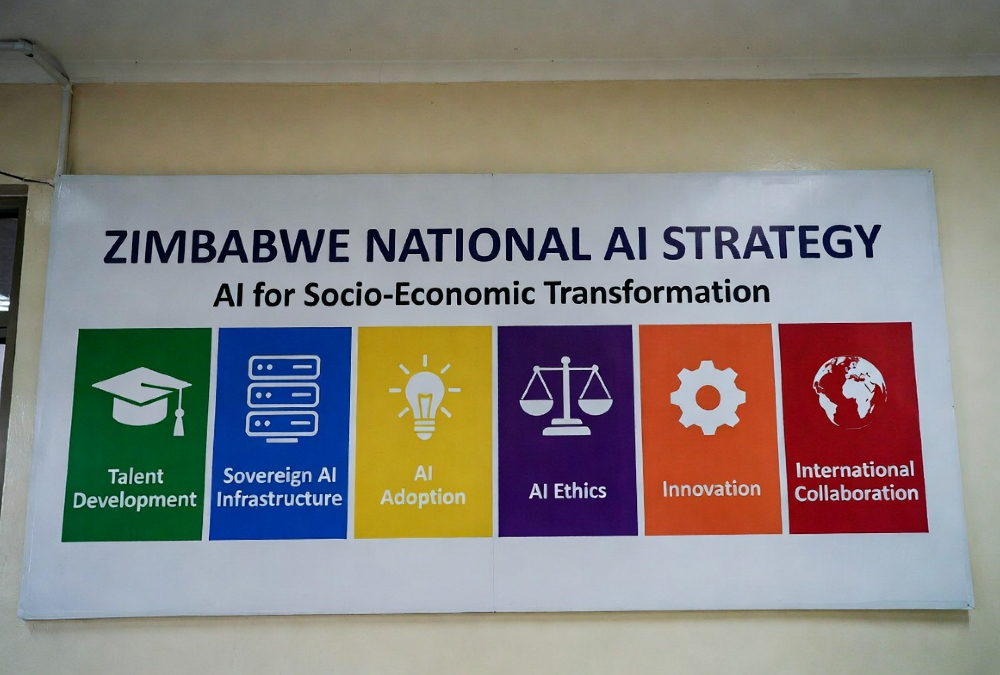
The strategy rests on six pillars: talent development, sovereign computing infrastructure, sectoral adoption, ethics, innovation and diplomacy. Central is Project Pangolin, a national data platform providing secure, local computational resources.
A new co-investment vehicle – the Mugove Fund – will back certified AI startups, while the “Innovation Crucible” regulatory sandbox offers temporary flexibility for fintech and telecom pilots.
Public outreach includes Nzwisiso.ai, an AI-literacy campaign targeting 60 percent of adults by 2030, and an annual Grand Challenge focused first on food security. Implementation follows three phases: a 100-day foundation sprint in early 2026, an 18-month build-out of core infrastructure, and scaling through 2030 under a National AI Council.
Distinctively, Zimbabwe anchors its AI governance in Ubuntu – the Bantu philosophy that “I am because we are” – prioritizing social cohesion and collective well-being over purely commercial incentives. This ethical framework seeks to differentiate Harare’s approach from EU or U.S. models.
The ambition faces steep headwinds. Zimbabwe’s economy is roughly one-eighth the size of South Africa’s, its regional tech rival. Yet smaller nations can sometimes execute nimbler reforms.
Success hinges not on rhetoric but on consistent funding, institutional credibility and tangible outcomes. If Harare delivers, it may carve a niche in Africa’s accelerating AI race—proving that values-driven innovation can compete with scale.


