


The 18th of September is World Water Monitoring Day, held each year to promote public awareness around the importance of water quality by involving communities in water testing and monitoring.
“Community participation is essential to preserving this precious but scarce resource, without which we cannot survive,” says Dr Lester Goldman, Chief Executive Officer of the Water Institute of Southern Africa (WISA).
However, says Goldman, ongoing training and capacity building among all stakeholders is critical to ensuring South Africa manages water demand meaningfully and effectively.
Water scarcity in SA
Stats SA estimates that South Africa’s population in 2025 is 63.1 million people. By 2040, that figure is projected at 74 million and by 2050, just over 79 million. Although the population continues to expand, the country’s water supply does not.
According to the World Bank, while each Icelandic person had 456,351 cubic metres of water available to them in 2021, each South African had only 728 cubic metres.
“Our water is a fixed sum and can only be preserved through protection of water sources, conservative use and heavy recycling, all of which take concerted effort by municipalities and the public alike,” says Goldman.
The good news is that targeted training and capacity building that engage communities has already shown results in several past projects.
Good examples
Water projects in Mogale, Emfuleni and Khayelitsha each enlisted the help of their communities to build capacity and achieved outstanding results through training and workshops.
In Mogale City, the Demand Management Training Programme addressed the municipality’s skills shortages by training twelve unemployed and indigent youths – especially women – as water demand managers. These individuals were taught various skills, such as leak detection, data logging, meter reading and installation, control valve maintenance, and more. The result was improved capacity, better skills and job creation.

The Emfuleni Leakage Reduction Project was created to address abnormal consumption due to the overuse of hosepipes and sprinklers by residents. The municipality hired and trained 51 Water Services Assessors and two Water Services Assessor Coordinators, and implemented schools’ awareness, community awareness and water wise gardening programmes. This resulted in better reporting of water and sanitation problems, allowing municipal capacity to be allocated more effectively.
In Khayelitsha, the main source of leakage was identified as damage to low-cost housing plumbing fittings by the high-pressure water supply. Residents could neither afford to repair the constant leaks nor foot the bill for the wasted water. A Pressure Management Project saw the construction of a pressure management installation to reduce excessive pressure using local labour, the training of two municipal personnel to maintain and operate the installation, and the participation of the community in making the project a success. The programme saves more than nine million cubic metres of water per year, amounting to R27 million per annum.
“These projects show the importance of community involvement, but they can only succeed through good leadership and professional expertise,” says Goldman.
The need for professionalisation
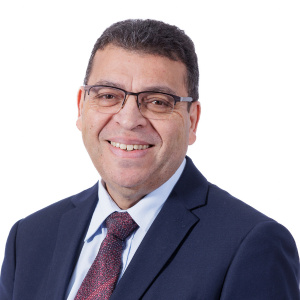
Dr. Lester Goldman, CEO, WISA
Professionalisation in municipality water planning, management and operations ensure that communities are dealt with ethically and competently.
“Professionalisation is a core driver of capacity building and training because those implementing efficiency programmes and passing skills down to communities have proven themselves compliant with law and recognised standards of competence and practice,” says Goldman.
WISA makes itself available to municipalities across South Africa to build professionalisation in the water industry.
“This can ensure that more of these projects are initiated and concluded successfully for effective water demand management and the preservation of our most precious resource,” says Goldman.


