– Advertisement –
The World Bank has reiterated its commitment to promoting disability-inclusive access to Water, Sanitation and Hygiene (WASH) services in Nigeria through its $700 million Sustainable Urban and Rural Water Supply, Sanitation and Hygiene (SURWASH) programme.
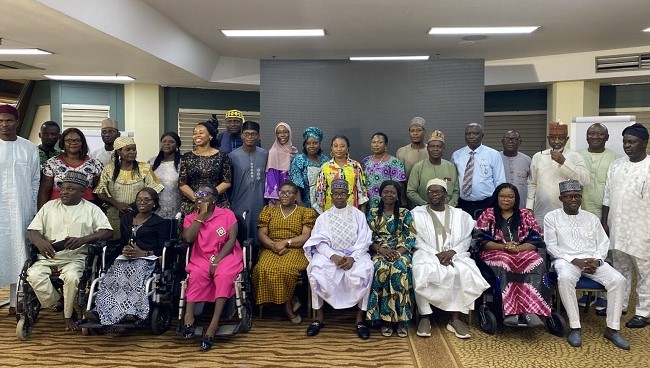
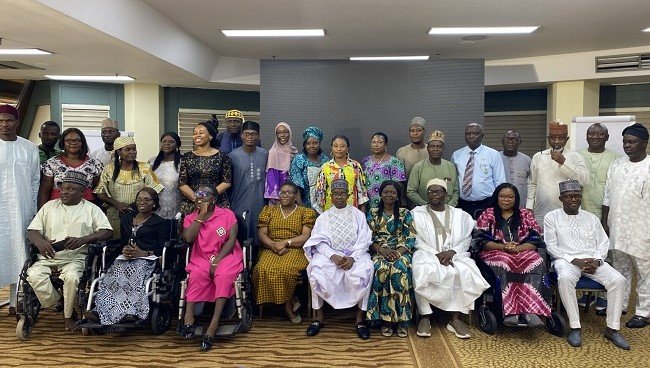
This reaffirmation came during a roundtable discussion on disability inclusion in WASH on Friday, May 2, 2025, in Abuja in collaboration with sector stakeholders, civil society organisations, and representatives of persons with disabilities.
The session was aimed at assessing progress, identifying gaps, and proposing inclusive solutions within the SURWASH implementation framework.
Speaking at the event, Ms. Awa Diagne, the World Bank’s Task Team Lead for SURWASH, stressed that the programme is not a one-off intervention, but a systemic performance-based platform designed to strengthen national delivery systems across the country.
“SURWASH is not a project, it is a programme that aims to strengthen national systems to deliver WASH services to everyone, with special consideration for people living with disabilities,” she said.
Diagne explained that SURWASH integrates disability inclusion into its performance-based financing model and supports the development of context-specific policies and guidelines to improve service delivery.
“We are not just financing infrastructure; we are helping states design policies that embed inclusion and resilience from the start, a major focus of the discussion was the importance of inclusive design that goes beyond physical infrastructure.
“Accessibility must go beyond ramps and handrails, it must reflect the full spectrum of disabilities, mobility, visual, hearing, cognitive, and must begin with meaningful engagement of stakeholders from the outset.”
She added that disability inclusion must be viewed not as an add-on, but as an essential part of design, planning, and implementation.
She further called on state-level implementers to take the outcomes of the roundtable back to their respective regions and translate discussions into action.
“We need to be more conscious of who we consult, and what we mean by disability inclusion,” she urged, adding that monitoring, evaluation, and accountability must be strengthened to ensure inclusive outcomes.
Also speaking, Cindy Ikeaka, Senior Social Development Specialist at the World Bank, noted challenges faced by persons with disabilities in accessing essential services in Nigeria.
She cited statistics indicating that more than 25 million Nigerians live with disabilities, many of whom are excluded from public services due to inaccessible infrastructure and weak enforcement of inclusion policies.
“We have children with disabilities who cannot go to school simply because the buildings are not designed to accommodate them,” she said.
Ikeaka underscored the need for stronger implementation of Nigeria’s Discrimination Against Persons with Disabilities (Prohibition) Act, passed in 2019.
“While some states have domesticated the law, enforcement remains inconsistent, it is not enough to pass a law, there must be mechanisms to ensure it is enforced,” she said.
She also pointed to other inclusive development efforts by the World Bank, such as the Adolescent Girls Initiative for Learning and Empowerment (AGILE) project, which promotes inclusive education, including for girls living with disabilities.
She stressed the importance of participatory engagement in all phases of development programmes.
“A person with a disability understands the barriers better than someone without one. If we want to ensure accessibility in schools, water points, or health centres, we must engage those directly affected.
“Inclusion is not optional but essential to achieving sustainable development and equitable service delivery,” she said.
In his remarks, Mr. Abdulhamid Gwaram, SURWASH National Programme Coordinator, reiterated that disability inclusion in Nigeria’s WASH sector is both a development priority and a legal obligation.
He referenced the 2019 disability rights law, which mandates inclusive public services and infrastructure.
“Disability inclusion is not just a moral imperative, it is enshrined in Nigerian law,” he stated.
Gwaram noted that inadequate planning and design continue to limit access to water and sanitation for persons with disabilities, undermining their dignity and well-being.
He explained that the SURWASH framework incorporates inclusive principles to address this gap, but stressed the need to decentralise the initiative.
“We now have partnerships with key stakeholders like the National Commission for Persons with Disabilities, but we must take these conversations to the states and local governments to ensure real impact,” he said.
Also contributing, Mr. Tony Agwuna, Monitoring and Evaluation Officer, called for greater disability inclusion in WASH programming across all Ministries, Departments and Agencies (MDAs).
He said inclusive WASH must encompass participation, non-discrimination, gender sensitivity, accessibility, staff training, and effective monitoring.
He recommended the disaggregation of programme data to reflect the experiences of people with disabilities and ensure their inclusion from planning through to implementation.
“All MDAs should institutionalise the needs of people with disabilities in their programmes,” Agwuna added.
“Inclusive WASH is a human rights issue and is central to achieving the Sustainable Development Goals and the UN Convention on the Rights of Persons with Disabilities.”
The SURWASH programme is being implemented in seven states of Delta, Ekiti, Gombe, Imo, Kaduna, Plateau and Katsina.
By Akpan Glory