

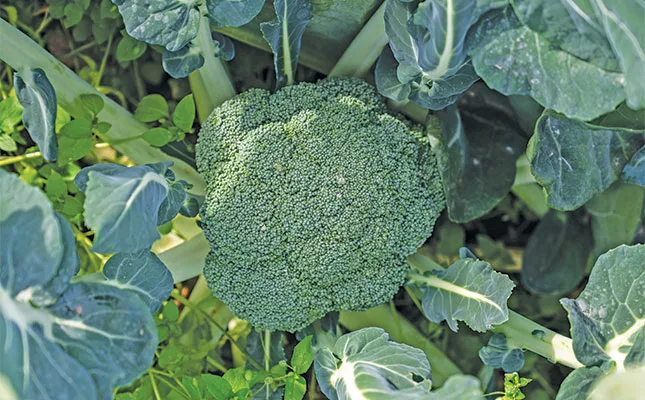
Among the Brassica genus types, broccoli has been one of the popular choices for farmers in cooler climates. In the past, broccoli was rotated out in summer, but farmers like Danie Barnard have used lower summer temperatures and advancements in cultivars to plant high volumes all year around. Henning Naudé spoke to Barnard about his production approach to satisfy market demand while maintaining high-quality yields.


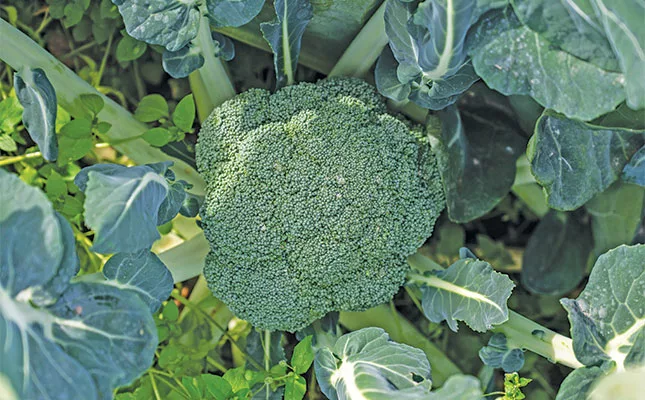
Photo: Henning Naude
Resting close to the Outeniqua Mountain range outside the Great Brak River region in the Western Cape, Danie Barnard’s farm, Langhoek, has produced a wide variety of crops over the many years it has been in the family.
The farm now produces around 14 different crop varieties, including lettuce, green beans, cauliflower, and butternut. These crops are planted seasonally to ensure consistent output while retaining soil fertility. Previously, Brassicas dominated his planting programme, which limited his income since yields are significantly lower in summer.
“When we only focused on Brassicas, our total yield was insufficient. Since Brassica crops are expensive to plant, we needed to expand our options,” says Barnard.
Three-year rotation
The farm has 130ha under irrigation, which is carefully utilised for scheduled plantings, depending on where broccoli falls in the rotation.
Barnard runs a three-year rotation period for broccoli, substituting other vegetables such as potatoes and green beans in the interim. Green beans retain stable nitrogen levels in the soil, resulting in accessible nutrients for broccoli growth.
He says: “Because we do not have a large area under production, I cannot afford to only plant broccoli and cauliflower every three years. Moving away from monocultures was vital for me to be able to stay productive.”
Maintaining healthy soil conditions is highly important for Barnard due to the risk of soil-borne diseases such as clubroot.
“Careful monitoring of your soil is vital if you want healthy broccoli.”
When thorough crop rotations are not adhered to, there is an increased possibility that harmful pathogens that target Brassicas will remain in the soil. The plant programme is also influenced by buyer needs, and Barnard meets with buyers twice a year to discuss recommended plant programmes.
He averages between 8t/ha and 10t/ha total yield, with a saleable yield of at least 80% of his total harvest.
Cultivating broccoli
The production cycle that Barnard follows allows him to plant year-round, and his rotations give him consistent windows in which to grow broccoli. Because broccoli requires high levels of available nutrients, soil analysis is done three times per year after a harvest, indicating which fertilising programme is needed.
Broccoli grows best in a soil pH of between 6 and 7, and Barnard ensures the soil is tilled and ripped up to an average of 300mm deep when he works in his compost.
He buys his seeds from various suppliers such as Starke Ayres and Sakata, based on the cultivars he chooses. Seeds are sent to a nursery to produce seedlings, which takes around five to seven weeks before they can be transplanted in the field.
Barnard plants 40 000 seedlings/ha on average, both by hand and by planter, depending on how steep the terrain is. When slopes in the blocks are too severe, planting must be done by hand.
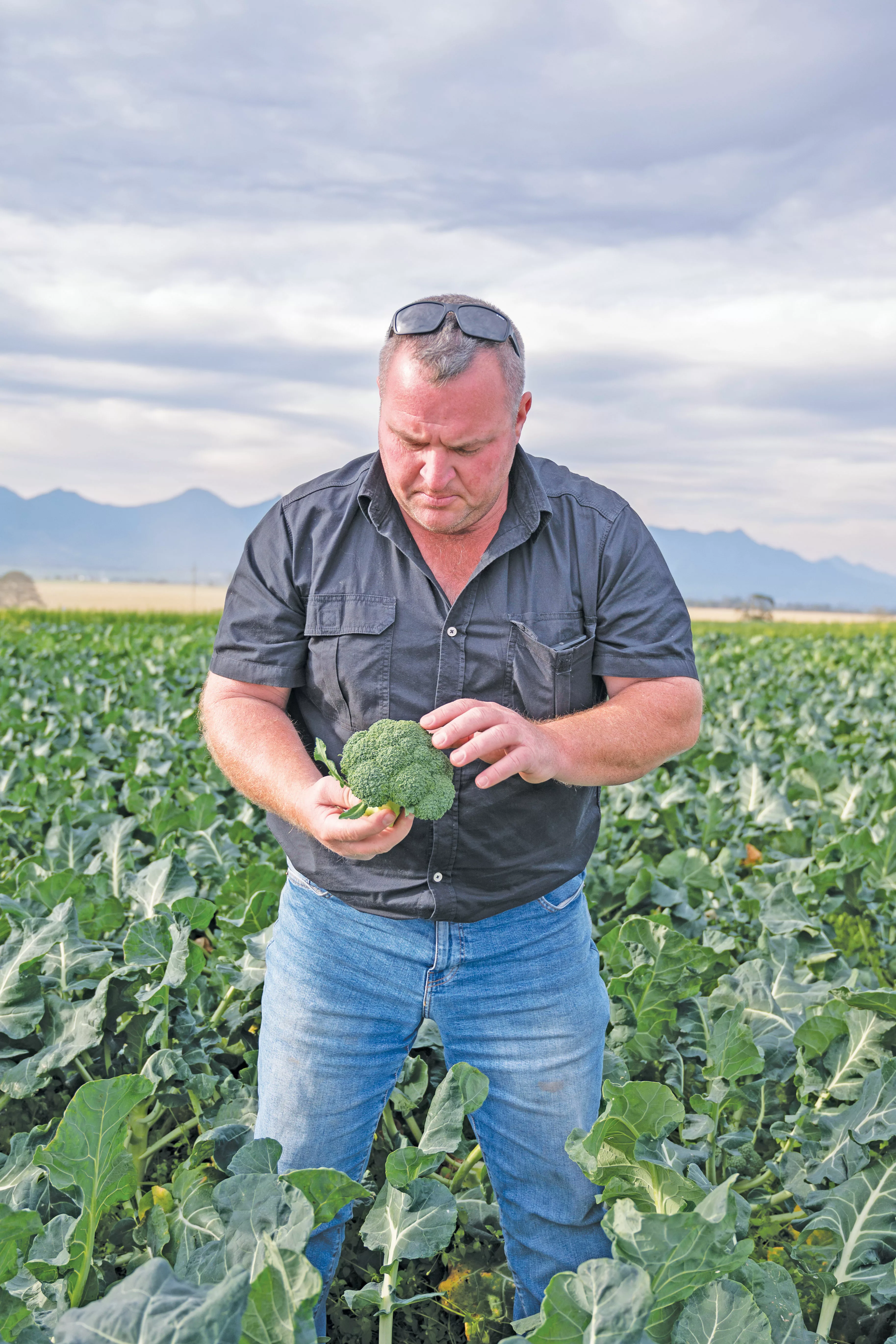
Cultivars are chosen based on season, but as Barnard explains: “Because broccoli is a crop better suited to the winter, almost any cultivar is suitable. However, choosing the right summer cultivar can be challenging as there are fewer varieties suited to summer conditions, and the cultivar must be chosen carefully based on your specific growing conditions.”
Barnard plants roughly 3ha of broccoli per month and does not adjust his volume based on seasonality.
“It is more expensive to plant in summer because of the disease pressure and lower saleable yield, but we are lucky to have both north- and south-facing fields that we utilise based on season, so crops can either get more or less sun exposure.”
Granular fertiliser is utilised with overhead pivot irrigation, so fertiliser can be soaked into the soil effectively. The broccoli receives about 10mm to 15mm of water per week, depending on rainfall.
Overhead irrigation
Barnard chooses to irrigate overhead due to his fields being on steep slopes. Drip irrigation would cause uneven coverage, and water would be completely wasted in areas where it could run freely down steep hills.
He focuses on providing a good balance between chemical and biological pest control, particularly targeting diamondback moth and bollworms.
“I believe that full biological pest control is not yet feasible, but I do make use of biological products I think are effective.”
He makes use of supplementary products such as Eckosil silica, which offers bio-available silica to both assist crops with nutrient absorption, and protection against harmful pathogens and insects. Chemicals are implemented only when pest populations and crop damage increase above economic threshold levels.
Harvest periods
The summer broccoli cultivars that Barnard utilises are typically ready for harvest after three months, with winter cultivars taking roughly three weeks longer to mature.
When broccoli reaches harvest maturity, the heads weigh between 400g and 650g. Buyers differ based on the weight of the heads, and therefore, Barnard will grow cultivars based on buyer demand.
There are three harvests per year, during which harvesting is done three times per week by hand until all mature crops have been picked.
As soon as the broccoli is picked, it is immediately sent to the packhouse for processing and cold storage to avoid degradation. All of Barnard’s packing is done in an on-site packhouse.
The broccoli is packed and sent either as a full head, or in punnets of smaller portions.
Supermarkets that Barnard regularly supplies include Pick n Pay, Shoprite/Checkers and the Freshmark stores.
Production challenges
Market demand is higher in summer, but supply is lower. The challenge is to keep producing crops that meet market standards.
“We have to conform to the industry standards, and that can be tough in the warmer months, mainly due to disease pressure and rapid weather changes.”
Alternaria poses the biggest threat to Barnard’s crops in summer, causing low saleable yield during a period where profit margins could potentially be higher. The summer climate often provides favourable conditions for diseases like Alternaria to spread due to the combination of warmer temperatures and early morning mist.
Although there are factors that make cultivation in summer much more challenging, Barnard perseveres through strict pest and disease management, the introduction of resistant cultivars, and the use of strategic plant locations that are more sheltered against harsh conditions.
He adapted a cultivation strategy that allows for high-quality broccoli to be grown consistently, and his use of specialised cultivars allows for minimal damage and maximum returns as a reliable producer for the local market.
For more information email Danie Barnard at [email protected].


